
 21 November 2026
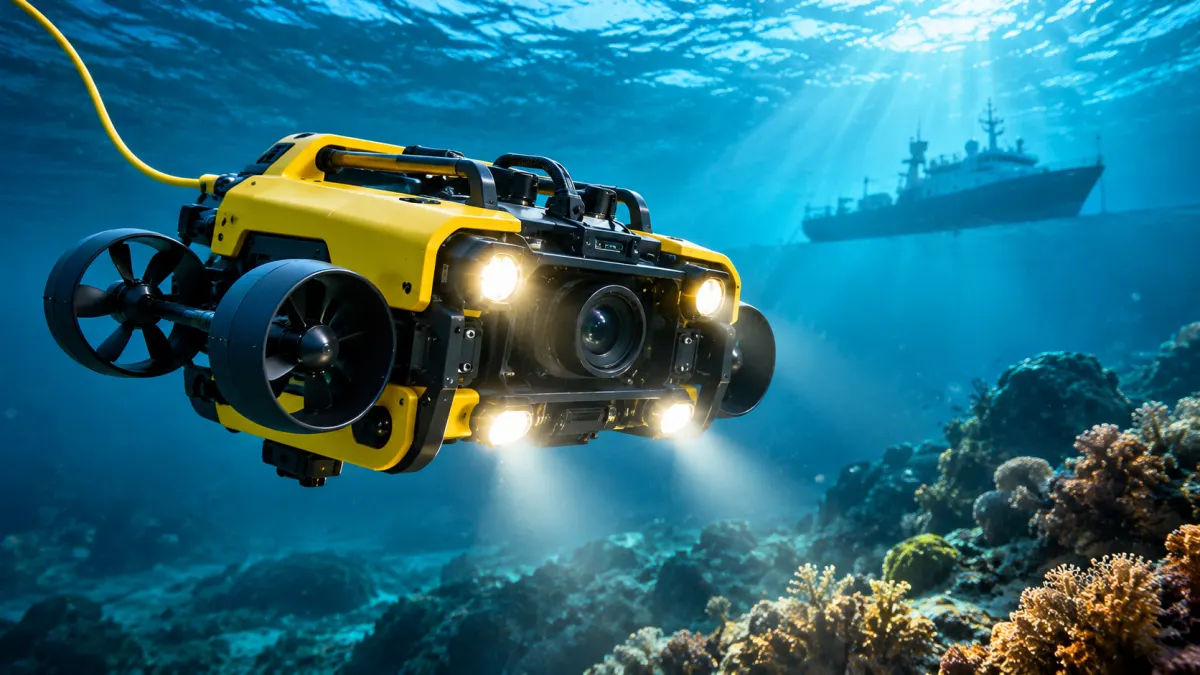
Underwater drones are robotic vehicles designed to explore, inspect, and collect information beneath the water's surface.
From compact, camera-equipped ROVs to autonomous underwater vehicles, these systems are expanding access to underwater environments for research, industry, and conservation.
14 Key Things to Know About Underwater Drones
What Is Hantavirus? The Deadly MV Hondius Cruise Ship Outbreak and Everything You Need to Know
 Inside the List
14 Items
Underwater Drones Support Search and Recovery Operations
Type: Search and recovery vehicle
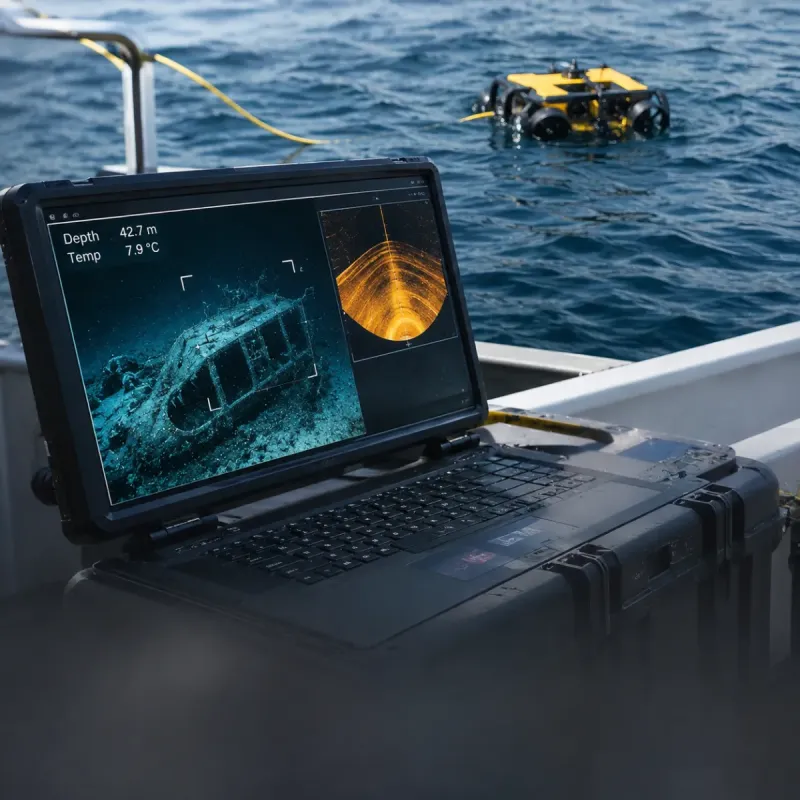
Underwater drones can help locate submerged objects, inspect wreckage, and examine difficult-to-reach areas during search and recovery missions. Cameras and sonar provide useful information when visibility or safety limits diver access.
- Wreck inspection
- Object detection
- Recovery support
Marine Research and Aquaculture Benefit From Underwater Robotics
Type: Research and monitoring vehicle
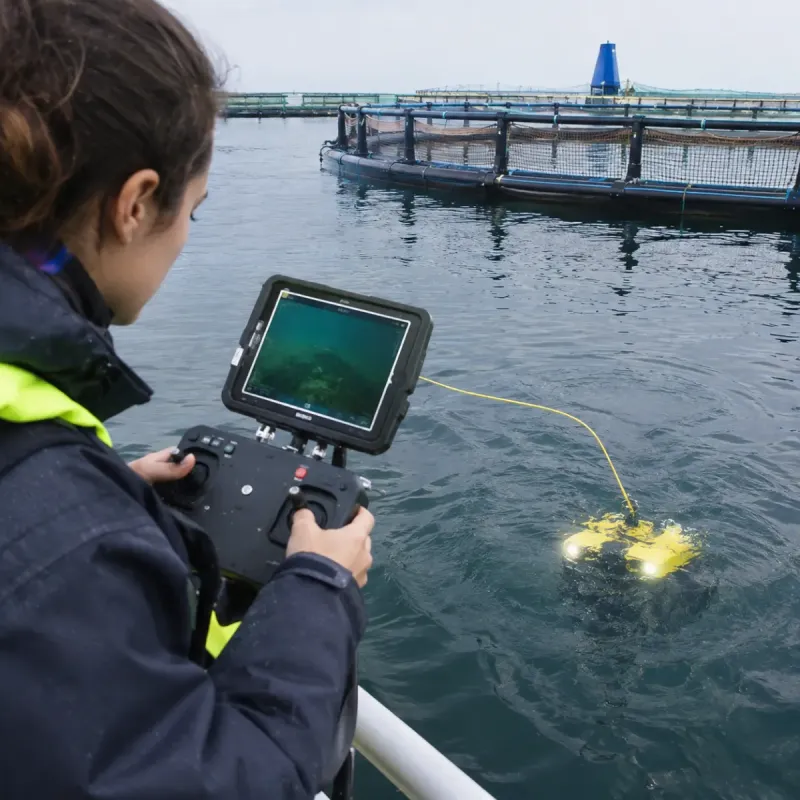
Researchers and aquaculture operators use underwater drones to observe marine habitats, monitor fish farms, and collect visual information. These systems support environmental monitoring while reducing the need for frequent diver operations.
- Marine research
- Fish farm monitoring
- Habitat observation
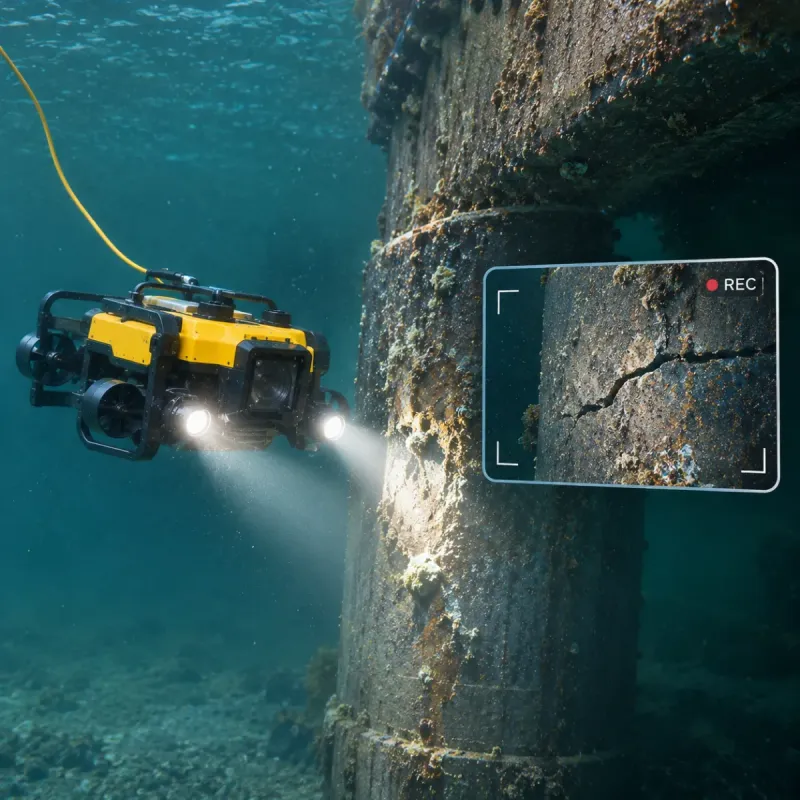
Underwater Drones Inspect Submerged Infrastructure
Type: Industrial inspection vehicle
Industrial operators use underwater drones to examine pipelines, dams, bridges, ship hulls, tanks, and offshore structures. Cameras and sonar help identify damage and document conditions without draining facilities or relying entirely on divers.
- Pipeline inspection
- Hull assessment
- Structural surveys
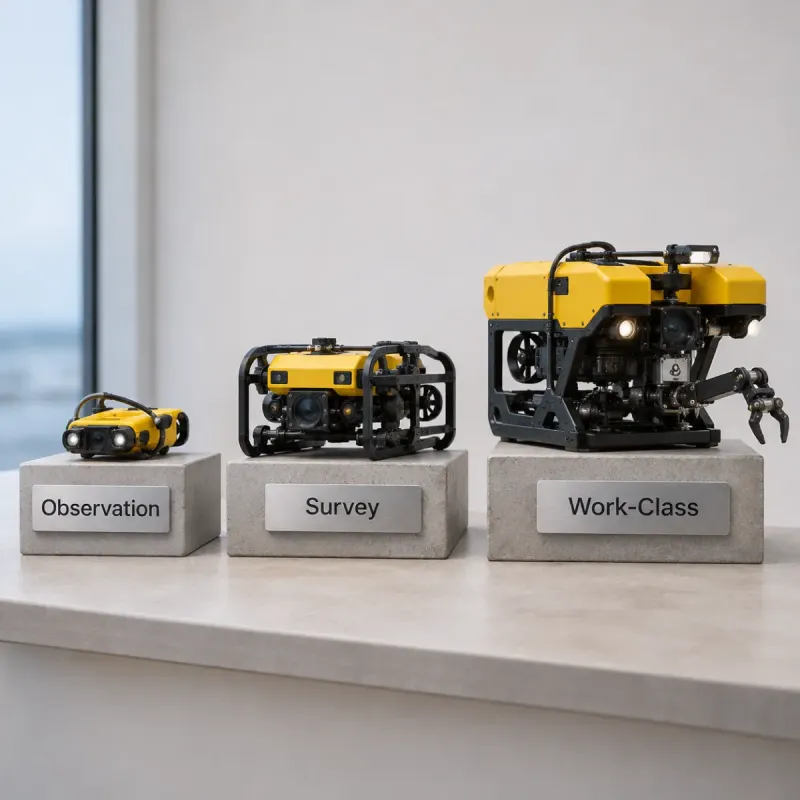
Underwater ROVs Have Different Capability Classes
Type: ROV classification
ROVs are classified by capability, ranging from basic observation systems to work-class vehicles with manipulators. These categories help users select equipment based on inspection, surveying, or intervention requirements.
- Observation class
- Work class
- Specialized systems
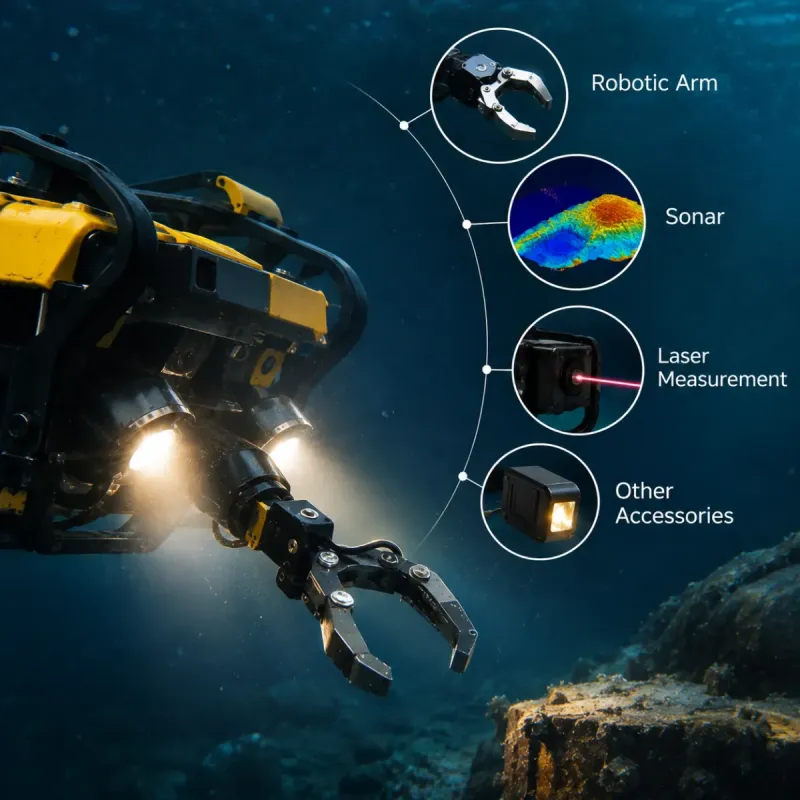
Robotic Arms and Accessories Expand Their Capabilities
Type: Modular robotic platform
Some professional underwater drones support robotic arms, sonar, laser measurement tools, and other accessories. These additions let vehicles do more than visual inspections, including object handling and specialized measurements.
- Robotic arms
- Laser measurement
- Modular equipment
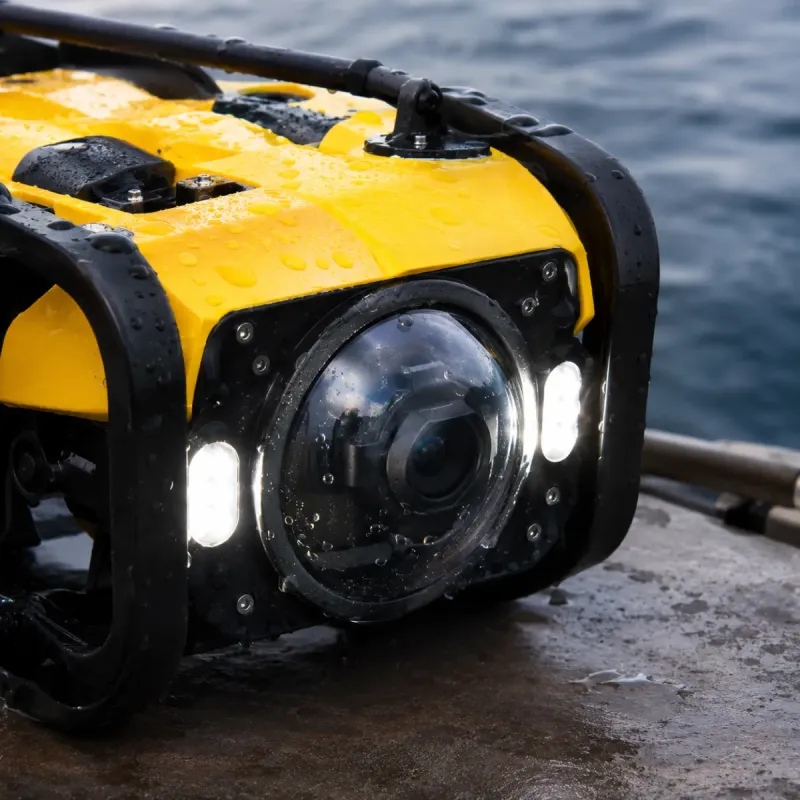
Pressure-Resistant Construction Enables Deep Exploration
Type: Protective structure
Water pressure increases with depth, making strong housings and sealed components essential for underwater operation. Manufacturers use durable materials and pressure-tested designs to protect electronics and cameras.
- Sealed components
- Durable materials
- Deep-water capability
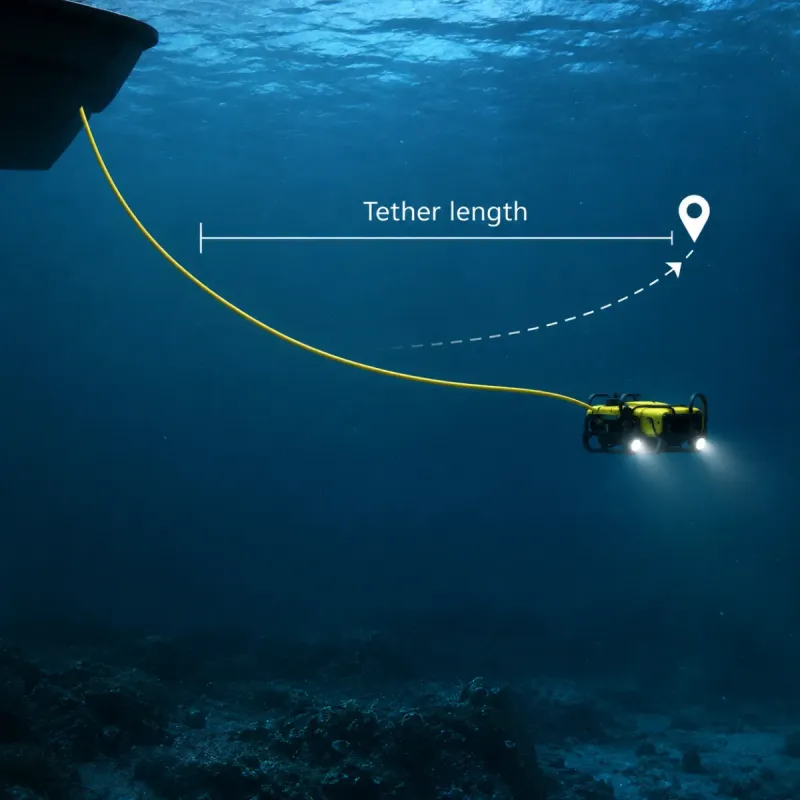
Tether Length Affects Operating Range
Type: Connection system
For tethered underwater drones, cable length determines how far the vehicle can travel from its deployment point. Longer tethers provide greater reach, while neutrally buoyant cables can reduce drag in moving water.
- Cable length
- Signal transmission
- Reduced drag
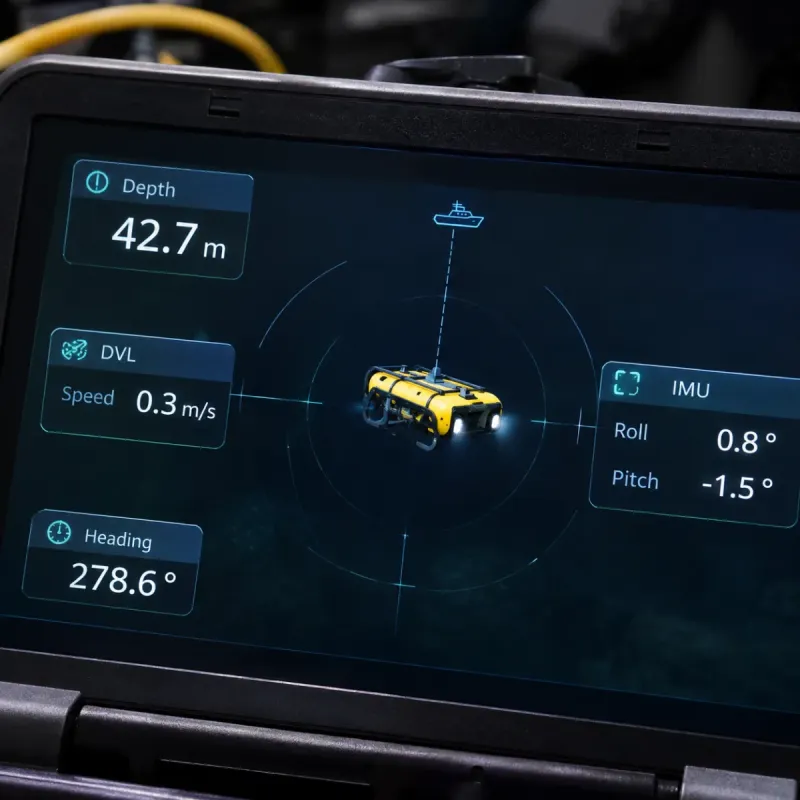
Navigation Sensors Improve Position Tracking
Type: Navigation system
Underwater drones can use depth sensors, inertial measurement units, and Doppler velocity logs to monitor their movement and position. These tools help operators navigate accurately and repeat inspections.
- Depth measurement
- Position tracking
- Motion sensors
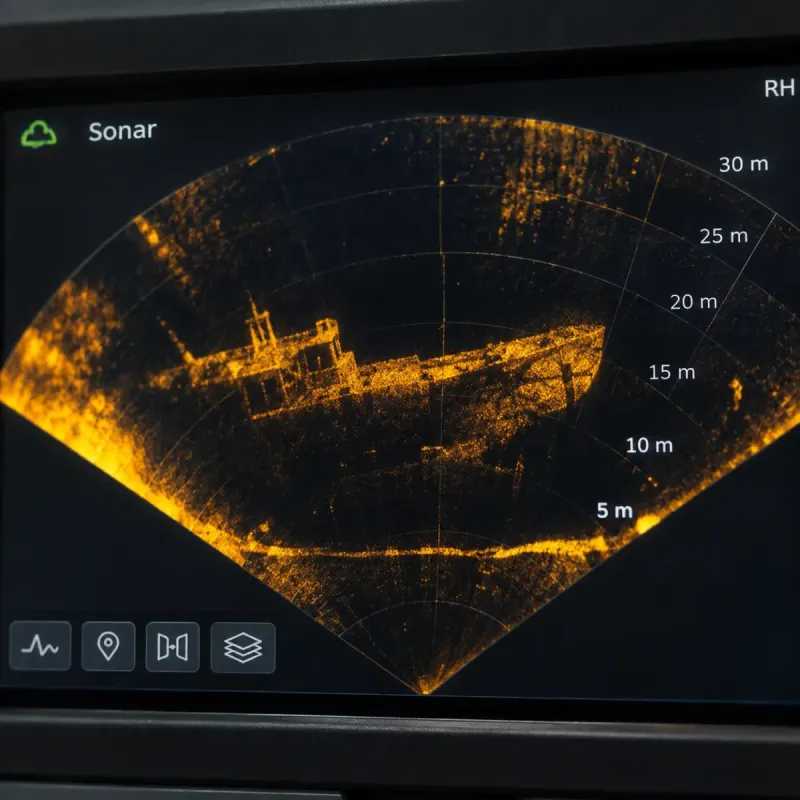
Sonar Helps Drones Navigate Murky Water
Type: Acoustic sensing system
Sonar uses sound waves to detect objects and map underwater surroundings. It is particularly useful when suspended particles, darkness, or poor visibility prevent cameras from producing clear images.
- Object detection
- Acoustic imaging
- Low-visibility operation
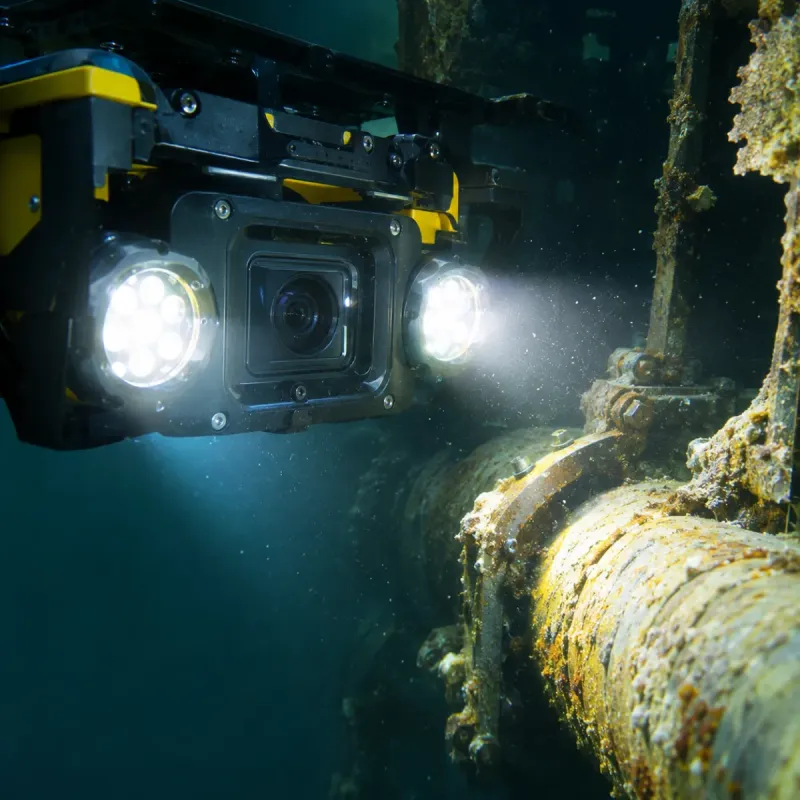
Cameras and Lights Capture Underwater Images
Type: Imaging system
Many underwater drones feature high-resolution cameras, including 4K models, for recording detailed footage. Powerful LED lights improve visibility and reveal details in dark environments, such as submerged tanks and pipelines.
- 4K video
- LED lighting
- Image recording
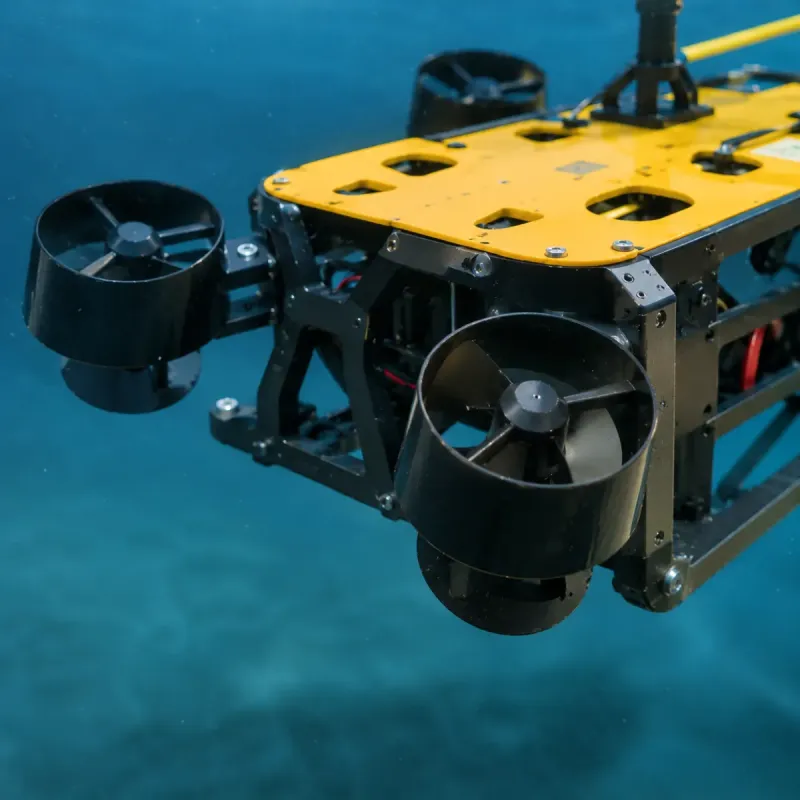
Thrusters Provide Precise Underwater Movement
Type: Propulsion system
Underwater drones use electric thrusters to move forward, backward, sideways, and up and down. Multiple thrusters can also help vehicles rotate and stay stable near structures or inspection targets.
- Electric propulsion
- Directional movement
- Position holding
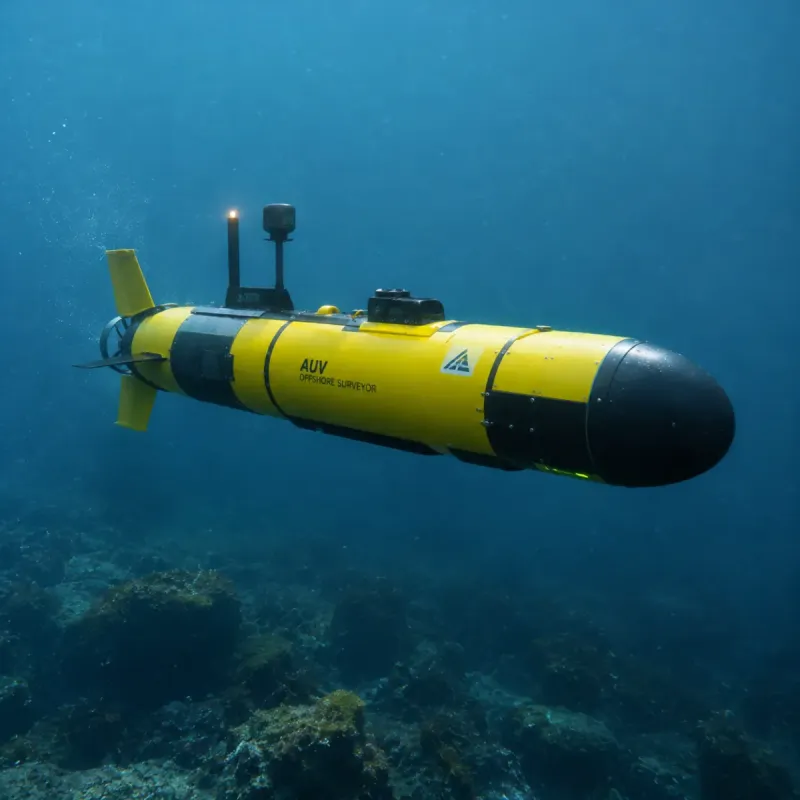
Autonomous Underwater Vehicles Operate Independently
Type: Autonomous underwater vehicle
Autonomous underwater vehicles (AUVs) follow programmed missions without continuous control from a surface operator. They carry onboard power, navigation systems, and sensors to collect information across underwater areas.
- Programmed missions
- Onboard navigation
- Independent operation
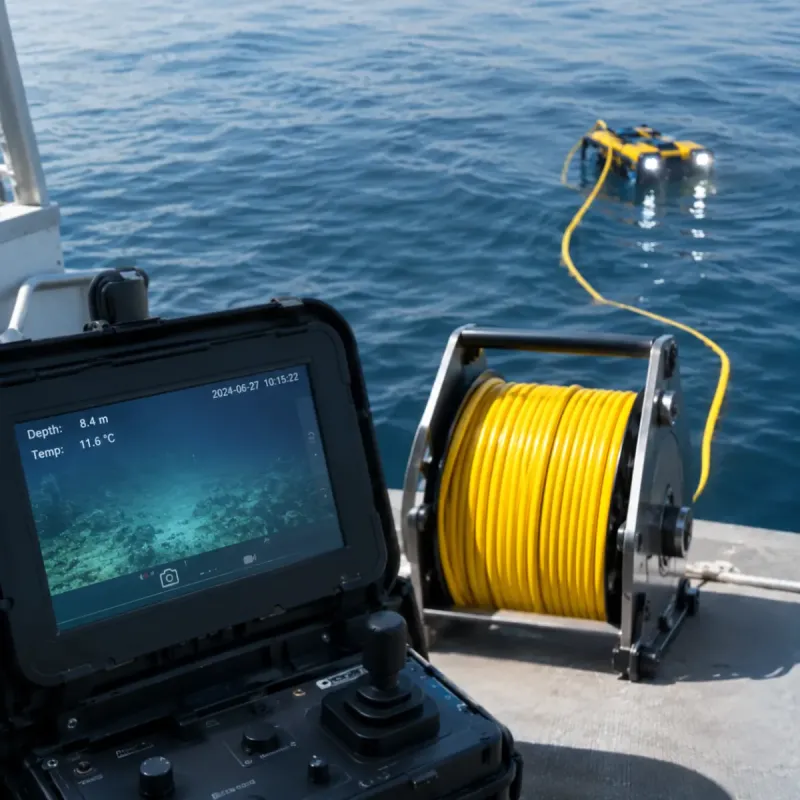
ROVs Are Controlled Through Tethers
Type: Remotely operated vehicle
Most observation-class underwater drones connect to a surface controller through a tether. This cable carries control signals, video, and sometimes electrical power, allowing operators to guide the vehicle while viewing live footage.
- Live video
- Remote navigation
- Cable connection
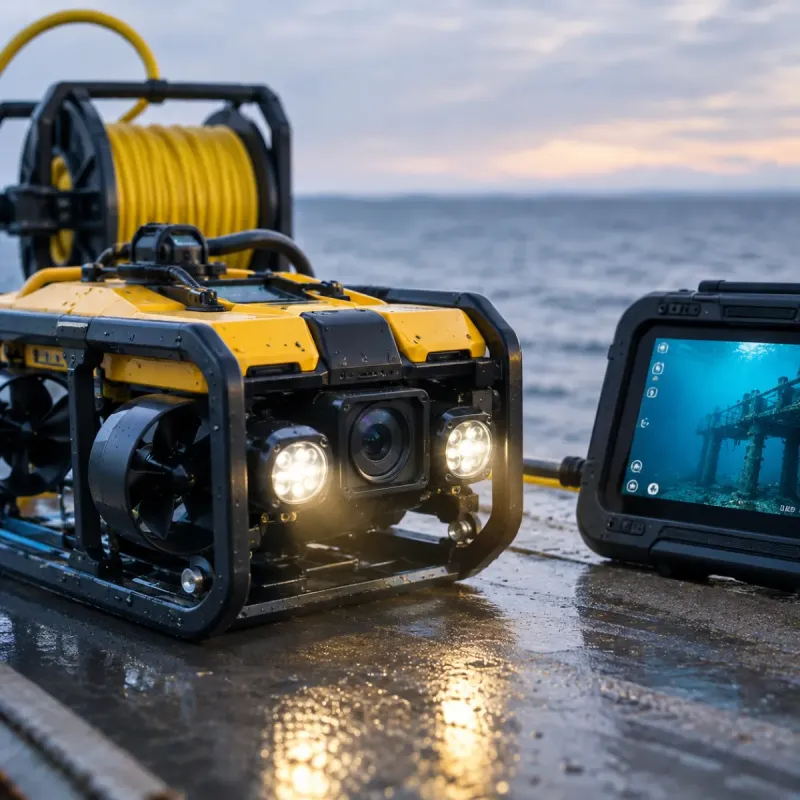
Underwater Drones Are Also Called ROVs
Type: Unmanned underwater vehicle
Underwater drones are commonly known as remotely operated vehicles (ROVs). They carry cameras, lights, and sensors to explore submerged environments and inspect underwater structures without requiring a diver to enter the water.
- Enables remote operation
- Captures underwater footage
- Monitors environmental conditions