

 20 November 2026
AI agents are changing how people and businesses use artificial intelligence by moving beyond simple questions and answers to performing multi-step tasks.
Using reasoning, memory, and external tools, these systems can plan activities, make decisions, and execute actions with varying levels of human supervision.
14 Key Things to Know About AI Agents
From AI Agents to Brain Chips: 17 Tech Trends Reshaping 2026
 Inside the List
14 Items

Businesses Can Use Agents Across Different Industries
Type: Enterprise AI
AI agents have applications in customer service, healthcare, finance, supply chains, and manufacturing. They can support information processing, workflow coordination, and repetitive activities across business operations.
- Supports customers
- Manages supply chains
- Optimizes industrial workflows

Security and Human Supervision Remain Important
Type: Governed AI systems
AI agents can introduce risks involving data privacy, incorrect decisions, and uncontrolled actions. Clear permissions, activity monitoring, and human approval help businesses maintain control over automated workflows.
- Enables human oversight
- Controls system access
- Monitors activity

General-Purpose Agents Can Handle Different Activities
Type: General-purpose AI
Some AI agents connect to tools for email, web browsing, research, coding, and document creation. Do Anything, for example, offers an agent that coordinates multiple activities across connected applications.
- Manages emails
- Conducts web research
- Creates documents

AI Coding Agents Can Develop Software
Type: Software development AI
AI coding agents can examine codebases, create development plans, modify files, and execute commands. Platforms such as Qoder provide agent modes for handling multi-step programming and software development tasks.
- Generates code
- Fixes bugs
- Edits files
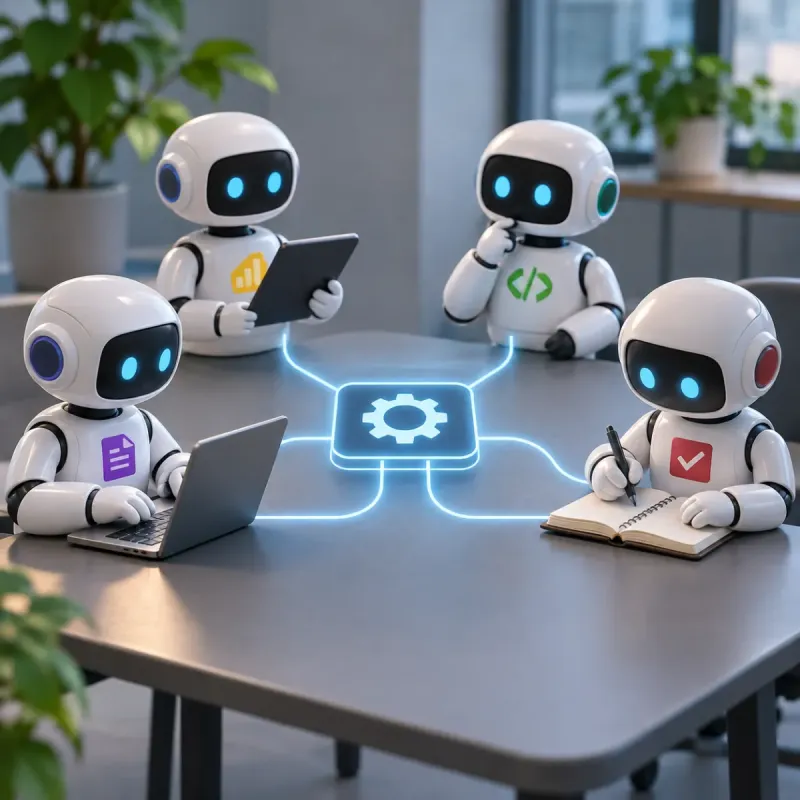
Multiple AI Agents Can Work Together
Type: Multi-agent system
Multi-agent systems combine specialized AI agents to complete complex tasks. Each agent can handle a particular responsibility, while an orchestration system coordinates their activities and information exchange.
- Enables agent collaboration
- Delegates tasks
- Coordinates workflows

Different Types of AI Agents Have Different Capabilities
Type: Agent architectures
AI agents include simple reflex, model-based reflex, goal-based, utility-based, and learning agents. Each type uses a different approach to processing information, making decisions, and responding to its environment.
- Responds to immediate inputs
- Pursues defined goals
- Learns from experience

Learning Agents Improve Through Experience
Type: Learning-based AI
Learning agents use feedback and new experiences to update their knowledge and improve future decisions. Their ability to adapt can help them handle unfamiliar situations and changing requirements.
- Analyzes feedback
- Updates knowledge
- Adapts behavior

Perception Helps Them Understand Their Environment
Type: Perception-based AI
AI agents collect information through user inputs, databases, APIs, and other connected systems. This ability helps them understand their operating environment and make decisions based on available information.
- Processes inputs
- Collects data
- Recognizes context

Memory Helps Maintain Context
Type: Memory-enabled AI
Memory allows AI agents to retain information from previous interactions and recall relevant details during future tasks. Depending on their design, they can use short-term context and longer-term stored knowledge.
- Maintains short-term memory
- Stores long-term information
- Understands context
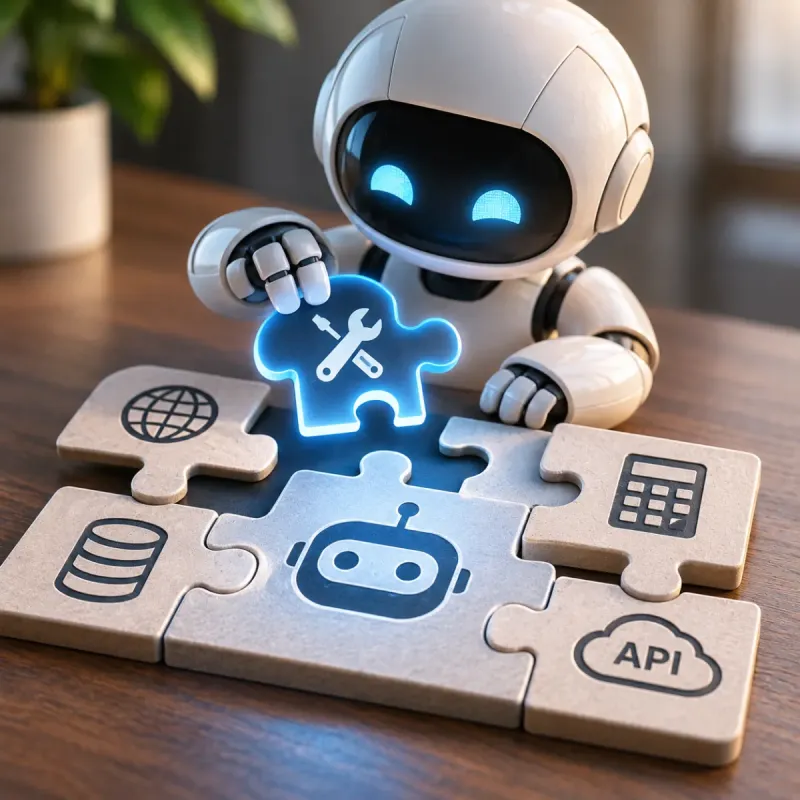
They Use External Tools and APIs
Type: Tool-enabled AI
AI agents extend their capabilities by connecting to external tools, databases, websites, and APIs. These integrations allow them to retrieve information, perform calculations, and interact with other software systems.
- Connects to APIs
- Retrieves data
- Interacts with systems

Reasoning Helps Them Make Decisions
Type: Cognitive AI
AI agents use reasoning to evaluate information, compare possible actions, and select suitable responses. They can also reassess their plans when tool results or changing conditions require a different approach.
- Analyzes information
- Selects actions
- Adjusts plans

Goal Setting Guides Their Actions
Type: Goal-based intelligence
AI agents begin with objectives provided by users or other systems. They break complex requests into smaller tasks, establish priorities, and organize the steps needed to reach the desired outcome.
- Defines goals
- Breaks down tasks
- Plans execution steps

They Are Different From Traditional Chatbots
Type: Agentic AI
Traditional chatbots mainly answer user questions, while AI agents can plan tasks, use external tools, and take action. They can also adjust their approach when new information becomes available.
- Performs autonomous actions
- Integrates with tools
- Adapts responses
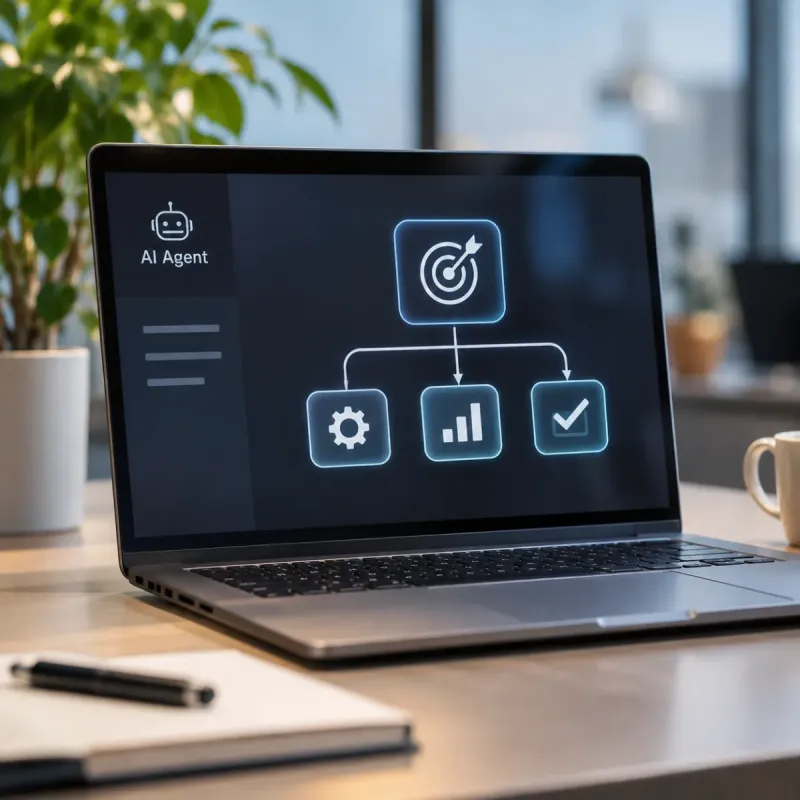
AI Agents Can Perform Tasks Autonomously
Type: Autonomous AI system
AI agents are software systems designed to achieve specific goals by creating workflows and using available tools. Unlike basic AI models, they can make decisions, solve problems, and perform actions to complete tasks.
- Executes tasks
- Makes decisions
- Creates workflows