From AI Agents to Brain Chips: 17 Tech Trends Reshaping 2026
This article breaks down the 17 most important technology trends shaping 2026, examining how each one is moving from concept to mainstream adoption and what it means for the years ahead.
1. The Rise of Brain-Computer Interfaces (BCIs)
Brain-computer interfaces are moving from laboratory experiments into real-world clinical use. In early 2024, Neuralink confirmed that it had implanted its first chip in a human, enabling the recipient to control a computer cursor through thought alone. Companies such as Synchron and Precision Neuroscience are developing less invasive alternatives aimed at restoring mobility and communication for individuals with paralysis.
In clinical trials, stroke patients have used BCIs to regain control of limbs and send messages directly through thought. While the technology remains in its early stages, the implications for medicine, accessibility, and human-computer interaction are no longer theoretical.
2. Generative AI Becomes the Default
By 2026, most of the content people read, watch, or listen to will have been touched—if not entirely created—by generative AI. OpenAI, Google, and Anthropic continue to push the limits of large multimodal models such as GPT-5 and Gemini Ultra, which can process text, images, video, and audio within a single conversation.
Adobe Firefly and Runway ML are powering commercial video editing pipelines, while ElevenLabs allows users to clone voices and generate speech in seconds. Generative AI is no longer a novelty; it has become a standard part of how articles, podcasts, films, and marketing materials are produced.
3. AI Agents That Work Autonomously
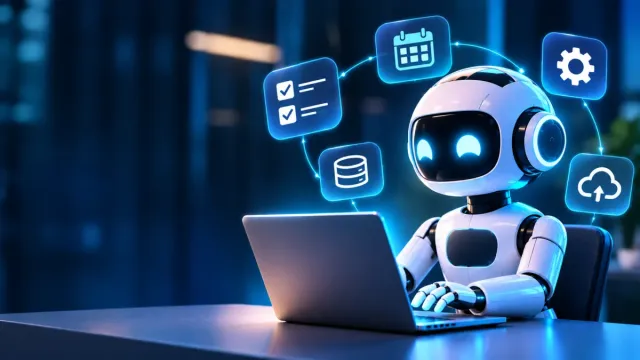
AI agents have evolved beyond simple prompt-response interactions and are now capable of handling complete tasks from start to finish. Devin, an AI software engineer demonstrated by Cognition Labs in 2024, can build full websites, debug code, and deploy projects autonomously. Tools like Auto-GPT chain tasks together to plan itineraries, book reservations, and deliver summaries without human oversight at each step.
Across enterprises, these agents are being trained to onboard employees, manage data, and respond to clients. The shift is significant: instead of chatting with AI, users are beginning to delegate entire workflows to it.
4. Humanoid Robots Go Commercial
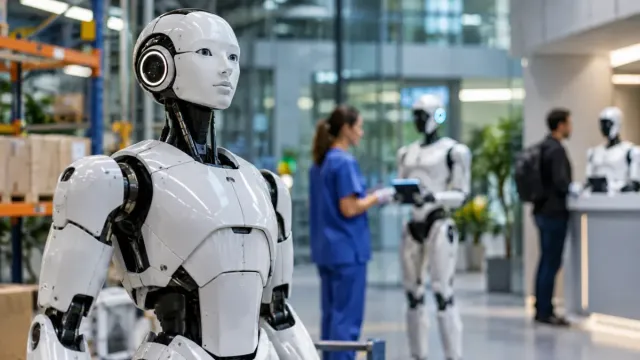
Humanoid robots have crossed the threshold from walking demonstrations to actual workplace deployment. In 2024, Figure AI signed a partnership with BMW to bring its bipedal robot, Figure 01, into automotive manufacturing. Agility Robotics has deployed its Digit robot in logistics environments, and Tesla's Optimus is now performing basic factory tasks such as folding laundry and sorting parts.
These machines can walk, lift, and execute repetitive tasks with enough dexterity to be commercially viable. Equally important, production costs are falling—some models are projected to sell for less than the price of a small car by 2026.
5. AI-Powered Home Assistants
Smart speakers are evolving into mobile, intelligent home robots. Amazon's Astro, first introduced in 2021, is quietly gaining new capabilities and is already being used for home patrol, elder care, and voice-command deliveries inside homes and offices. Apple is reportedly developing its own tabletop robot—internally referred to as J595—designed to swivel and track users during FaceTime calls.
In China, humanoid showroom assistants are already greeting customers and distributing brochures. These devices are moving well beyond voice-only interaction by adding screens, wheels, arms, and in some cases, facial expressions.
6. Edge AI Chips Everywhere
The next generation of consumer devices will ship with dedicated AI chips built directly into the hardware. Edge AI delivers real-time intelligence on the device itself, eliminating cloud latency. Apple's A17 Pro and M4 chips already handle language translation, image editing, and voice recognition instantly. Qualcomm's Snapdragon X Elite is bringing similar performance to Windows laptops, and Intel's Meteor Lake chips include Neural Processing Units (NPUs) designed to run AI workloads with minimal power consumption.
This shift effectively transforms every phone, laptop, and tablet into its own self-contained AI engine.
7. AI in Healthcare Gets Personal
Artificial intelligence is reshaping diagnostics and treatment planning across the medical field. In 2024, Google DeepMind announced an AI model capable of detecting 21 different diseases from retinal scans, often earlier than human clinicians. In the United States, hospitals are increasingly using AI to analyze patient data and flag signs of sepsis or cardiac risk hours before symptoms emerge.
AI is also entering oncology, helping personalize chemotherapy regimens based on a patient's genetic profile—an approach that could significantly improve treatment outcomes.
8. AR Glasses Begin to Replace Screens
Augmented reality glasses have been promised for over a decade, but they are finally approaching genuine usefulness. Apple's Vision Pro set the stage, and companies including Meta, XReal, and Samsung are now developing lightweight glasses with real-time overlays. Features such as live captions, navigation arrows, and translated subtitles appear directly in the user's field of view.
By 2026, pulling out a smartphone to read a text or check directions may become optional. With AI providing contextual awareness, these glasses are expected to deliver information before users even ask for it.
9. Quantum Computing Nears Practical Utility
Quantum computing has long sounded like science fiction, but 2026 may be the year it begins delivering measurable value in real workflows. IBM reached 1,000 qubits in 2023 and plans to debut a 1,386-qubit chip, while also developing error-corrected systems capable of meaningful tasks such as molecular simulation for drug discovery and supply chain optimization.
Google, IonQ, and Rigetti are competing alongside IBM, and the pace of breakthroughs is accelerating. While quantum is still in its early commercial phase, the demonstrations are no longer purely theoretical.
10. Wearables That Know You Better Than You Do
Wearables have moved well beyond step counters and are becoming round-the-clock health monitors. Devices from Oura and Whoop provide athletes and everyday users with recovery scores, sleep cycle analysis, and stress tracking. Newer models add non-invasive blood sugar monitoring, and companies such as Movano are developing continuous blood pressure wearables.
Some smart rings can now detect changes in skin temperature before users feel ill. Crucially, the data these devices collect feeds into AI systems that provide personalized recommendations rather than raw numbers alone.
11. AI-Native Operating Systems
Artificial intelligence is being embedded directly into operating systems rather than confined to standalone applications. Microsoft is testing Copilot inside Windows 11, allowing users to ask their desktop to summarize files, rewrite emails, or generate images without switching applications. Apple is expected to announce additional AI-native features in macOS and iOS, running on-device through its neural engines.
The result is an entirely new computing paradigm in which the operating system itself acts as a thinking partner.
12. AI-Enhanced Robotics in Retail and Logistics
The retail and logistics sectors are rapidly adopting AI-powered robotics. Agility Robotics began deploying its Digit robot at Amazon warehouses in 2024. Walmart now uses autonomous shelf scanners in over a thousand stores, and college campuses across North America have become familiar with Starship and Kiwi delivery bots transporting food orders.
These robots are not remotely operated. They rely on AI-driven computer vision and real-time mapping, and they are improving rapidly. With persistent labor shortages in warehousing and last-mile delivery, this category is positioned for sustained growth.
13. Workflow Automation at Scale
Enterprise platforms such as ServiceNow, UiPath, and Zapier are enabling companies to automate end-to-end workflows—from hiring to invoicing—without manual intervention. ServiceNow has reported up to a 65% reduction in repetitive work at large organizations after implementing automation. Amazon's warehouses use predictive analytics to coordinate human workers and robots in real time.
The shift goes beyond automating individual tasks; entire business processes are now running autonomously.
14. Privacy-First AI and Local Processing
Privacy concerns are pushing AI back to the device. Apple's latest chips handle AI workloads locally, eliminating the need to upload data to the cloud. Meta's Llama 3 models can also run on local hardware, and Intel's Meteor Lake chips ship with built-in AI accelerators designed for on-device processing.
With regulatory pressure mounting from Europe's GDPR and California's CCPA, the industry is moving toward systems that keep user data on the device rather than transmitting it to remote servers.
15. Smart Infrastructure and IoT 2.0
The number of connected devices worldwide is projected to exceed 30 billion by 2026, ushering in a new era of smart infrastructure. Singapore already operates traffic lights that adjust dynamically based on congestion. Warehouses are using AWS and Verizon platforms to track inventory in real time without human input. In South Korea, smart poles handle everything from air quality monitoring to phone charging.
This evolution—often called IoT 2.0—represents a shift from simple connected devices to fully responsive urban systems.
16. AI-Crafted Experiences in Extended Reality
Virtual and extended reality (XR) are becoming intelligent environments rather than static experiences. Nvidia is developing real-time AI characters capable of holding full conversations. Meta is investing billions in avatars that not only look realistic but also react and improvise. At CES, virtual retail spaces have been demonstrated that adapt their layouts based on how users move through them.
By 2026, XR environments are expected to generate themselves dynamically based on user behavior, opening new possibilities for entertainment, training, and commerce.
17. Low-Code and No-Code Development
Building applications is no longer the exclusive domain of professional engineers. By 2026, more than 75% of new applications are expected to be built using low-code or no-code platforms such as Glide, Bubble, and Microsoft Power Apps. These tools allow users to drag, drop, and publish functional software without writing traditional code.
OpenAI now allows users to create custom GPTs with zero coding, and Google's AppSheet enables businesses to automate full workflows without hiring developers. This democratization of software creation is reshaping how organizations build digital tools.
 Alex Mandela 26 May 2026