
 20 November 2026
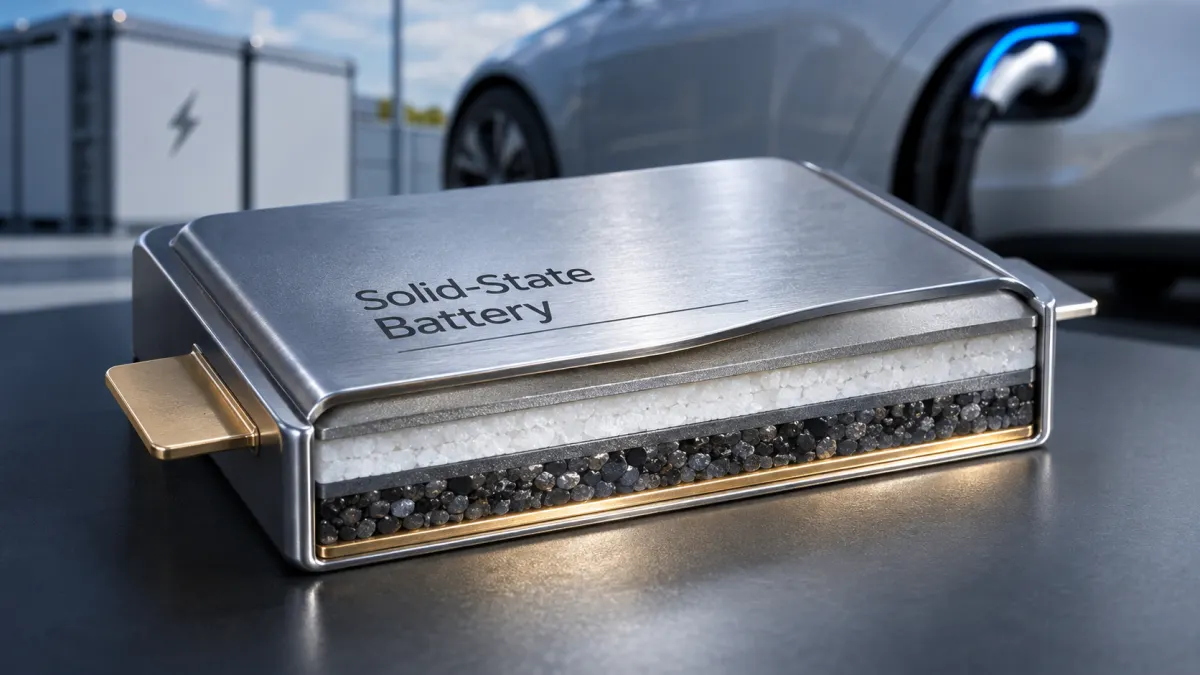
Solid-state batteries are an emerging battery technology that replaces the liquid electrolyte found in conventional lithium-ion cells with a solid material.
Their potential benefits include higher energy density, improved safety, and new possibilities for electric vehicles and industrial energy storage.
15 Key Things to Know About Solid-State Batteries
Read More


 Inside the List
15 Items

Large-Scale Projects Are Moving the Technology Forward
Main Purpose: Expanding solid-state battery manufacturing
ProLogium selected Dunkirk in France for a planned European solid-state battery factory. The announced project represents a major industrial investment and targets applications including premium electric vehicles, solar energy, and industry.
- Advances ProLogium projects
- Expands European production
- Supports industrial applications

Electric Vehicles Are a Major Potential Application
Main Purpose: Powering electric vehicles
Higher energy density could allow electric vehicles to use smaller or lighter battery packs while maintaining useful driving range. This makes solid-state technology an important area of research for future electric mobility.
- Supports EV applications
- Extends driving range
- Reduces battery weight
High Costs Limit Wider Adoption
Main Purpose: Developing commercial energy storage
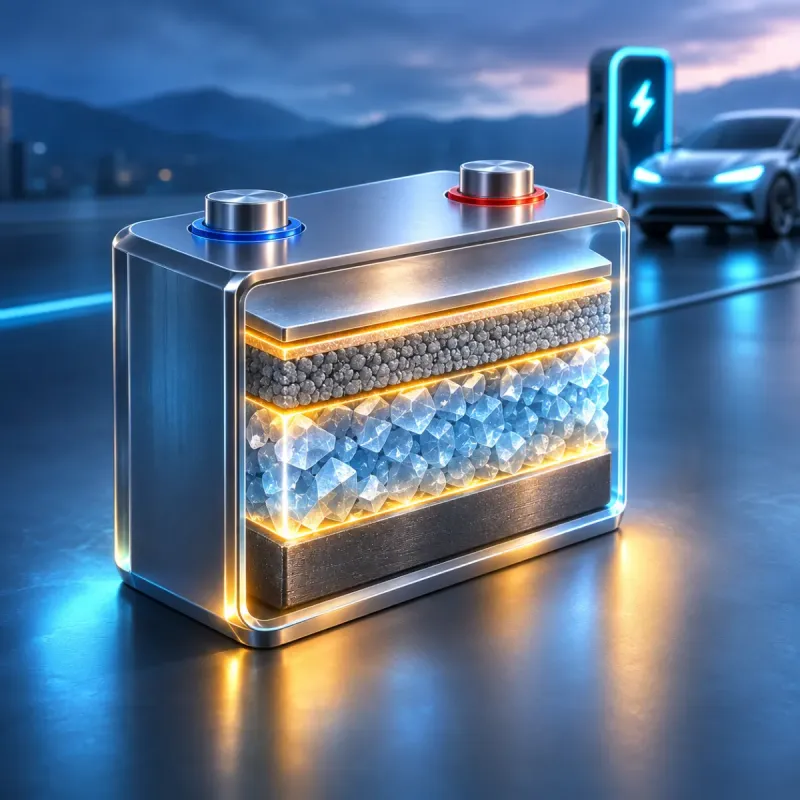
Solid-state batteries currently face high material and manufacturing costs compared with established, mass-produced lithium-ion cells. Scaling production and improving manufacturing processes will be important for making them more commercially competitive.
- Involves high production costs
- Requires costly materials
- Faces scaling challenges
Battery Lifespan Still Needs Improvement
Main Purpose: Maintaining long-term performance
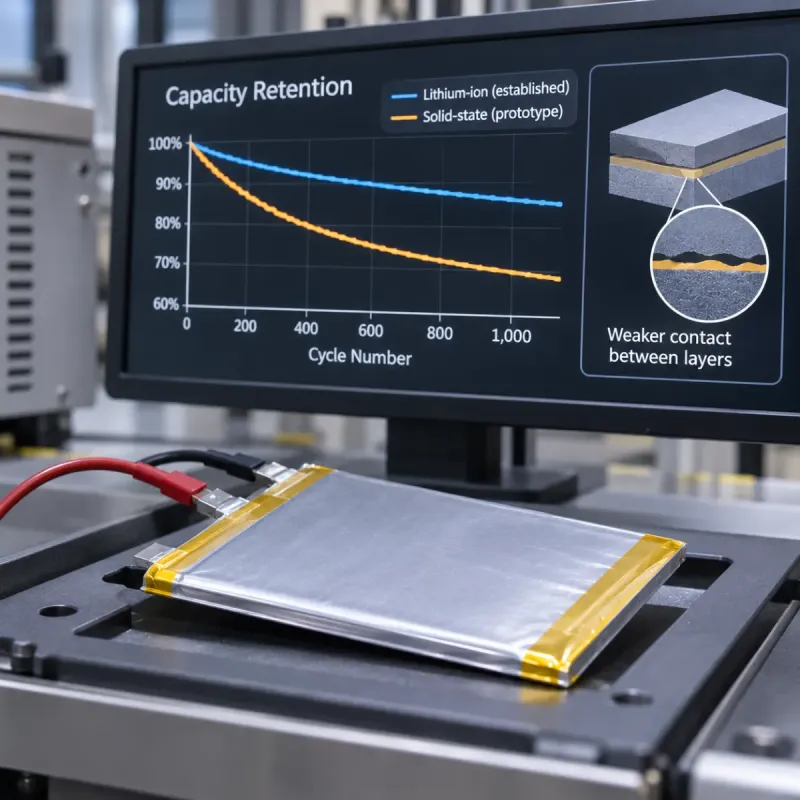
Some solid-state battery prototypes have shorter lifecycles than established lithium-ion technologies. Maintaining strong contact between the cell's layers is difficult, and losing that contact can reduce capacity and performance.
- Supports repeated charge cycles
- Retains battery capacity
- Maintains layer contact

Some Solid Electrolytes Need Higher Temperatures
Main Purpose: Supporting ion movement
Certain solid electrolytes conduct ions effectively only at relatively high temperatures. This creates a challenge for electric vehicles and other applications that need batteries to perform reliably under different operating conditions.
- Depends on heat
- Enables ion conductivity
- Requires temperature control

Cell Stability Remains a Major Challenge
Main Purpose: Maintaining cell stability
Lithium-metal layers expand during charging and contract during discharging. These repeated changes can affect the contact between internal layers, making it difficult to maintain a stable cell structure and consistent performance.
- Accommodates volume changes
- Maintains layer contact
- Ensures structural stability

Manufacturing Could Become More Efficient
Main Purpose: Improving production efficiency
Removing the liquid-electrolyte filling stage could simplify parts of battery production. However, large-scale production has not yet proven the expected savings in manufacturing time, materials, and energy.
- Simplifies filling processes
- Reduces material use
- Supports mass production
Faster Charging Is a Potential Advantage
Main Purpose: Reducing charging time
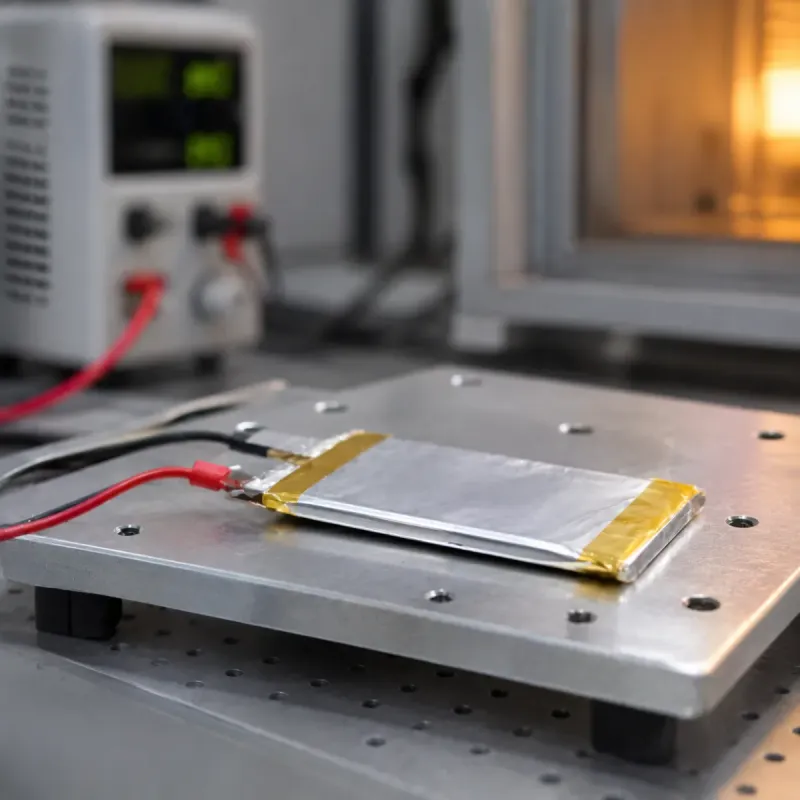
Solid-state batteries may support faster charging because some solid electrolytes can perform well at elevated temperatures. However, very rapid charging in prototypes can involve trade-offs, and commercial performance remains to be established.
- Enables faster charging
- Improves thermal performance
- Increases charging efficiency
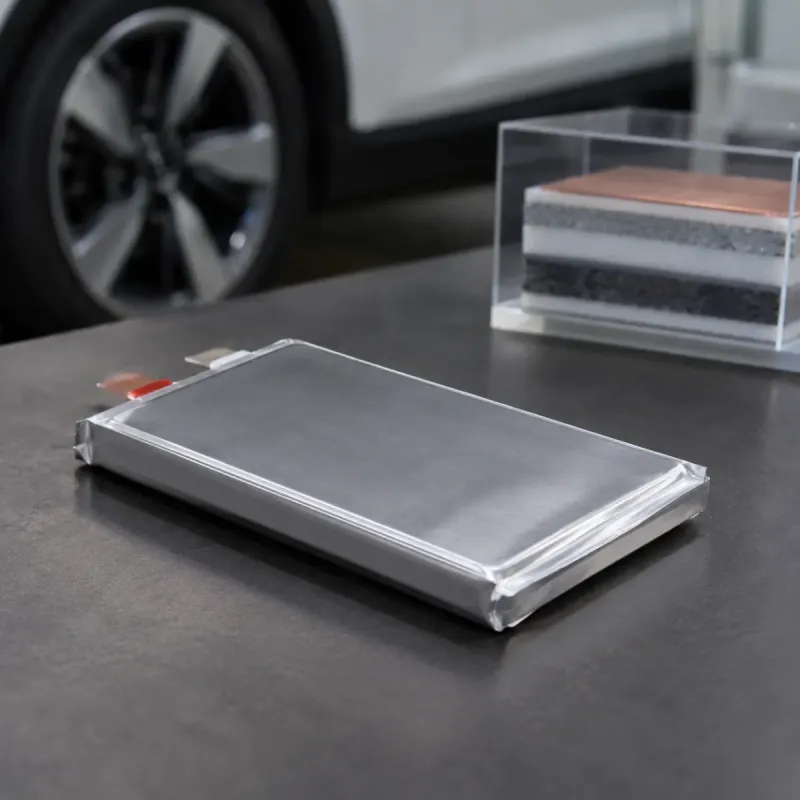
They May Achieve Higher Energy Density
Main Purpose: Increasing energy storage
Using a lithium-metal anode and removing bulky components could let solid-state batteries store more energy in a smaller space. This may lead to lighter battery packs and longer driving ranges.
- Increases energy density
- Enables compact designs
- Reduces overall weight

Solid-State Batteries May Offer Improved Safety
Main Purpose: Improving battery safety
Replacing a volatile liquid electrolyte with a solid material may reduce certain fire risks. Some solid separators also provide stronger physical separation between electrodes, reducing the likelihood of internal short circuits.
- Eliminates liquid electrolytes
- Improves heat resistance
- Prevents short circuits
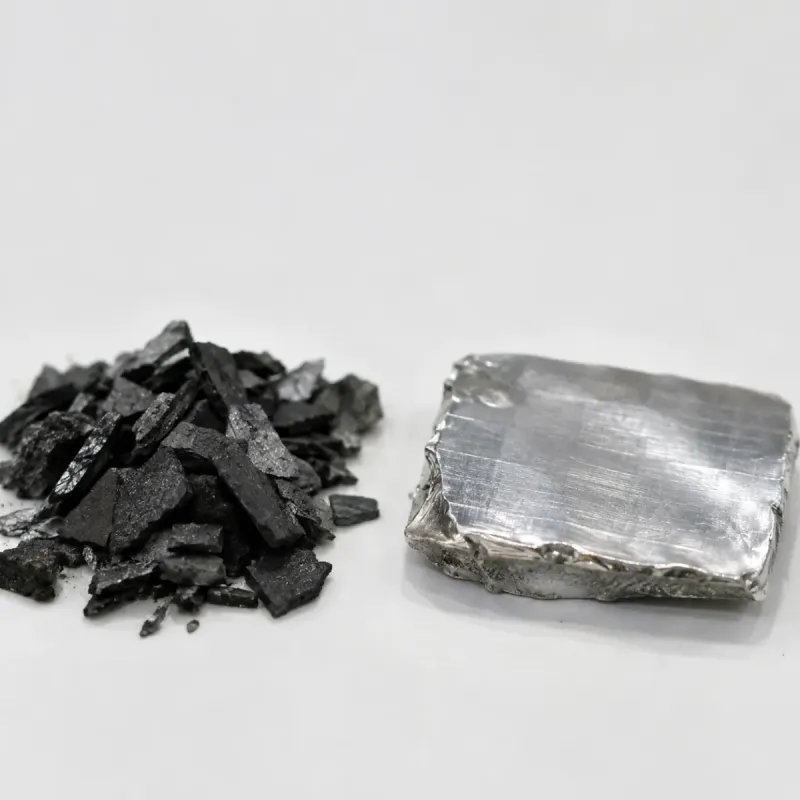
Some Designs Use a Lithium-Metal Anode
Main Purpose: Increasing energy density
Solid-state battery designs can use pure lithium metal at the anode instead of the graphite structure common in conventional lithium-ion cells. Removing bulky graphite can reduce the anode's volume and weight.
- Uses pure lithium
- Reduces battery volume
- Lowers overall weight

Lithium Ions Move Between Electrodes During Charging
Main Purpose: Charging and discharging
During charging, lithium ions travel from the cathode through the solid separator and form a lithium layer at the anode's electrical contact. Their movement reverses during battery discharge.
- Enables ion movement
- Supports lithium deposition
- Transfers energy

The Solid Separator Has Two Important Roles
Main Purpose: Ion transport and separation
In many designs, the solid separator conducts lithium ions while keeping the positive and negative electrodes physically apart. It therefore acts as both an electrolyte and an insulating barrier inside the cell.
- Conducts ions
- Separates electrodes
- Provides electrical insulation
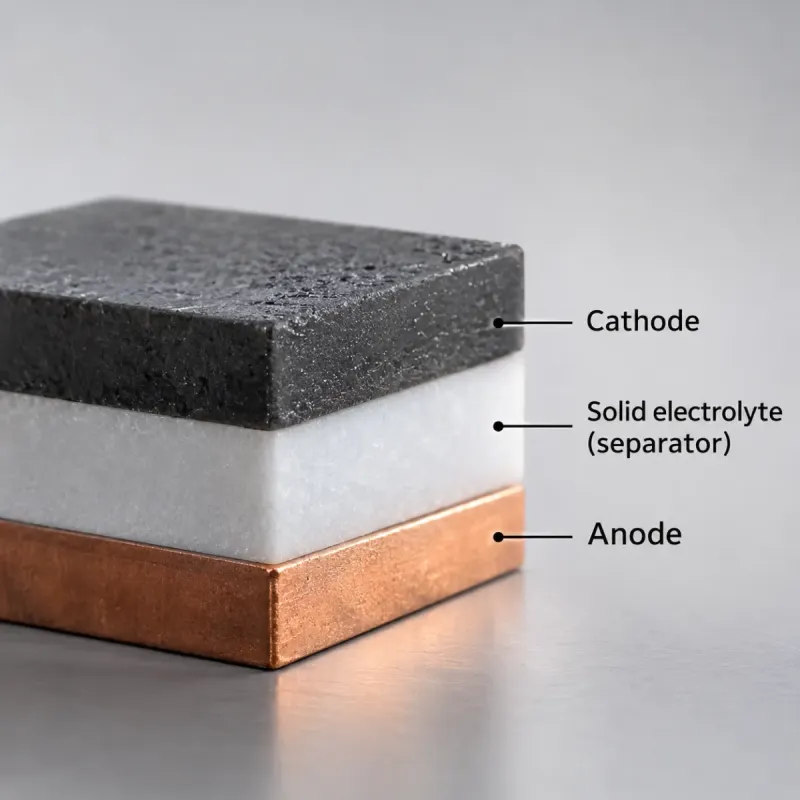
Their Internal Structure Differs From Lithium-Ion Batteries
Main Purpose: Electrochemical energy storage
A typical solid-state cell contains a cathode, an anode, and a solid separator that also functions as the electrolyte. This differs from conventional cells, which use a separate separator and liquid electrolyte.
- Contains cathode
- Includes anode
- Uses a solid separator
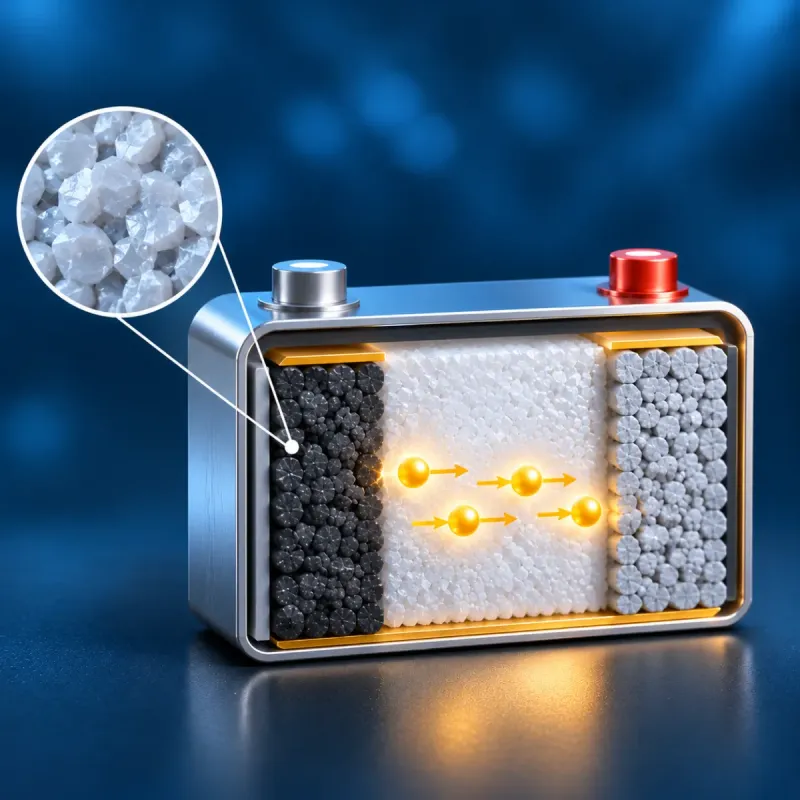
Solid-State Batteries Use a Solid Electrolyte
Main Purpose: Storing and releasing energy
Solid-state batteries use a solid electrolyte instead of the liquid electrolyte found in conventional lithium-ion batteries. This material allows lithium ions to move between the electrodes during charging and discharging.
- Uses solid electrolytes
- Enables lithium-ion movement
- Eliminates liquid electrolytes