


 24 November 2026
Read More

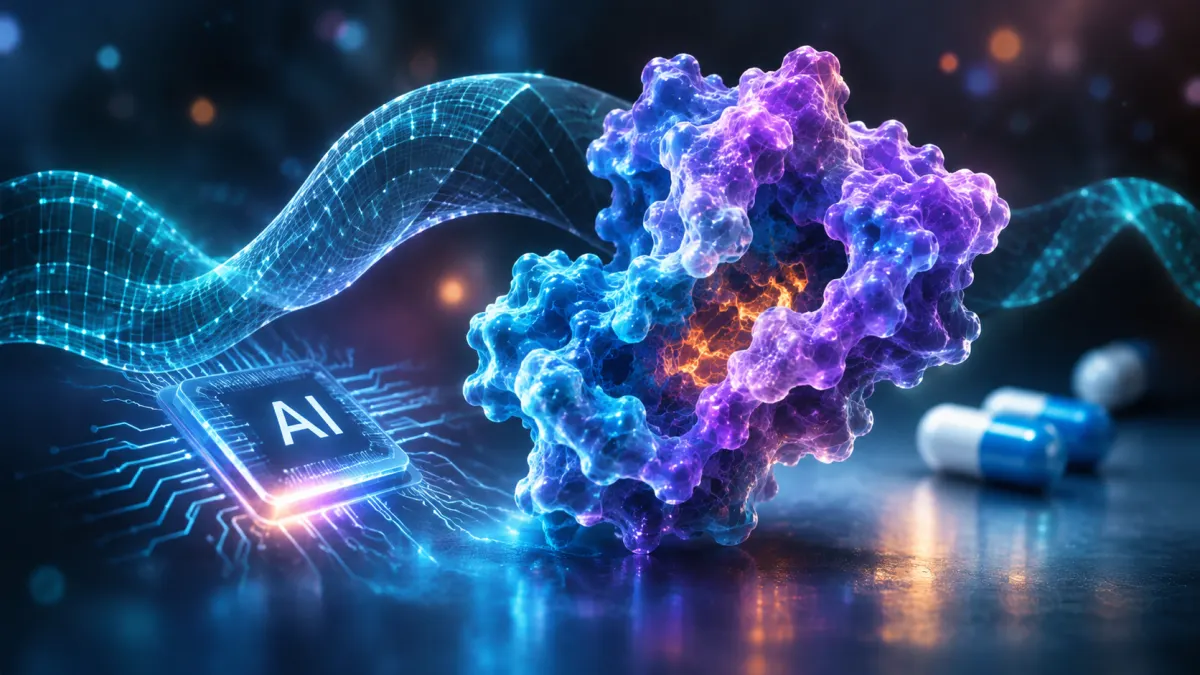
By using deep learning, protein language models, and large structural databases, researchers can predict complex three-dimensional protein shapes faster and investigate their roles in health, disease, and drug development.
11 Major Advances in AI Protein Structure Prediction
Read More

 Inside the List
11 Items

New AI Methods Address Protein Prediction Challenges
Type: Emerging research
Despite major improvements, AI models still face challenges with flexible protein regions, alternative conformations, binding-site accuracy, and proteins underrepresented in training datasets. Researchers are developing methods that combine AI with physical modeling and experimental evidence to improve reliability.
- Model refinement
- Physical modeling
- Experimental validation

AI Models Guide Experimental Structural Biology
Type: Structural biology
AI-generated structures can serve as starting points or references for experimental techniques such as X-ray crystallography, nuclear magnetic resonance, and cryo-electron microscopy. These predictions can help researchers interpret experimental results and investigate structures that are difficult to determine.
- Experimental guidance
- Model comparison
- Structural analysis

AI Supports Enzyme Engineering
Type: Protein engineering
Enzymes are proteins that accelerate chemical reactions in living systems. Predicted structures can help researchers understand their active sites and investigate possible modifications, supporting efforts to develop enzymes for biotechnology, industrial processes, and environmental applications.
- Active sites
- Protein modification
- Enzyme research
Protein Complex Prediction Reveals Molecular Relationships
Type: Complex modeling
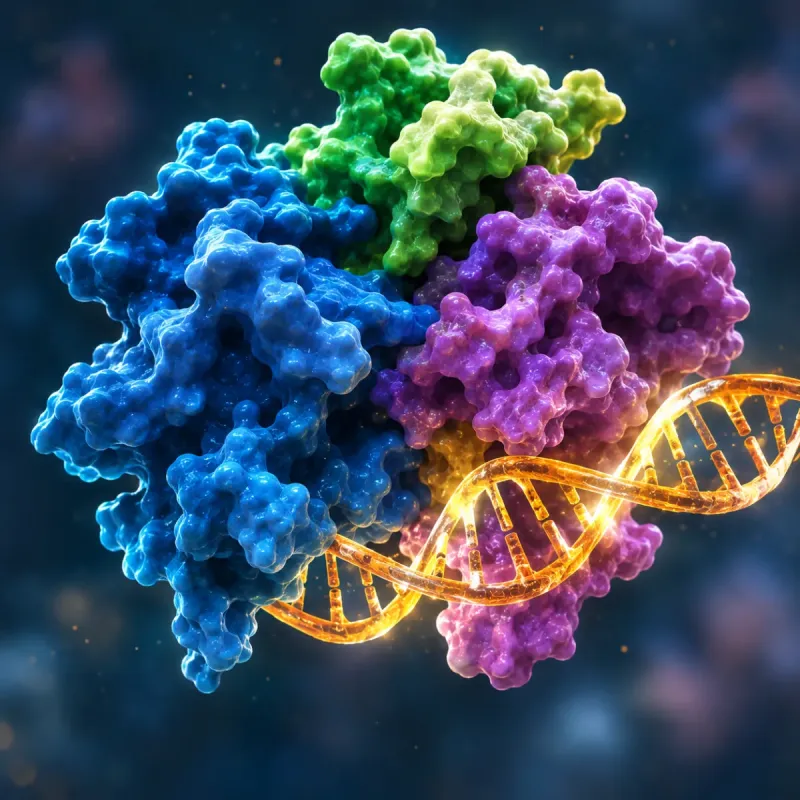
Many biological processes depend on interactions between multiple proteins or between proteins and other molecules. AI systems such as AlphaFold 3 and RoseTTAFold-based methods help researchers model these complexes and investigate how their components fit together.
- Protein interactions
- Complex structures
- Molecular analysis

AI Accelerates Drug Discovery
Type: Drug discovery
Understanding a protein's structure helps scientists assess its potential as a drug target. AI models provide structural information for studying binding sites and molecular interactions, helping researchers prioritize targets and guide subsequent drug discovery experiments.
- Binding sites
- Target analysis
- Drug research

Protein Structure Prediction Supports Disease Research
Type: Biomedical research
Changes in amino acid sequences can affect protein structure and function. AI-generated models help researchers examine how certain genetic variations may alter molecular shapes, supporting investigations into diseases associated with protein dysfunction and misfolding.
- Mutation analysis
- Protein misfolding
- Disease research

AI Expands Access to Protein Structures
Type: Structural database
The AlphaFold Protein Structure Database makes more than 200 million predicted protein structures publicly accessible. Researchers can use this resource to examine proteins from different organisms without determining every structure experimentally.
- Public access
- Large-scale datasets
- Predicted structures
ESMFold Uses Protein Language Models
Type: Protein language model
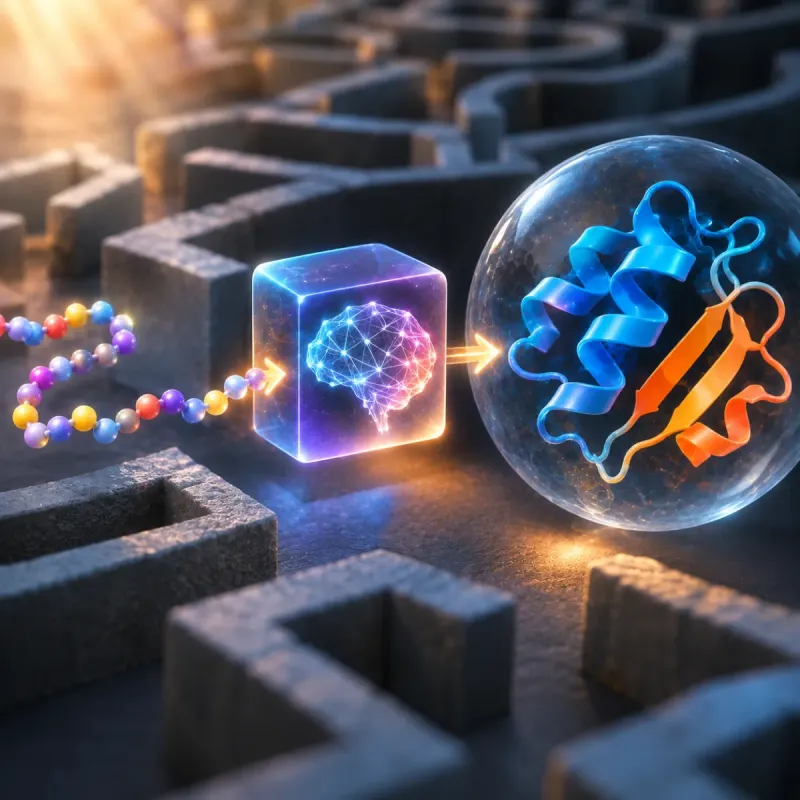
ESMFold applies large protein language models to predict structures directly from amino acid sequences. Unlike approaches that rely heavily on multiple sequence alignments, it can predict from a single sequence, offering advantages in speed and scalability. The related ESM-2 model provides the underlying protein language representations.
- Single sequences
- Protein language models
- Fast prediction
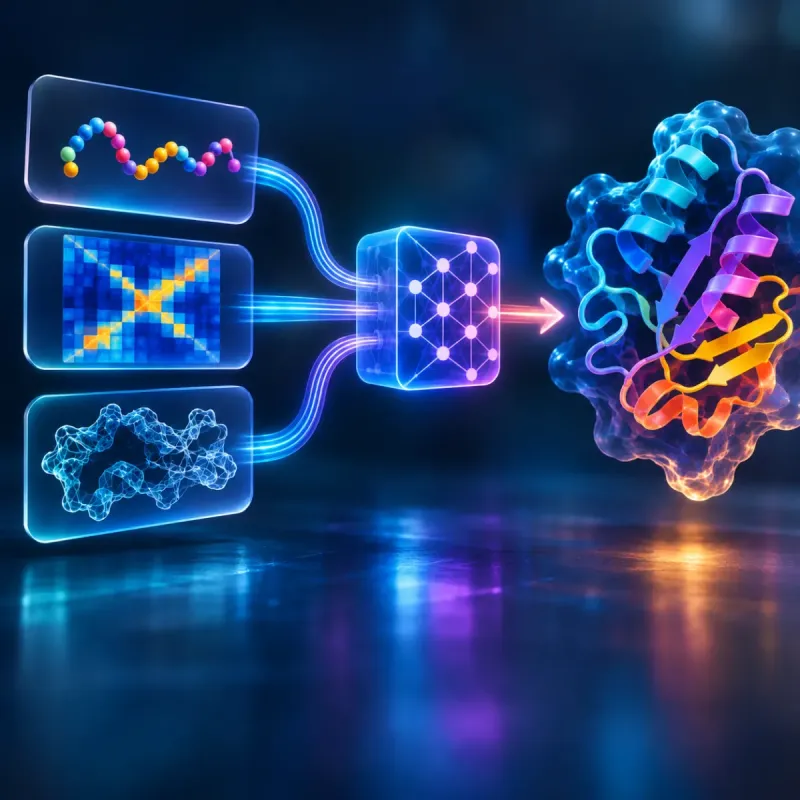
RoseTTAFold Connects Multiple Structural Dimensions
Type: Deep learning
RoseTTAFold uses a three-track neural network to process protein sequences, spatial relationships, and three-dimensional coordinates together. This approach lets information flow between representations, supporting predictions of protein structures and molecular complexes.
- Multi-track processing
- 3D coordinates
- Complex modeling
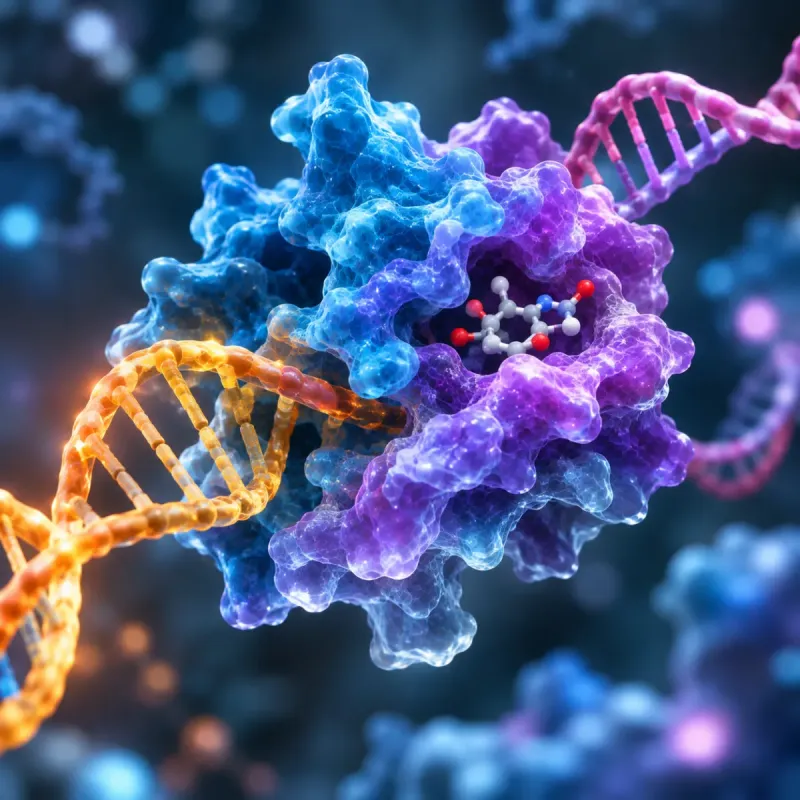
AlphaFold 3 Predicts Molecular Interactions
Type: Molecular prediction
AlphaFold 3 extends AI protein structure prediction beyond individual proteins. It can model how proteins interact with other biological molecules, including DNA, RNA, and small molecules, helping researchers investigate complex molecular systems.
- Molecular interactions
- Complex prediction
- Atomic modeling

AlphaFold Makes Protein Folding Faster
Type: Deep learning
AlphaFold transformed protein structure prediction by using deep learning to estimate how amino acid sequences fold into three-dimensional structures. A task that could previously take years of experimental work can now receive a highly informative computational prediction in minutes.
- 3D prediction
- Sequence analysis
- Faster modeling