

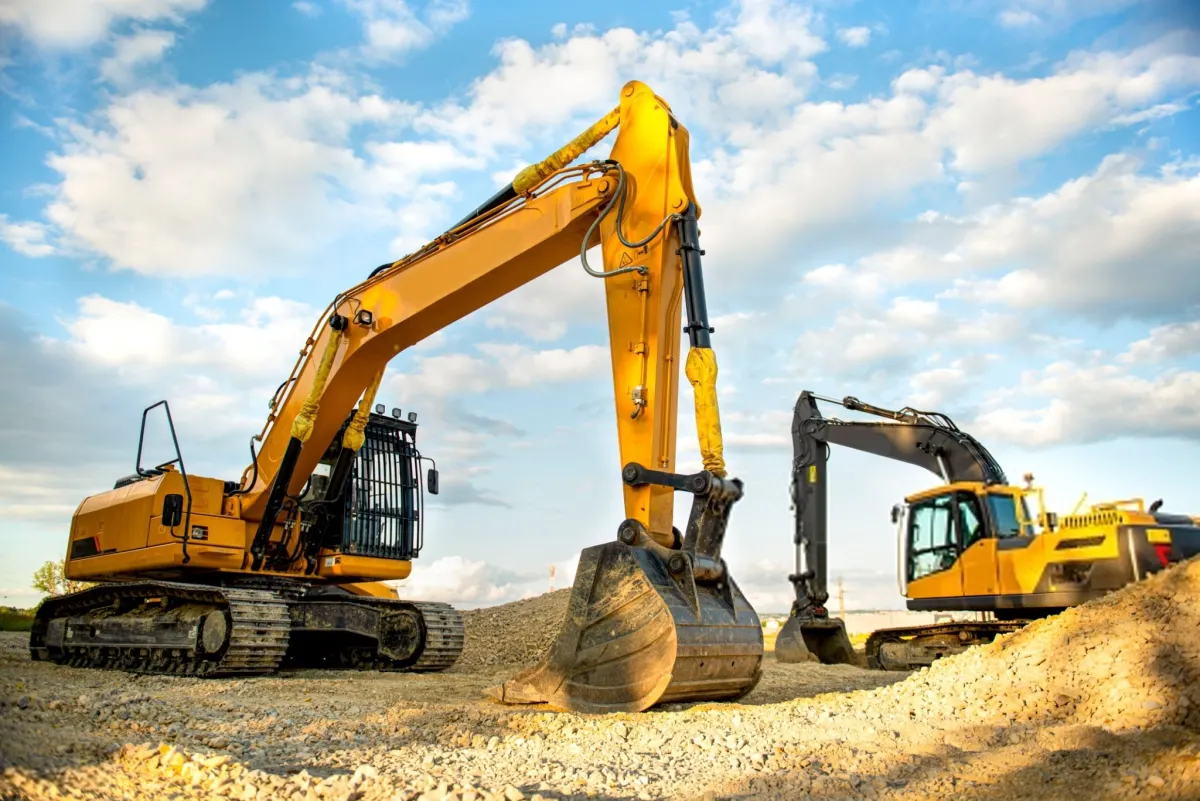
Excavators are the backbone of construction, mining, and road-building projects. These massive machines move huge volumes of soil, rock, and materials every day, powered by high-output engines designed for demanding work. One of the main concerns for project managers, contractors, and operators is how much fuel these machines consume over a specific period.
The question, “If an excavator runs all day, how much fuel does it use?” does not have a simple answer. The actual figure depends on many factors.
In this article, we take a deep, technical look at excavator fuel consumption during a standard 8-hour workday. Rather than giving a single, misleading number, we provide a practical framework that helps estimate fuel use for any specific model with a high level of accuracy. This analysis is based on international SAE standards (Society of Automotive Engineers) and technical data from major manufacturers such as Komatsu, Caterpillar, Volvo, and Hyundai.
Read More

Key factors that determine fuel consumption
To understand fuel usage, it is important to know which factors directly affect diesel consumption. These can be divided into two main groups: machine-related factors and operating conditions.
Operating weight and machine class
The most basic and important factor is the machine’s weight. Excavators are usually classified by operating weight. The heavier the machine, the more power it takes to move its components and overcome inertia.
- Mini excavators: Under 6 tons. Suitable for urban projects, trenching, and landscaping. Fuel consumption in this class is the lowest.
- Medium excavators: Between 6 and 30 tons. The most common class in construction and civil engineering projects.
- Large excavators: Between 30 and 100 tons. Used in large mines and heavy-duty projects.
- Ultra-large excavators: Over 100 tons. Mainly used in open-pit mines to load enormous haul trucks.
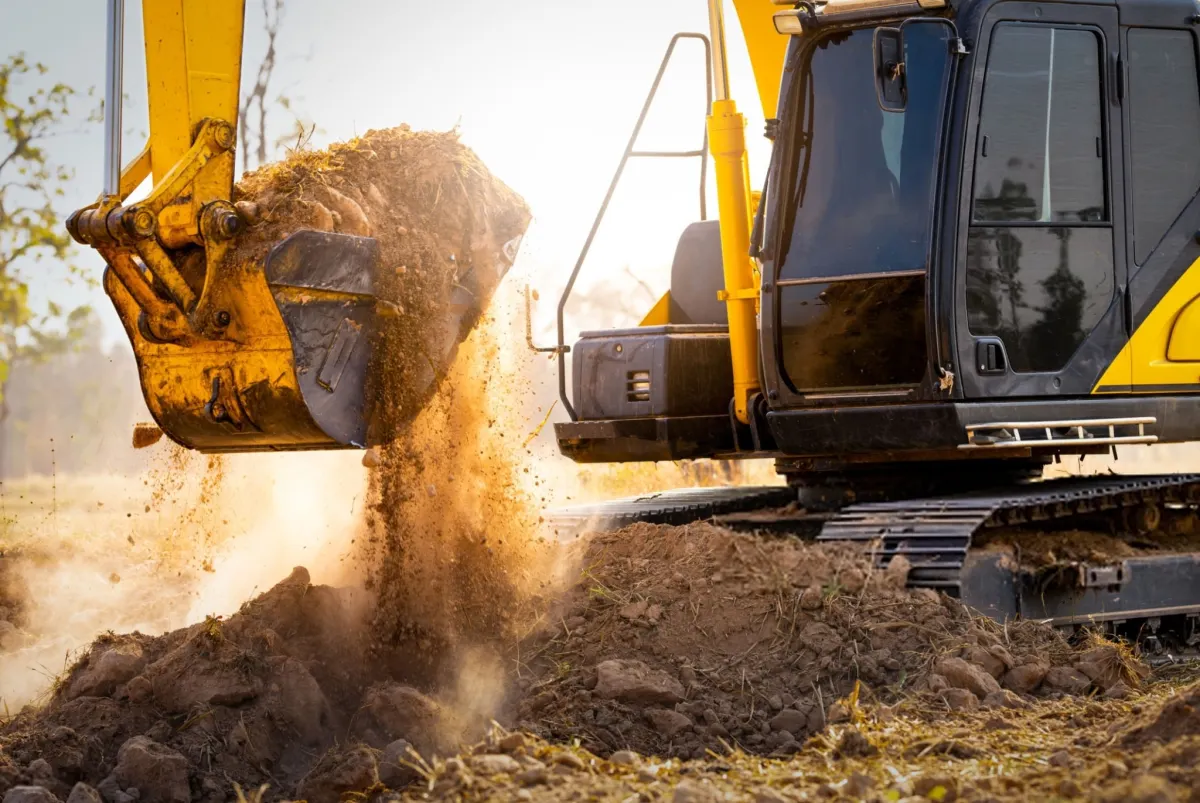
Engine power (horsepower)
Engine output has a direct relationship with fuel consumption. Modern excavator engines are typically turbocharged and equipped with Common Rail fuel injection technology, which offers better thermal efficiency than older engines. Power is measured in kilowatts (kW) or horsepower (HP).
Engine type and emissions standard
Emissions standards such as Tier 4 Final in the United States and Stage V in Europe have a direct impact on fuel use. Engines equipped with EGR (exhaust gas recirculation), SCR (selective catalytic reduction), and DPF (diesel particulate filter) systems may, in certain conditions, use more fuel. However, engine calibration has been optimized to minimize this increase.
According to the U.S. Department of Energy, Tier 4 Final engines generally consume about 3 to 5 percent more fuel than the previous generation, while reducing NOx and particulate emissions by up to 90 percent.
Working mode and engine settings
Modern excavators usually include several preset work modes:
- Eco Mode: Limits engine power and keeps RPM lower. Fuel consumption in this mode is 15 to 25 percent lower than in heavy mode.
- Standard Mode: Balances power and fuel efficiency. Suitable for most general tasks.
- Heavy Mode / Power Mode: Delivers maximum output to the operator. Fuel consumption is at its highest and is necessary for difficult work such as demolition or rock excavation.
- Auto Mode: The machine’s smart system automatically adjusts power according to the load.
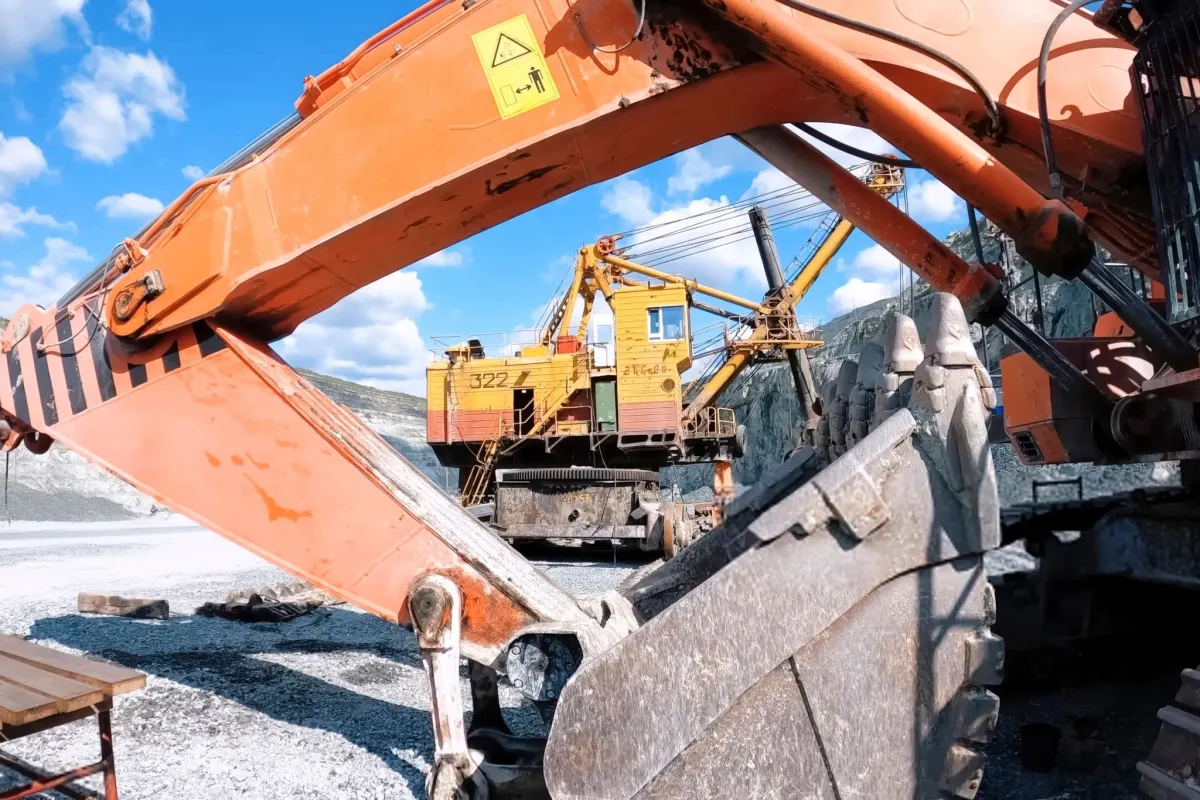
Load factor
This may be the most important factor in determining real-world fuel consumption. Load factor refers to the percentage of maximum engine power used during a work cycle. For example:
- Digging in soft soil: Load factor around 40 to 50 percent.
- Digging in hard clay: Load factor around 60 to 75 percent.
- Digging in soft rock: Load factor around 75 to 90 percent.
- Rehandling: Load factor around 30 to 40 percent.
- Idle time: Load factor around 0 to 10 percent, used only to keep the engine ready.
According to Caterpillar’s data, a Caterpillar 320 excavator (20 tons) consumes about 3 to 4 liters per hour while idling, but in heavy digging it can rise to 18 to 22 liters per hour.
Operator skill
A skilled operator can reduce fuel consumption by 10 to 15 percent through proper digging techniques, reduced idle time, and optimized use of working modes. Smooth, steady movements, using the boom and arm’s momentum during digging, and avoiding sudden acceleration or braking are among the most effective methods.
How to calculate fuel consumption in a workday
To estimate the fuel consumption of an excavator during an 8-hour shift, you can use the following formula, based on SAE J1349 standards and field data:
Daily fuel consumption (liters) = (fuel consumption rate in a given working mode (liters/hour) × load factor × 8 hours)
To determine the fuel consumption rate, two common methods are used:
Method 1: Using the manufacturer’s fuel consumption curve
The most reliable approach is to consult the machine’s manual or technical datasheet. Reputable manufacturers provide a fuel consumption curve based on engine RPM and torque. By knowing the RPM in the intended working mode, you can estimate instantaneous fuel use.
Method 2: Using a rule of thumb
For a quick estimate, engineers often use this rule of thumb: fuel consumption in liters per hour is roughly 0.5 to 0.7 times engine horsepower divided by 100.
Example: An excavator with a 150 HP engine working in heavy mode:
Approximate consumption = 0.6 × (150 / 100) = 0.9 liters per hour?
This number is incorrect. That is not the right formula for horsepower.
A more accurate formula for power measured in kilowatts is:
Fuel consumption (liters/hour) ≈ engine power (kW) × 0.2
(for full load)
Corrected example
A Komatsu PC200 excavator with an engine output of about 110 kW at full load:
Consumption = 110 × 0.2 = 22 liters per hour
Now calculate for an 8-hour workday, assuming 60 percent loading (digging in normal soil):
- Fuel use at full load: 22 liters/hour
- Fuel use at 60 percent load: 22 × 0.6 = 13.2 liters/hour
- Daily fuel use: 13.2 × 8 = 105.6 liters
This is a reasonable estimated figure for a 20-ton excavator on a normal workday.
Estimated fuel consumption table for popular models
To provide a clearer picture, the table below shows estimated fuel consumption, based on technical data and field reports, for several popular models across different classes over an 8-hour day, assuming average 70 percent loading.
| Machine model | Operating weight (tons) | Engine power (kW/HP) | Fuel consumption at full load (L/h) | Estimated daily fuel use (70% load) (L) |
|---|---|---|---|---|
| Caterpillar 305.5E2 | 5.5 | 38 / 51 | 7.5 | 42 |
| Hyundai R80-9A | 8.5 | 55 / 74 | 11 | 61.6 |
| Komatsu PC130-8 | 13 | 73 / 98 | 14.5 | 81.2 |
| Caterpillar 320 GC | 20 | 110 / 148 | 21 | 117.6 |
| Volvo EC220E | 22 | 129 / 173 | 25 | 140 |
| Komatsu PC360-11 | 34 | 202 / 271 | 40 | 224 |
| Hyundai R520LC-9S | 52 | 295 / 396 | 58 | 324.8 |
| Caterpillar 390F L | 95 | 433 / 581 | 85 | 476 |
Important note: The figures in the table are estimates and may vary by up to 20 percent depending on job type, machine settings, altitude, fuel quality, and operator skill.
Technologies that reduce fuel consumption in modern excavators
Manufacturers have introduced smart technologies to reduce fuel consumption as much as possible:
Intelligent Hydraulic Management (IHM)
This system uses pressure, flow, and temperature sensors to detect the real demand of the hydraulic system and supplies the main pump exactly as needed. This prevents wasted energy caused by excess oil flow.
Volvo refers to this system as ECO Mode, while Komatsu calls it Power Lever Mode.
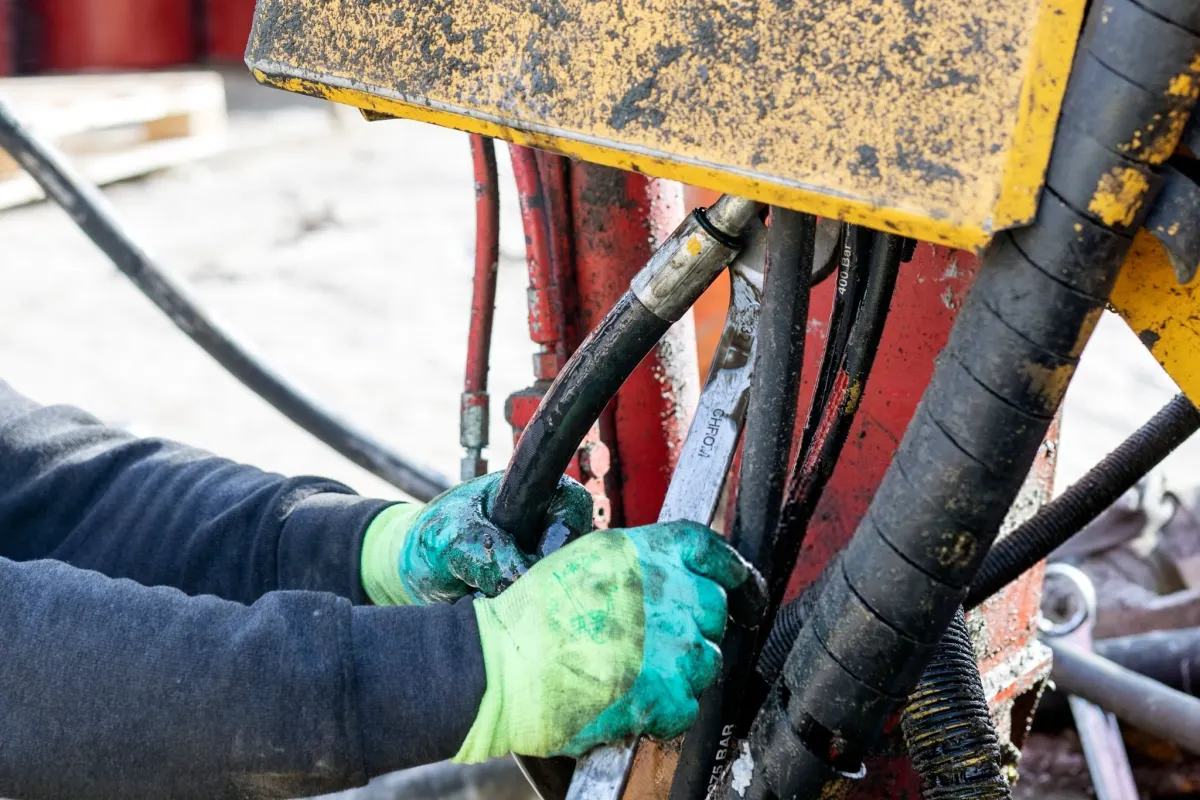
Automatic idle shutdown
This feature, now found on many modern excavators, automatically shuts off the engine if the machine remains idle for a set period, usually 3 to 5 minutes. This simple function can reduce fuel consumption over a shift by 5 to 8 percent.
According to Construction Equipment Magazine, this system can save about 1,500 liters per year for a 20-ton machine.
High-efficiency hydraulic pumps
The use of variable displacement axial piston pumps, controlled by the ECU, has increased overall hydraulic efficiency to as much as 90 percent. These pumps can precisely adjust flow and pressure according to the machine’s instant needs.
How environmental conditions affect fuel consumption
Environmental conditions play an important role in fuel use, but they are often overlooked:
- Altitude: At higher elevations, above 1,500 meters, air density decreases. Turbocharged diesel engines usually perform well up to around 2,500 meters, but beyond that, reduced oxygen lowers engine output and increases fuel use per unit of work. Some engines use auxiliary air compressors to compensate.
- Ambient temperature: Extremely cold air increases the viscosity of engine oil and hydraulic oil. This raises internal resistance and increases fuel consumption during the first minutes of operation. Multi-grade oils and engine preheating systems can reduce this effect. Extremely hot weather can also reduce cooling efficiency and raise hydraulic oil temperature, which lowers performance.
- Fuel quality: Diesel with low cetane rating or high sulfur content reduces combustion efficiency. Using Euro 4 or Euro 5 standard fuel with proper additives is essential.
Practical ways to reduce fuel consumption
Project managers and operators can improve fuel efficiency by following these tips:
- Careful work planning: Make sure materials are placed properly and travel paths are efficient so the machine does not waste time or fuel.
- Choosing the right bucket: Using a bucket with the right capacity and shape for the soil type reduces digging time.
- Adjusting tire pressure on wheeled excavators: Low tire pressure increases rolling resistance.
- Reducing idle time: Shut the engine off during long stops. Use the Idle Shutdown system.
- Regular servicing: Timely replacement of the air filter, fuel filter, engine oil, and hydraulic oil has a direct impact on efficiency. A clogged air filter can increase fuel consumption by up to 4 percent.
- Operator training: Investing in eco-driving and fuel-efficient operating techniques is one of the least expensive and most effective solutions.
If you want, I can also turn this into a polished AOL-style article format with a stronger headline, subheadline, meta description, and SEO tags.