
Every time a powerful gust of wind turns the blades of a modern wind turbine, an extraordinary chain of engineering begins. Within seconds, invisible wind energy is transformed into electricity capable of powering thousands of homes.
These towering machines have become one of the world's most recognizable renewable energy technologies. Standing taller than many 30-story buildings, modern wind turbines combine aerodynamics, mechanical engineering, advanced electronics, and smart automation into a single highly efficient power plant.
Here's exactly how wind turbines generate electricity—and why they're among the greatest engineering achievements of modern renewable energy.
Read More

Modern Wind Turbines Are Engineering Giants
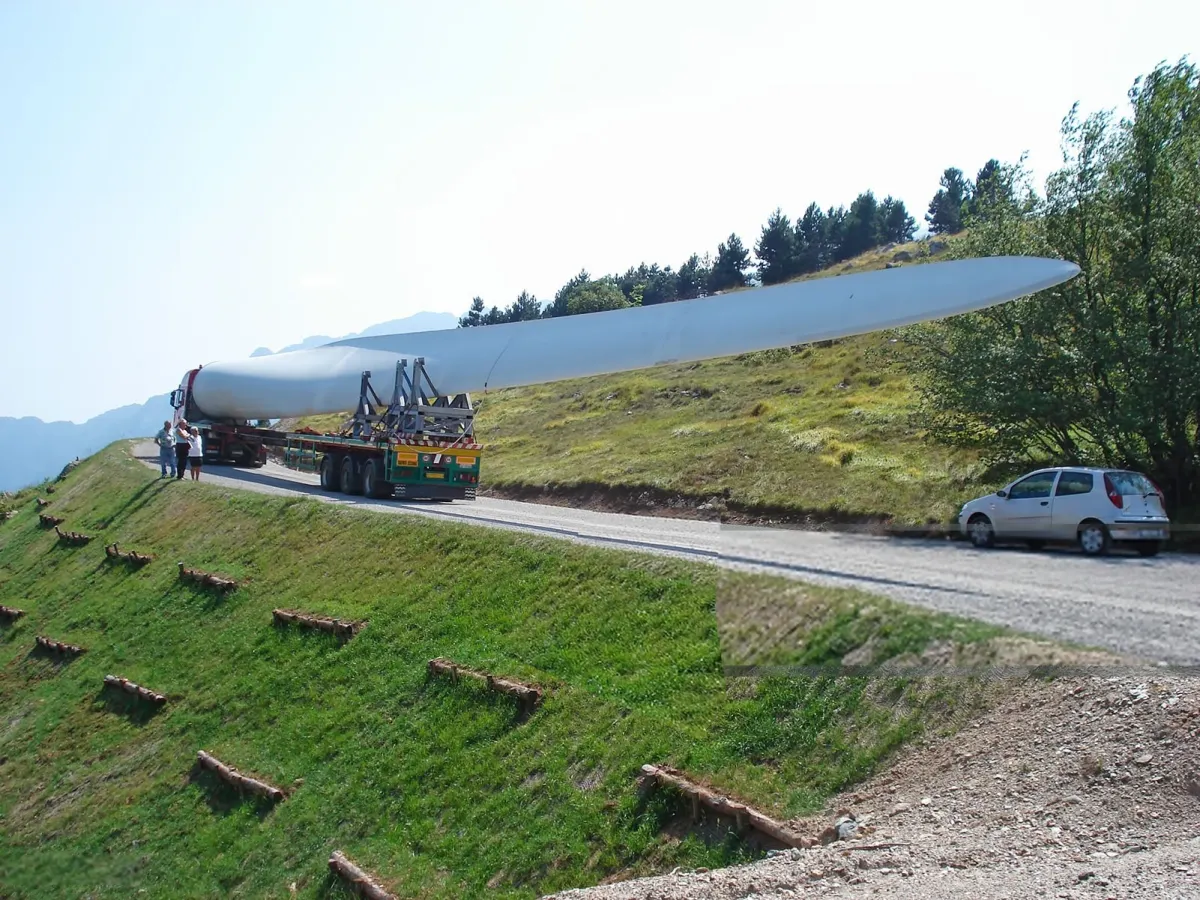
Modern utility-scale wind turbines are far larger than most people realize.A single blade can exceed 100 meters (328 feet) in length, with the entire rotor sweeping an area larger than several football fields. Despite their enormous size, the blades are constructed from lightweight composite materials such as fiberglass and carbon fiber.
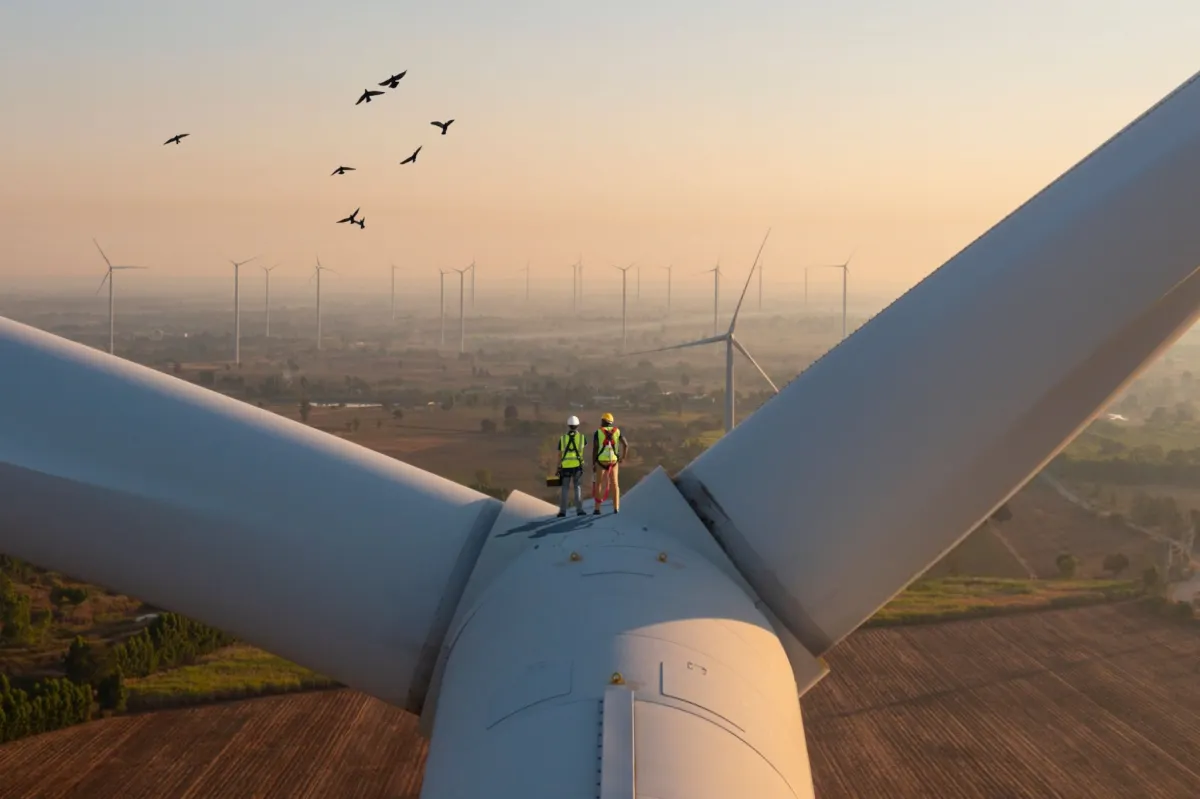
These materials allow the blades to remain strong enough to survive decades of exposure to:
- Powerful storms
- Heavy rainfall
- Freezing temperatures
- Extreme heat
- Constant mechanical stress
Each blade can weigh over 50 tons, yet they are designed to flex slightly in strong winds—much like the wings of an aircraft during flight.
How Wind Creates Rotation
Although many people believe wind simply "pushes" the blades, the actual physics is much more sophisticated.Each blade has an airfoil shape similar to an airplane wing.
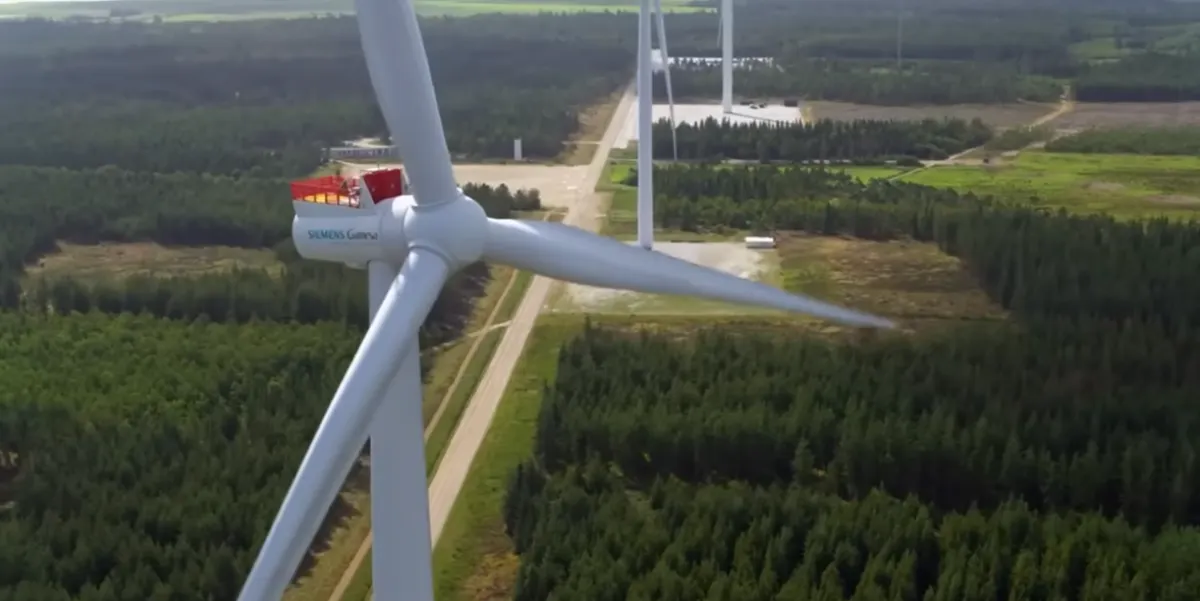
As wind flows around the blade:
- Air travels faster over one surface.
- Pressure becomes lower on that side.
- Higher pressure on the opposite side creates lift.
This lift force—not simple pushing—is what causes the enormous rotor to spin.Even though the blade tips can travel at speeds exceeding 300 km/h (186 mph), the complete rotor usually rotates at only 10–20 revolutions per minute.That relatively slow rotation contains an enormous amount of mechanical energy.
From Rotor to Nacelle
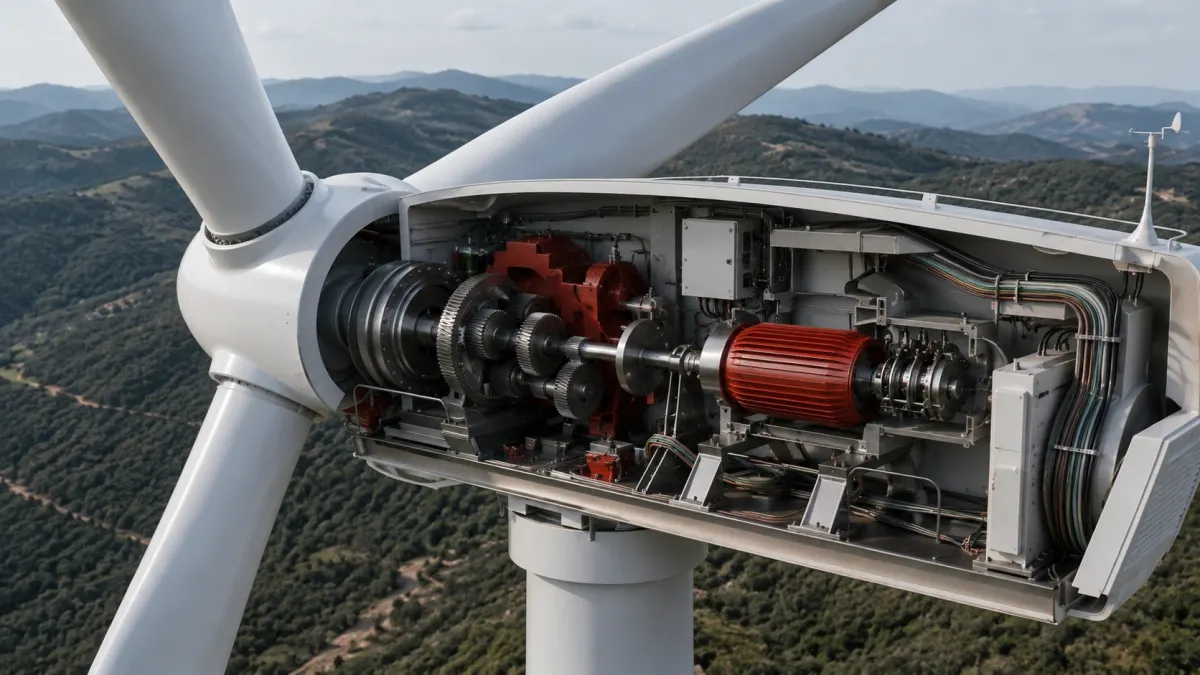
The spinning rotor transfers its rotational force through a massive main shaft into the nacelle, the large housing positioned at the top of the tower.The nacelle serves as the turbine's control center.
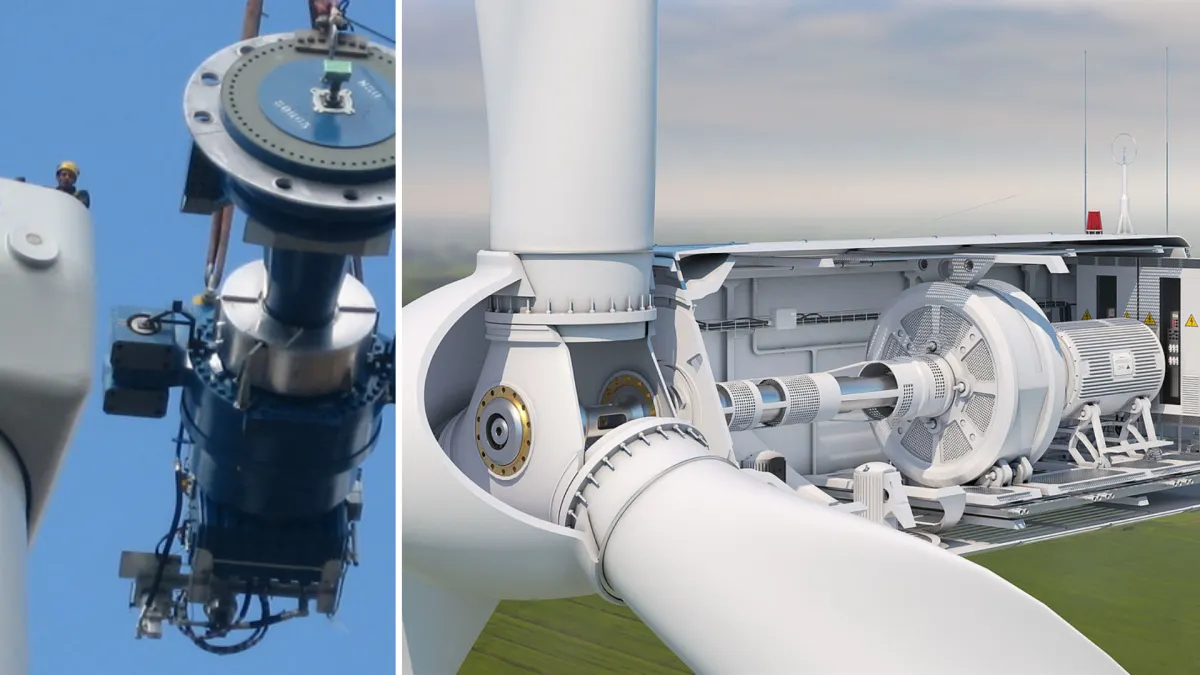
Inside are numerous critical components, including:
- Main shaft
- Gearbox
- Electric generator
- Hydraulic systems
- Electronic controllers
- Emergency brakes
- Smart monitoring sensors
This compact enclosure contains nearly all of the technology responsible for converting wind into usable electrical power.
Why Wind Turbines Need a Gearbox
One of the biggest engineering challenges is speed.Although the rotor captures tremendous energy, it rotates too slowly for most electrical generators.To solve this problem, many turbines use a gearbox, sometimes called a speed multiplier.
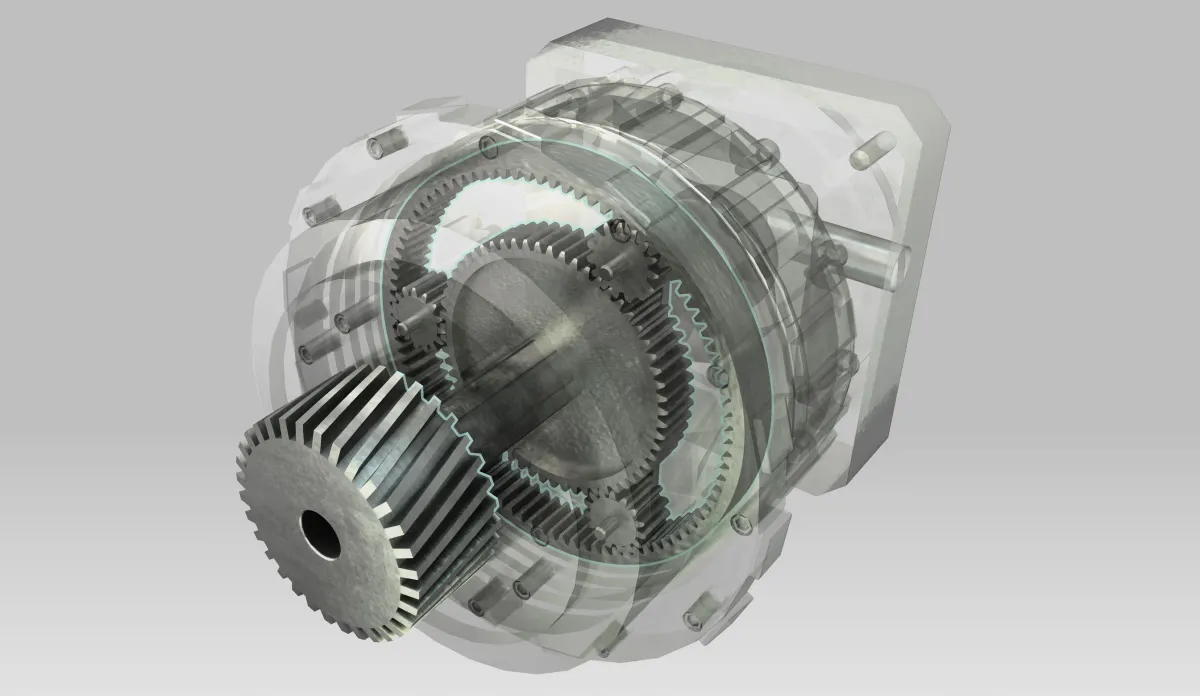
Inside, multiple sets of precision steel gears dramatically increase rotational speed.
For example:
- Rotor speed: 15 RPM
- Generator input: approximately 1,800 RPM (depending on generator design)
The gearbox allows the generator to operate at maximum efficiency while the blades continue rotating relatively slowly.
Because these gear systems operate continuously under enormous loads, they are manufactured from specially heat-treated steel and constantly lubricated with hundreds of liters of oil that reduce friction and dissipate heat.
How the Generator Produces Electricity
The generator is where mechanical motion becomes electricity.
Inside the generator:
- Powerful magnets rotate.
- Copper windings remain stationary.
- The changing magnetic field moves electrons through the copper coils.
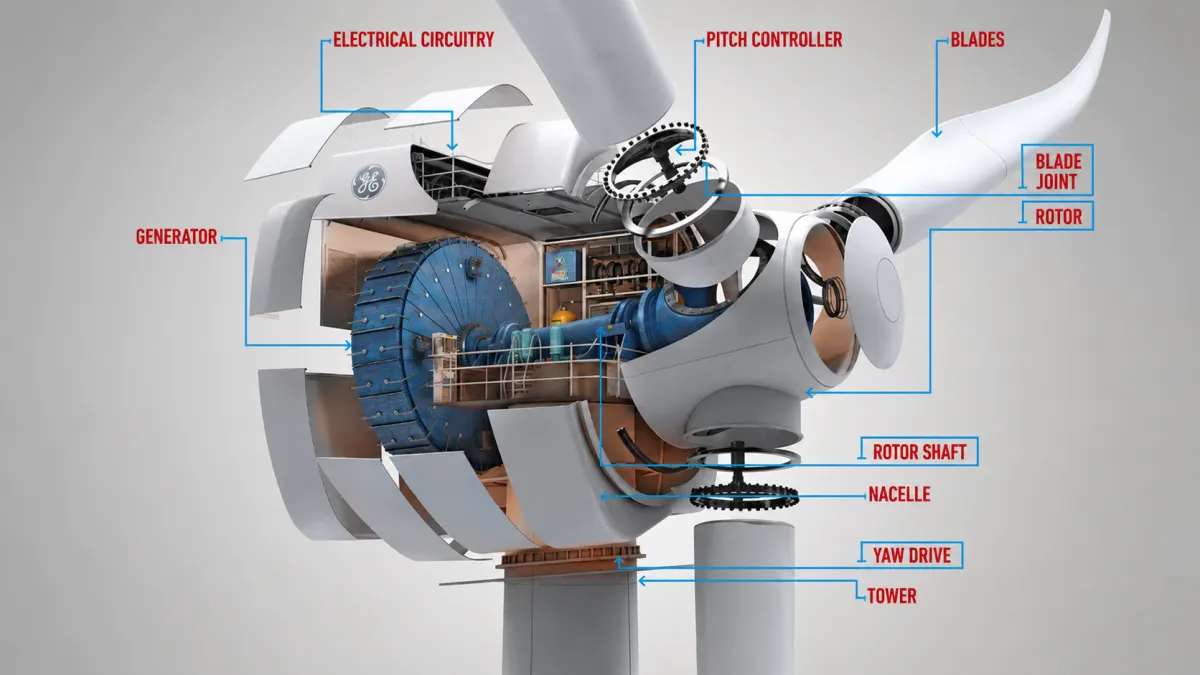
This process creates electric current through electromagnetic induction, the same scientific principle discovered by Michael Faraday nearly two centuries ago.Remarkably, almost every major electricity generation technology—including hydroelectric, fossil-fuel, nuclear, and wind power—still relies on this same fundamental principle.
Smart Turbines Constantly Adjust to the Wind
Today's wind turbines are far more than giant spinning machines.
Thousands of sensors continuously monitor:
- Wind speed
- Wind direction
- Temperature
- Structural vibration
- Generator performance
- Blade loads
- Ice formation
Using this data, onboard computers make real-time adjustments.The entire nacelle rotates so the rotor always faces the wind—a process called yaw control.At the same time, each blade independently changes its angle through pitch control, maximizing efficiency while protecting the turbine from excessive loads.
Why Too Much Wind Can Be Dangerous
Surprisingly, stronger wind does not always produce more electricity.Wind turbines operate only within a carefully designed wind speed range.
Typical operating conditions include:
| Wind Speed | Turbine Response |
|---|---|
| 10–15 km/h | Begins generating electricity |
| 45–55 km/h | Maximum power output |
| Around 90 km/h | Automatically shuts down |
If wind speeds become dangerously high, emergency braking systems stop the rotor entirely.Without these safety systems, excessive centrifugal forces and aerodynamic loads could cause catastrophic structural failure.Even a tiny crack inside a blade could rapidly expand at extreme rotational speeds.
Preparing Electricity for the Power Grid
The electricity leaving the generator cannot be sent directly to homes.Its voltage and frequency vary depending on rotor speed.
Before entering the electrical grid, the power passes through sophisticated power converters that stabilize:
- Voltage
- Frequency
- Power quality
Only after these adjustments can the electricity safely synchronize with the national grid.
Why Transformers Are Essential
After conversion, the electricity reaches one of the most important pieces of equipment in the entire wind farm—the transformer.Electricity generated inside the turbine usually leaves the generator at only a few hundred volts.Transporting electricity at such low voltage over long distances would waste large amounts of energy through heat.The transformer dramatically increases voltage while reducing current.
As a result:
- Transmission losses fall significantly.
- Electricity can travel hundreds of kilometers efficiently.
- Grid reliability improves.
High-voltage transmission lines commonly operate at:
- 220,000 volts
- 400,000 volts
- Or even higher in some countries.
The Journey from Wind Farm to Your Home
Once transformed to high voltage, electricity begins its journey across the transmission network.Along the way, substations gradually reduce the voltage in several stages:
- Long-distance transmission
- Regional distribution
- Local neighborhood distribution
- Household voltage (typically around 220–240 V in many countries)
The entire process happens almost instantly.From the moment wind turns the blades, electricity can reach homes, businesses, hospitals, and factories hundreds of kilometers away in fractions of a second.
How Much Electricity Can One Wind Turbine Produce?
Modern onshore turbines typically generate between 3 MW and 7 MW of power under favorable wind conditions.Depending on turbine size, local wind resources, and annual operating hours, a single turbine can produce enough electricity to supply approximately 3,000 to 5,000 homes each year.
This makes wind energy one of the most efficient large-scale renewable power sources available today.
The Future of Wind Energy
Wind turbines continue to grow larger, smarter, and more efficient.New generations of offshore turbines now feature blades longer than football fields, advanced direct-drive generators that eliminate traditional gearboxes, AI-powered monitoring systems, and predictive maintenance technologies that reduce downtime.
As renewable energy demand continues to rise, these engineering innovations will play a crucial role in reducing carbon emissions while delivering reliable electricity to millions of people worldwide.