

Largest Holders of Digital Gold in the World
The United States dominates the global market for «digital gold,» accounting for nearly half of all assets held in physically backed gold exchange-traded funds (ETFs). According to the infographic, U.S.-listed gold ETFs represent 48.7% of worldwide holdings, far ahead of every other country. The United Kingdom ranks second with 15.4%, while Switzerland, Germany, China, India, Canada, France, and other countries collectively make up the remainder.
These figures highlight where investors prefer to access gold through financial markets rather than purchasing and storing physical bullion themselves. As geopolitical uncertainty, inflation concerns, and central bank demand continue to shape precious metals markets, gold ETFs have become one of the most important gateways to investing in gold.
What Is "Digital Gold"?
The infographic uses the term digital gold to describe investments made through gold exchange-traded funds (ETFs).Unlike buying gold bars or coins, investors purchase ETF shares that represent ownership in professionally managed gold reserves. Most major gold ETFs are backed by physical bullion stored in secure vaults.
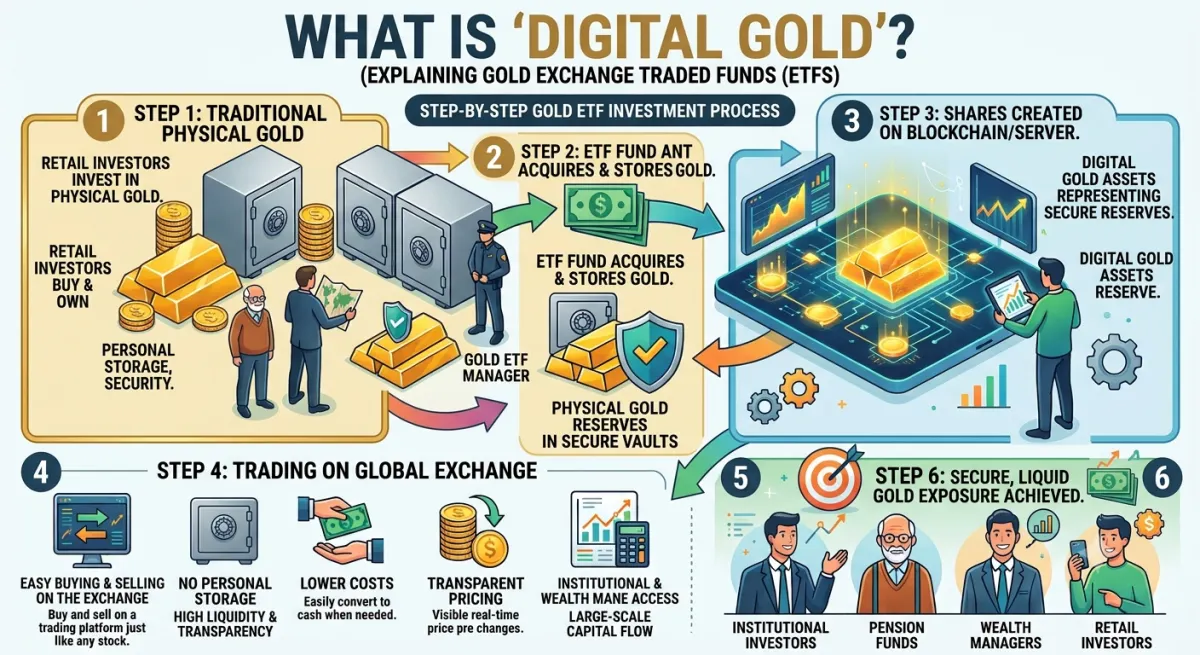
This approach provides several advantages:
- Easy buying and selling through stock exchanges
- No need for personal storage
- High liquidity
- Lower transaction costs
- Transparent pricing
For institutional investors, pension funds, wealth managers, and retail investors alike, gold ETFs have become one of the most popular ways to gain exposure to gold prices.
Read More


Global Gold ETF Ownership by Country
The infographic breaks down worldwide gold ETF assets as follows.
| Rank | Country | Share of Global Gold ETF Assets | Approximate Holdings |
|---|---|---|---|
| 1 | United States | 48.7% | 2,766 billion dollars |
| 2 | United Kingdom | 15.4% | 876 billion dollars |
| 3 | Switzerland | 9.1% | 500 billion dollars |
| 4 | Germany | 7.9% | 437.2 billion dollars |
| 5 | China | 7.2% | 397 billion dollars |
| 6 | India | 3.2% | 167.8 billion dollars |
| 7 | Other Countries | 5.2% | 278.9 billion dollars |
| 8 | Canada | 2.0% | 105 billion dollars |
| 9 | France | 2.0% | 110 billion dollars |
Why the United States Leads by Such a Wide Margin
Nearly half of global gold ETF assets are held through U.S. markets.Several factors explain this dominance.
Massive Capital Markets
The United States has the world's largest stock market and one of the deepest pools of institutional capital. Pension funds, mutual funds, hedge funds, and individual investors all have easy access to gold ETFs.
Large ETF Industry
The U.S. pioneered the ETF market and remains its largest ecosystem. Investors are already comfortable using ETFs for stocks, bonds, commodities, and precious metals.
Safe-Haven Demand
Periods of economic uncertainty often increase demand for gold. Inflation fears, banking stress, recession concerns, and geopolitical conflicts have all contributed to stronger interest in gold-backed investment products.
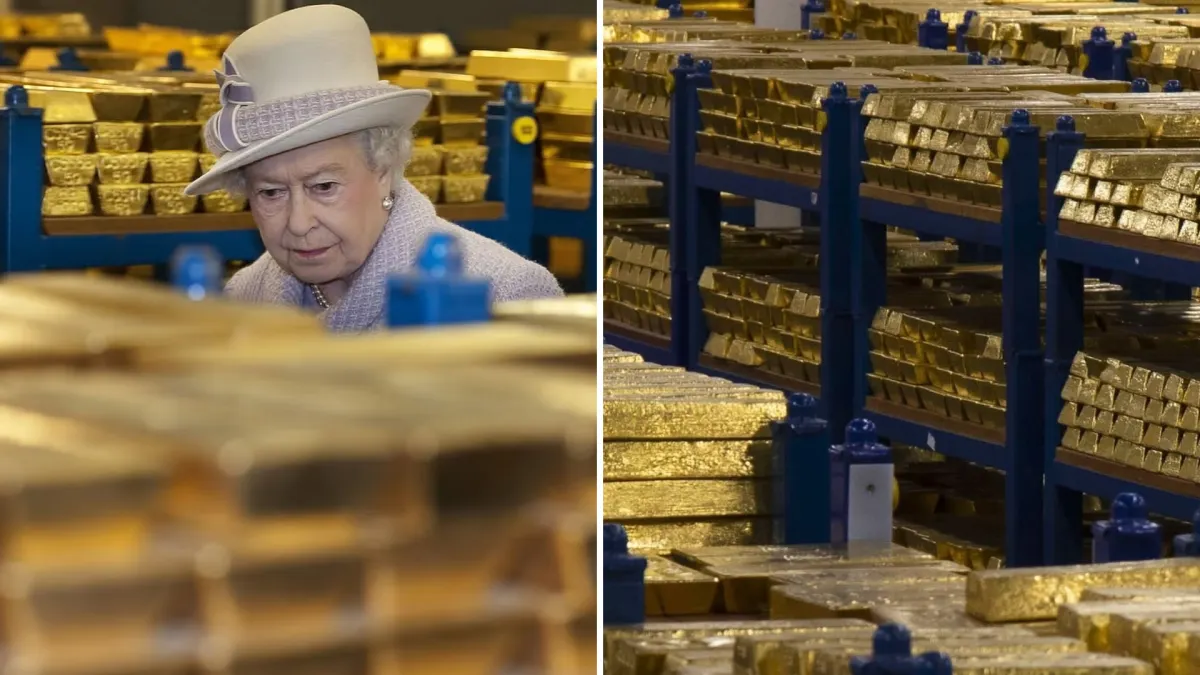
The UK represents 15.4% of global gold ETF assets.London has long been one of the world's most important precious metals trading hubs.
Many international financial institutions manage gold investments through London because it hosts:
- Major bullion vaults
- Global commodity trading firms
- International investment banks
- The London Bullion Market
This makes the UK a natural center for gold investment products.
Switzerland's Unique Role
Although Switzerland has a relatively small population, it controls over 9% of global ETF gold assets.Switzerland plays a unique role in the precious metals industry because it is home to:
- Some of the world's largest gold refineries
- International bullion storage facilities
- Private banking services
- Wealth management firms

Much of the world's investment-grade gold passes through Swiss refineries before entering financial markets.
Germany and Europe's Strong Gold Culture
Germany accounts for 7.9% of worldwide gold ETF assets.German investors have historically maintained a strong preference for gold as a store of value.

Economic memories of inflation during the twentieth century continue to influence investment behavior today, making gold an important component of many German investment portfolios.
China's Growing Influence
China represents 7.2% of global gold ETF holdings.The country's growing middle class, expanding financial markets, and increasing investor participation have fueled demand for gold investment products.China is also one of the world's largest gold producers and consumers, giving it an increasingly important role in the global precious metals market.
India's Long Relationship With Gold
India accounts for 3.2% of ETF gold assets.Traditionally, Indian investors have favored physical gold jewelry and bullion over financial products.However, digital investing platforms and gold ETFs have grown steadily as younger investors seek easier and more flexible ways to invest.
Canada, France, and Other Markets
Canada and France each contribute approximately 2% of worldwide ETF holdings.Meanwhile, all remaining countries collectively represent 5.2%.Although individually smaller, these markets continue expanding as ETF investing becomes more accessible worldwide.
Why Gold ETFs Continue Growing
Several long-term trends continue supporting demand for gold ETFs.
Inflation Protection
Gold has traditionally been viewed as a hedge against inflation over long periods.
Portfolio Diversification
Because gold often behaves differently from stocks and bonds, investors use it to reduce overall portfolio risk.
Geopolitical Uncertainty
Wars, political instability, and financial crises frequently increase investor demand for safe-haven assets.
Central Bank Buying
Record purchases of physical gold by central banks in recent years have reinforced confidence in gold's long-term role within the global financial system.
Easier Access
Online brokerages and investment apps have made purchasing gold ETFs almost as simple as buying ordinary stocks.
What This Distribution Reveals
The infographic illustrates more than just investment preferences.It reflects where the world's largest pools of financial capital exist and where investors have broad access to sophisticated ETF markets.
Countries with mature financial systems, strong regulatory frameworks, and active institutional investors dominate global gold ETF ownership.At the same time, emerging markets such as China and India are steadily increasing their share as wealth grows and digital investing becomes more widespread.
Future Outlook
Gold ETFs are likely to remain an important investment vehicle as investors seek protection against economic uncertainty and market volatility.
Several trends could reshape future ownership:
- Continued growth in Asian investment markets
- Increasing adoption of digital investment platforms
- Greater institutional allocation to alternative assets
- Rising demand during periods of geopolitical tension
- Ongoing innovation in exchange-traded investment products
While the United States currently holds an overwhelming lead, the balance may gradually become more diversified as global financial markets continue evolving.