
A swimming pool can be one of the most attractive features of a villa, but keeping it clean and inviting requires more than occasional skimming. Without regular maintenance, a pool can quickly develop water-quality problems, equipment damage, algae growth, leaks, and expensive repairs.
For villa owners, routine pool maintenance is not simply about appearance. It is a practical way to protect the property, extend the life of pool equipment, and keep the water safe for swimming.
Why Is Regular Pool Maintenance Important?
A residential pool is a small but complex system. Water continuously circulates through pumps and filters while chemical levels change because of sunlight, temperature, rain, debris, and swimmer activity.
Ignoring these changes can create problems that are not always visible at first.
Regular maintenance helps villa owners:
- Keep pool water clean and balanced
- Reduce algae and unwanted microorganisms
- Protect pumps, filters, and other equipment
- Prevent stains and buildup on pool surfaces
- Detect leaks and equipment problems early
- Reduce the likelihood of expensive repairs
Read More


1. Keep the Water Chemically Balanced
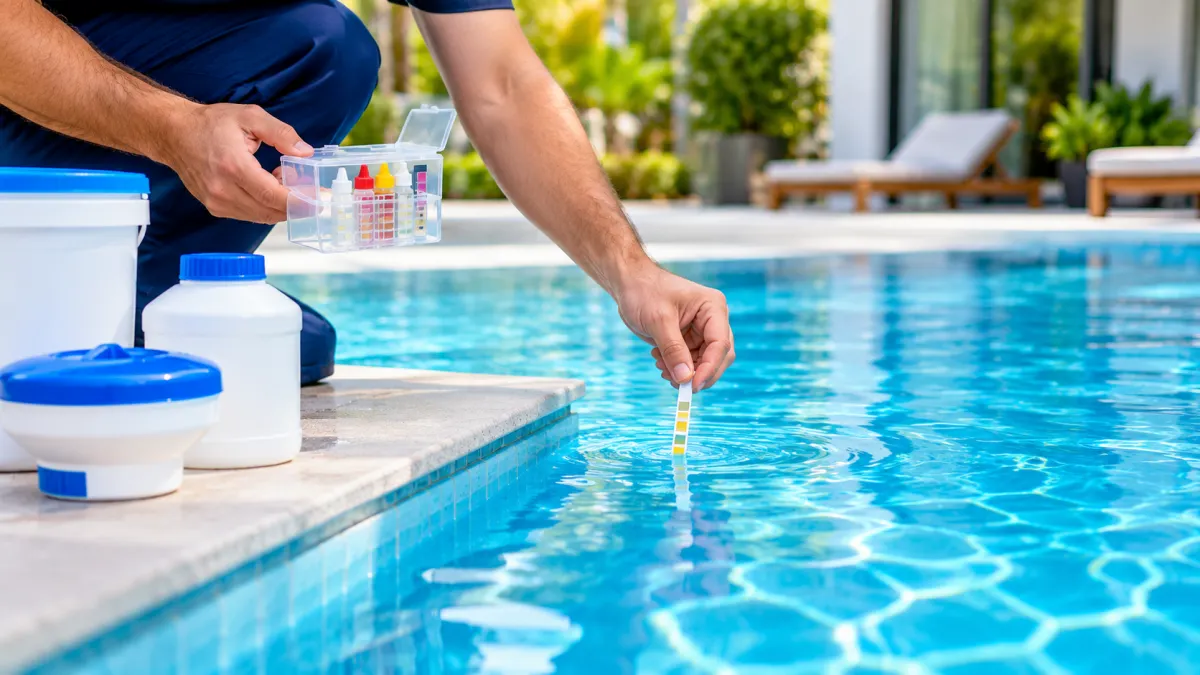
One of the most important parts of pool maintenance is monitoring the water chemistry.
The pH level affects how comfortable the water feels and how effectively sanitizing chemicals work. Water that is too acidic or too alkaline can also contribute to corrosion, scaling, or damage to pool components.
Pool owners should regularly test key water parameters and adjust them according to the requirements of their pool system and the instructions for the chemicals being used.
2. Prevent Algae Growth
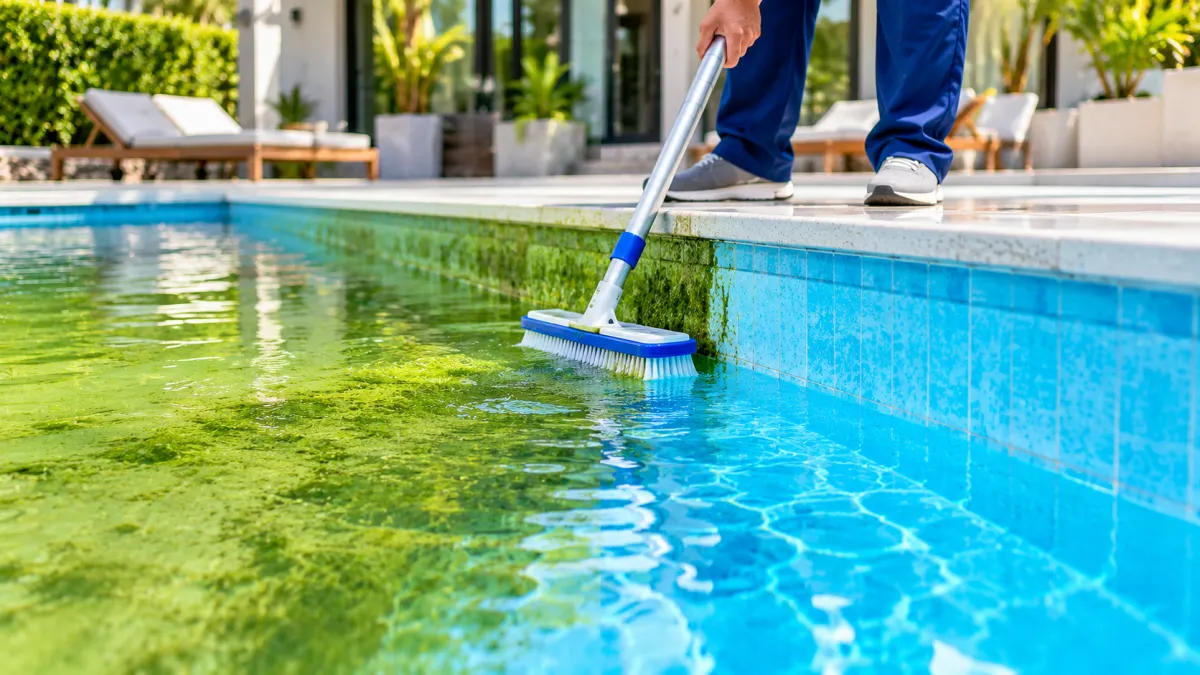
Warm weather, sunlight, poor circulation, and unbalanced water can create favorable conditions for algae.
Algae can make the pool look green or cloudy and may accumulate on walls, steps, and other surfaces. Once a significant algae problem develops, restoring the water can require considerably more cleaning and chemical treatment than routine maintenance.
Regular circulation, filtration, brushing, and appropriate sanitation can help keep algae under control.
3. Clean the Pool Filter
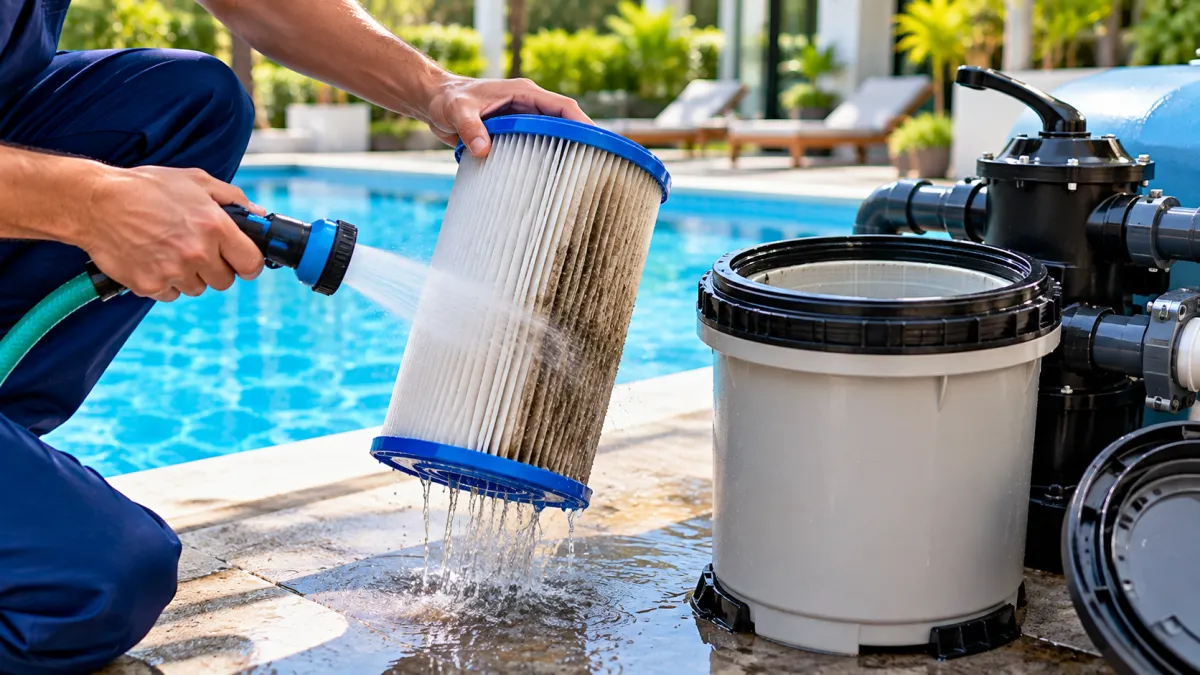
The filter is one of the most important components of a swimming pool system because it removes suspended particles from the water.
A dirty or overloaded filter can reduce water circulation and make the pump work harder. Over time, this can affect efficiency and place additional stress on the equipment.
The correct cleaning procedure depends on whether the pool uses a cartridge, sand, or diatomaceous earth filter, so maintenance should follow the manufacturer's instructions.
4. Protect the Pool Pump
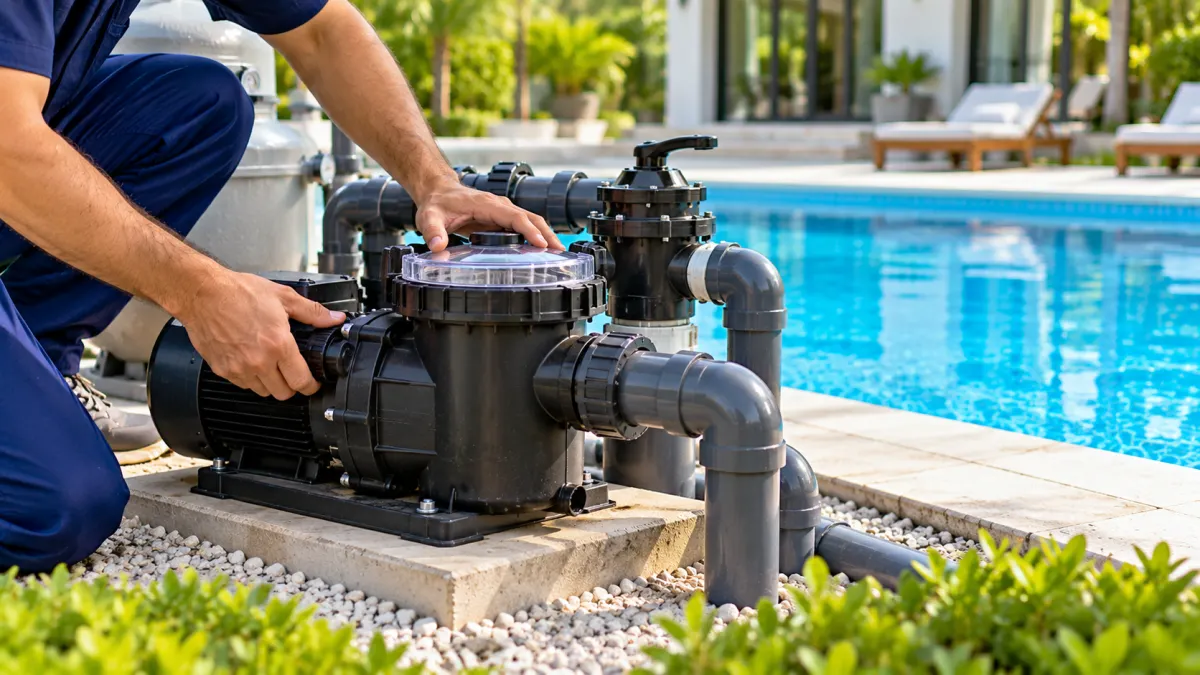
The pump keeps water moving through the filtration and circulation system. If circulation becomes weak, water quality can deteriorate even when chemicals are being added.
Villa owners should periodically check for unusual noises, leaks, reduced water flow, or other changes in pump performance.
Finding a problem early can be much less expensive than replacing a damaged pump or dealing with problems elsewhere in the circulation system.
5. Remove Leaves, Dirt, and Debris
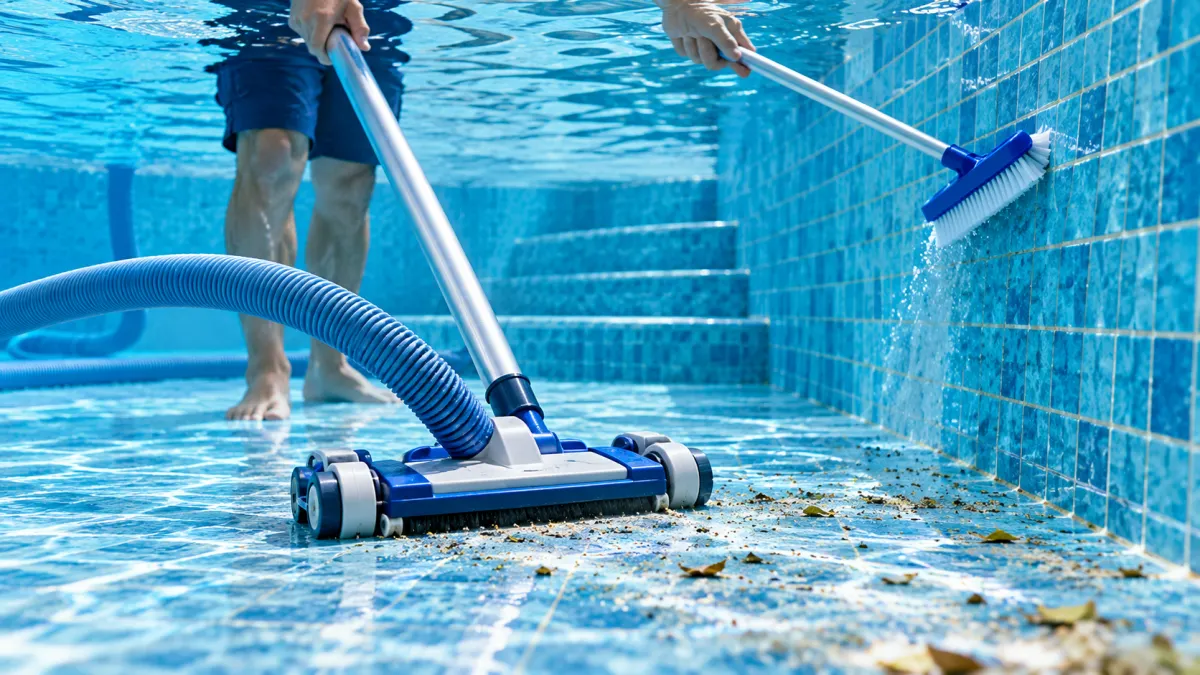
Outdoor villa pools are constantly exposed to their surroundings.
Leaves, insects, dust, grass, and other debris can enter the water and increase the load on the filtration system. Organic material can also affect water chemistry as it breaks down.
Skimming the surface and removing visible debris regularly is one of the simplest maintenance tasks and can make the rest of the pool-care process easier.
6. Brush and Vacuum the Pool
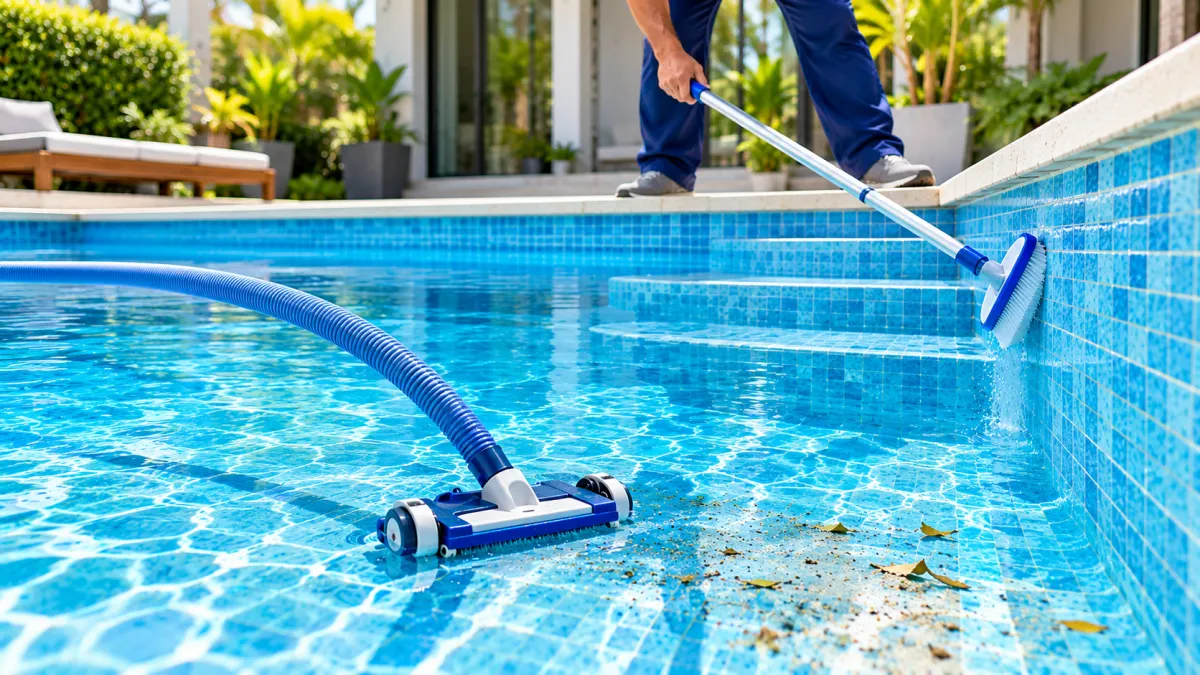
Not all dirt is removed by the filter.
Particles can settle on the bottom of the pool, while algae and mineral deposits can accumulate on walls, corners, steps, and other areas where water circulation is weaker.
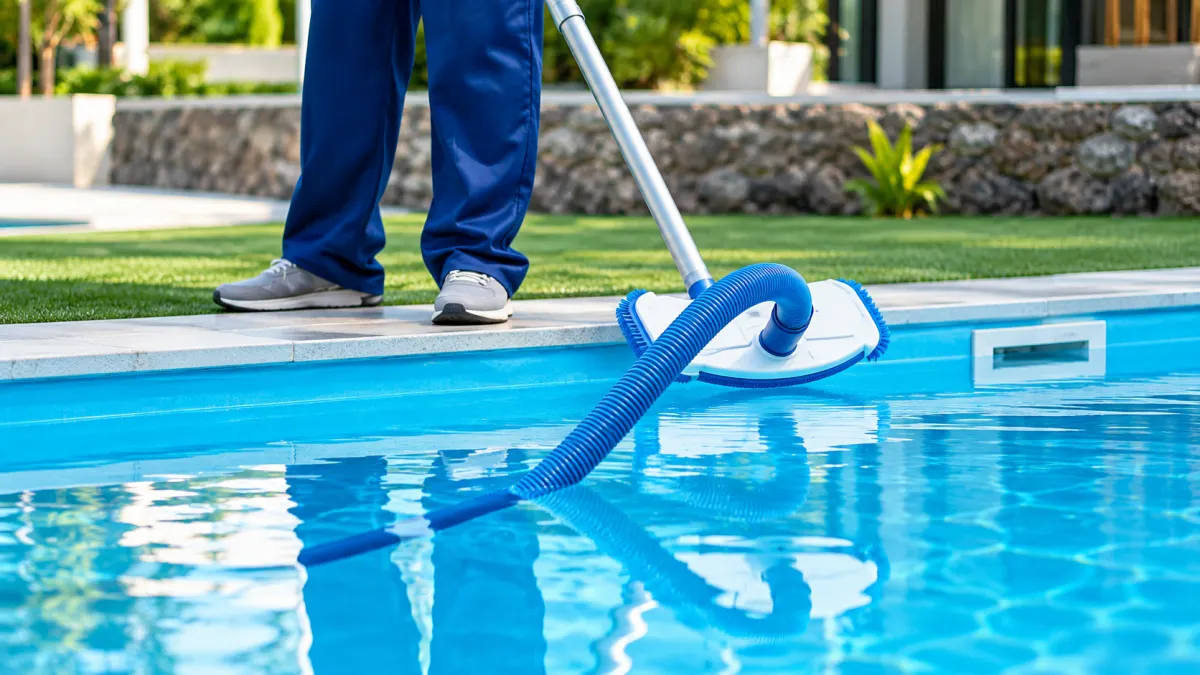
Regular brushing and vacuuming help prevent buildup and keep surfaces cleaner. Pay particular attention to corners, stairs, and areas around fittings.
7. Check the Water Level
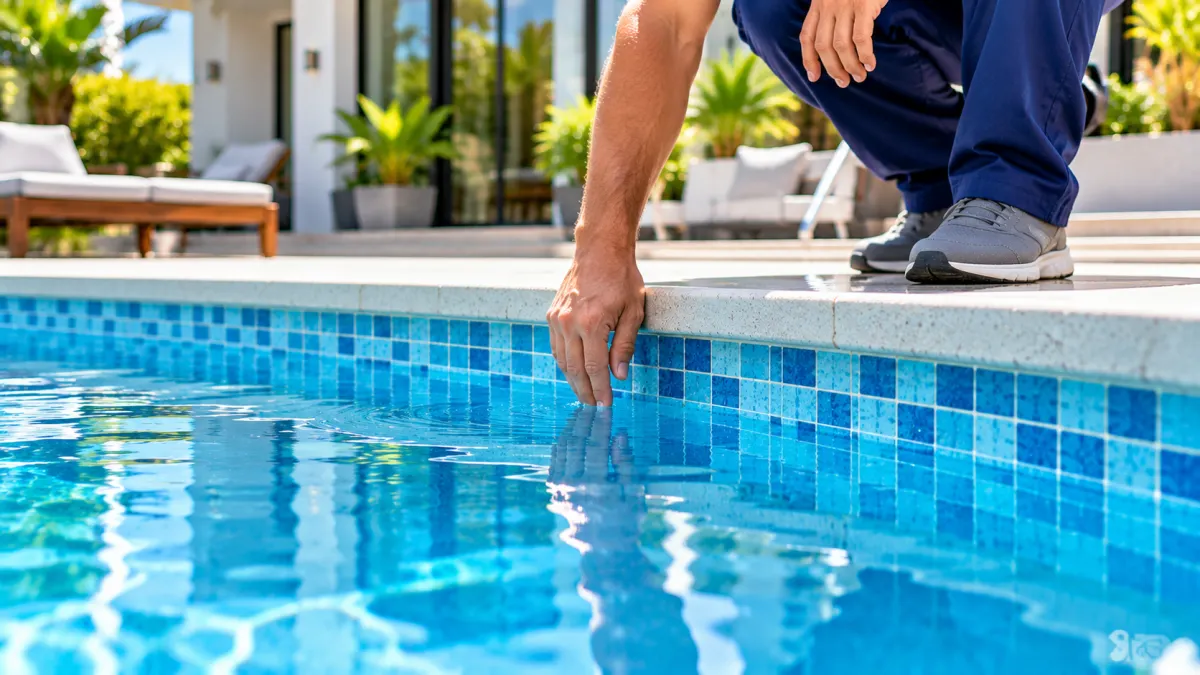
The water level can change because of evaporation, splashing, cleaning, weather conditions, or leaks.
A small amount of evaporation is normal, particularly in hot climates. However, an unusual or rapid drop in water level may indicate a leak.
Villa owners who notice persistent unexplained water loss should investigate the cause rather than repeatedly adding water.
8. Inspect for Leaks and Equipment Problems
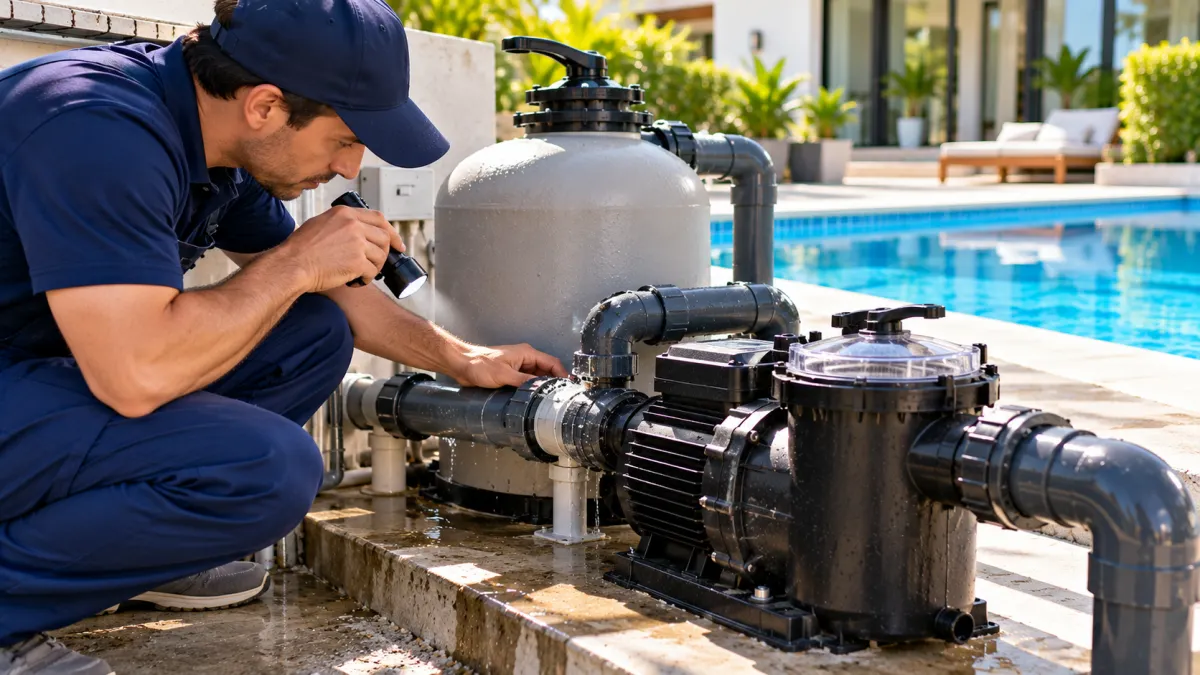
A pool should be inspected regularly for signs of water leakage or equipment problems.
Look around pumps, filters, valves, pipes, and visible connections for moisture or unusual water accumulation. Cracks or changes in the pool structure should also be investigated.
Early detection matters because a relatively small problem can become more complicated if it remains unnoticed for months.
9. Pay Attention to the Pool Surroundings
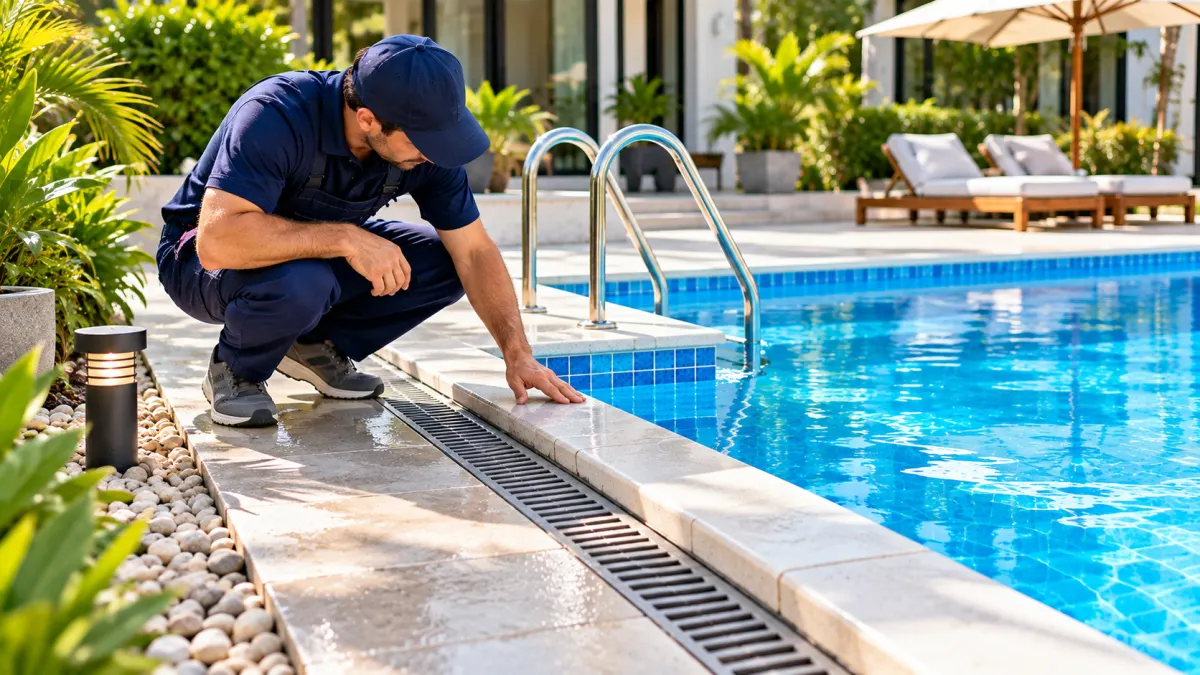
Pool maintenance is not limited to the water itself.
The surrounding deck, drainage system, coping, tiles, lights, ladders, and safety features should also be checked periodically.
Good drainage is particularly important around outdoor pools. Standing water can contribute to surface deterioration and create slippery areas around the pool.
10. Adjust Maintenance During Different Seasons
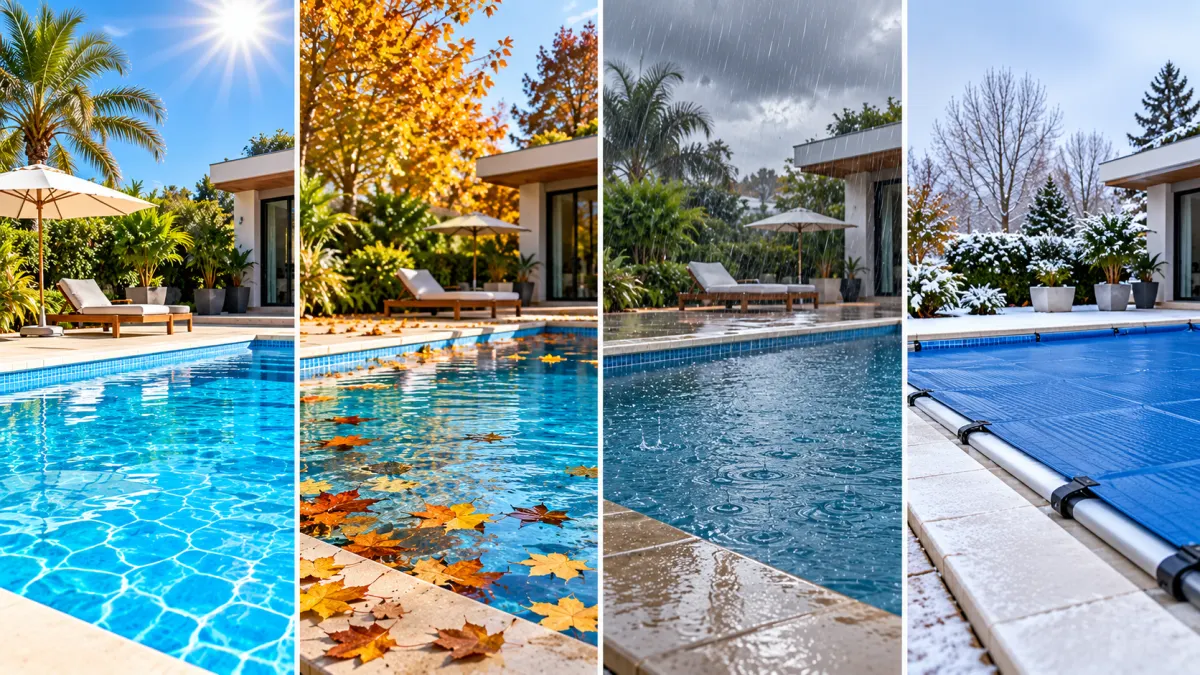
A villa pool may require different maintenance routines depending on the climate and how frequently it is used.
During hot summer months, evaporation and sunlight can affect water conditions more quickly. Heavy rain can also dilute or alter water chemistry and introduce debris.
If the pool is used less frequently during cooler months, owners should still maintain circulation, filtration, water chemistry, and equipment according to the pool manufacturer's recommendations.
How Often Should a Villa Pool Be Maintained?
There is no single maintenance schedule that works for every pool. Climate, pool size, equipment, surrounding vegetation, frequency of use, and whether the pool is indoors or outdoors can all affect the required routine.
A simple maintenance routine can include:
Daily or frequent checks
- Remove visible debris
- Check the water level
- Look for unusual changes in water clarity
Weekly checks
- Test water chemistry
- Clean or inspect the filter as required
- Brush pool surfaces
- Vacuum the pool
- Inspect equipment and visible connections
Monthly or periodic checks
- Inspect pumps, valves, and other equipment
- Look for signs of leaks or deterioration
- Review chemical consumption
- Check pool accessories and safety equipment
The manufacturer's maintenance instructions should always take priority, particularly for pumps, filters, heaters, automated chemical systems, and other specialized equipment.
The Cost of Ignoring Pool Maintenance
Neglecting a pool can create a chain reaction.
Poor water circulation can contribute to cloudy water. Unbalanced chemistry can affect surfaces and equipment. A dirty filter can reduce filtration performance, while an unnoticed leak can waste water and potentially cause property damage.
The longer a problem continues, the more difficult it may become to correct.
Routine maintenance therefore works much like preventative maintenance for a car or air-conditioning system: a small amount of regular attention can help reduce the risk of larger and more expensive problems later.
A Well-Maintained Pool Protects More Than the Water
For villa owners, a swimming pool is part of the property rather than an isolated feature. Its condition can affect the appearance of the outdoor space, the performance of expensive equipment, water consumption, and the overall experience of using the home.
Keeping a pool in good condition does not necessarily require complicated daily work. What matters most is consistency: testing the water, maintaining filtration, removing debris, inspecting equipment, and addressing unusual changes before they become major problems.
A clean pool may look like a luxury, but regular maintenance is ultimately about protecting an investment, preventing avoidable repairs, and keeping the swimming environment in good condition.