
The False Promise of the Glass-Walled Home
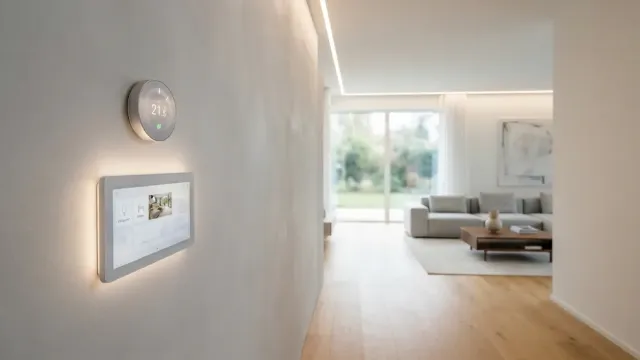
A decade ago, science fiction movies and consumer electronics expos sold the world an enticing vision of future domestic life. Every room in your dream home would feature a sleek, glowing iPad-style touchscreen mounted flush against the hallway drywall. With a casual tap or swipe, you would adjust the living room ambiance, adjust radiant floor heating, cue up jazz playlists, and lower motorized velvet shades. It looked impossibly sophisticated, futuristic, and effortless in glossy showroom catalogs.
Read More

Yet in actual practice, living in a touchscreen-dominated house has turned into an infuriating daily nuisance. When you stumble down a pitch-black corridor at three in the morning desperately seeking a glass of water, you do not want to squint through blinding blue menus, wait five seconds for an operating system update to finish installing, or hunt through nested settings submenus just to illuminate the hallway. You want to reach out blindly, flick an intuitive mechanical switch with muscle memory, and receive immediate physical confirmation.
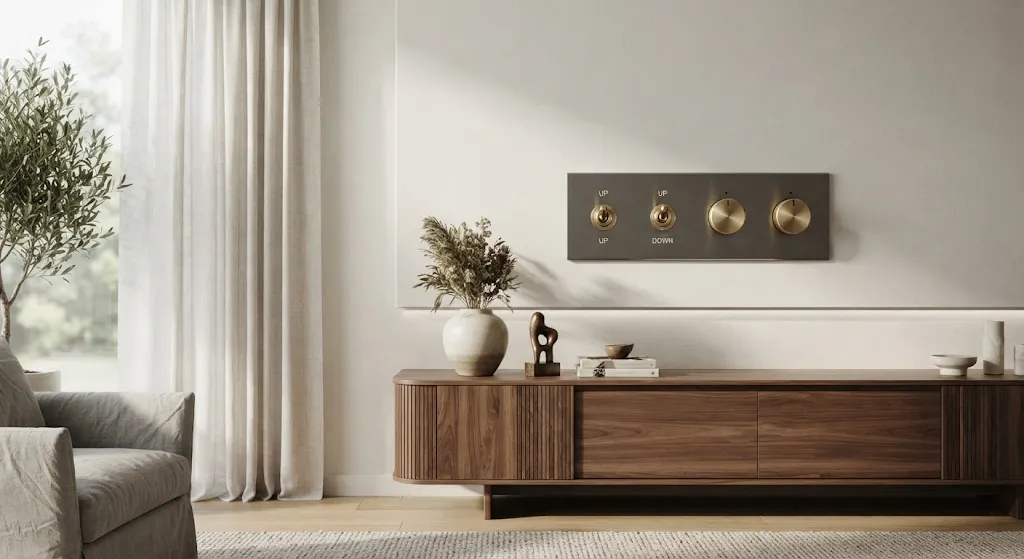
The honeymoon phase of modern home automation is officially over. Today, a passionate counter-revolution is sweeping through the smart home enthusiast community. Tired of endless software bugs, sluggish touch latency, and glaring wall displays that illuminate living rooms like late-night hospital corridors, homeowners and high-end architects are systematically abandoning wall-mounted tablets in favor of heavy, tactile rotary dials and satisfying mechanical toggle switches.
Interior designers are equally relieved by this return to physical hardware. Glowing digital screens age rapidly; a wall-mounted tablet that looks cutting-edge in 2021 looks outdated, thick-bezelled, and abandoned by 2026. High-end materials like brushed brass, aged bronze, solid walnut, and ceramic, by contrast, possess an enduring, timeless aesthetic that integrates naturally into sophisticated architecture rather than clashing with it. A well-crafted switch plate looks just as exquisite after twenty years of daily use as it did on the day it was installed.
The Magic of Tactile Feedback and Muscle Memory
The fundamental flaw of the touchscreen interface has always been its total lack of tactile feedback. A flat sheet of glass cannot tell your fingers where one control ends and another begins. To interact with a digital screen, you are forced to stop whatever you are doing, turn your head, look directly at the panel, and carefully aim your fingertip at a pixelated digital icon. If your hands are wet from washing vegetables in the kitchen or dusted with flour from baking, the capacitive sensor often fails to register your touch entirely.
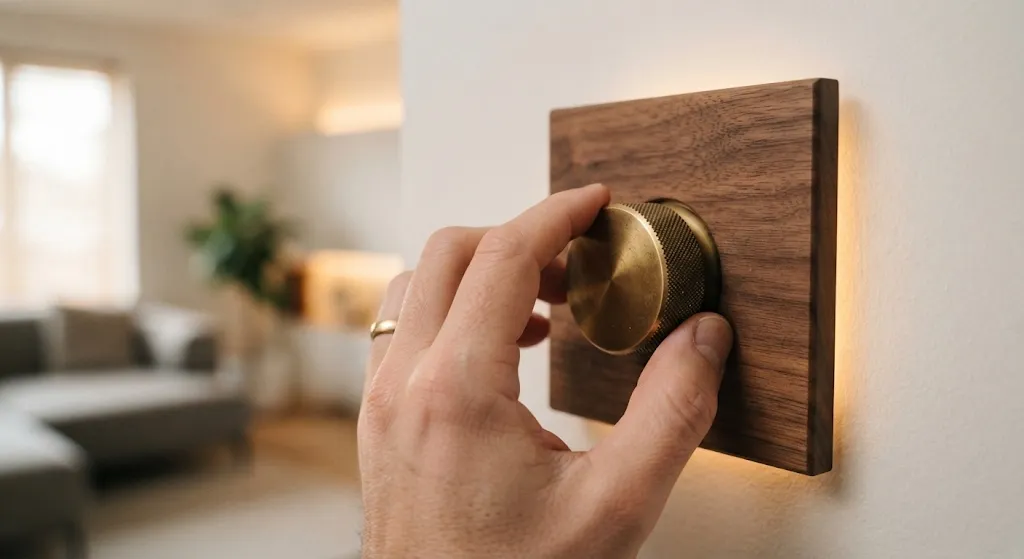
Physical knobs and toggle switches, on the other hand, communicate effortlessly through human touch. A weighted brass rotary dial provides instant resistance and smooth mechanical damping that allows you to dial in the perfect lighting level without taking your eyes off a conversation or an open oven door. You can feel the exact point where the brightness matches your mood, guided purely by the physical feedback of the hardware beneath your fingers.
Furthermore, mechanical switches possess an invaluable design virtue that software engineers routinely ignore: universal accessibility. When houseguests, elderly relatives, or babysitters visit your home, they should not need to download an iOS application, connect to a guest wireless network, or receive a twenty-minute tutorial on third-party software widgets just to illuminate the powder room. A physical switch is instantly understood by anyone between the ages of three and ninety-five, regardless of their technological literacy.
This design simplicity does not mean homeowners are abandoning modern smart functionality altogether. Instead, modern manufacturers are embedding wireless Zigbee and Matter micro-controllers inside retro-styled hardware. When you rotate a knurled brass dial, you are triggering a physical rotary encoder that sends instant local radio packets to smart LED drivers hidden above the ceiling, marrying the convenience of automated scenes with the unmatched tactile joy of heirloom craftsmanship. You get all the automation power without any of the touchscreen annoyance.
Reliability When the Internet Goes Down
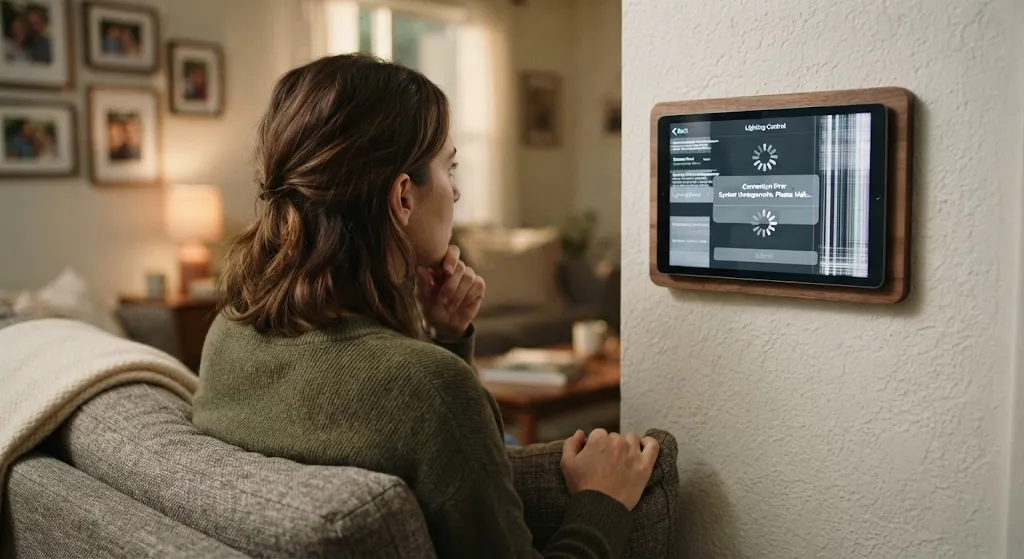
Perhaps the most compelling argument driving homeowners back to physical hardware is basic operational reliability. Wall-mounted smart tablets are full-fledged miniature computers running complex operating systems, proprietary cloud frameworks, and third-party applications. That means they are prone to all the frustrating software ailments that plague consumer computing: sudden Wi-Fi disconnections, cloud server outages, memory leaks that cause user interfaces to freeze, and forced firmware updates that reboot the system at the worst possible moments.
There is nothing more exasperating than having a sudden plumbing leak under a sink or hearing an unfamiliar sound downstairs, rushing to a wall panel, and being greeted by an animated loading spinner or an error message warning that the manufacturer's cloud service is experiencing temporary maintenance downtime. A light switch is life-critical domestic infrastructure, not an entertainment device. When you reach for a switch, it must function with absolute, uncompromising reliability one hundred percent of the time.
By pairing local, bridge-independent micro-switches directly with home electrical lines, smart homeowners are rediscovering peace of mind. Even if the home internet cuts out, the Wi-Fi router overheats, or a cloud automation company shuts down its remote servers permanently, the physical switches keep right on working without missing a beat. The home remains completely safe, functional, and controllable under all circumstances.
This movement is also breathing new life into traditional architectural detailing. Homeowners are treating switches not as cheap plastic afterthoughts to hide behind doors, but as focal design elements that invite tactile interaction. Feeling the weighty click of an industrial toggle switch or the smooth sweep of an engraved dial turns ordinary domestic rituals—turning down the lights for dinner, warming the floor for a morning shower—into moments of genuine sensory delight.
As the smart home industry matures, it is discovering that genuine luxury is not about cramming glowing displays onto every available surface. True luxury is technology that gracefully recedes into the background, operating quietly behind natural materials and intuitive tactile controls that feel wonderful to touch. The next generation of smart homes will not resemble spaceship command centers—they will look like comfortable, timeless sanctuaries where mechanical knobs and switches remind us that the best user interface is often the simplest one.