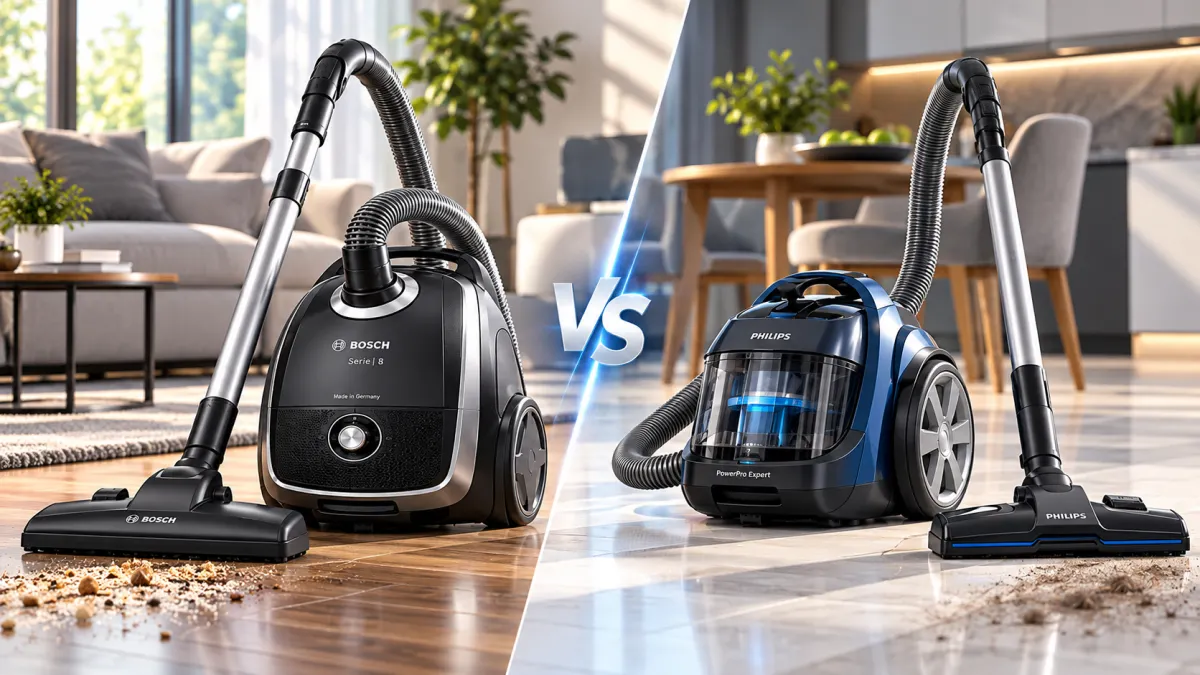

Choosing a reliable vacuum cleaner can make everyday cleaning easier, but with so many models available, deciding between two established brands like Bosch and Philips isn't always straightforward. Both manufacturers offer a range of vacuum cleaners designed for different homes, cleaning habits, and budgets.
Bosch is often associated with practical engineering, durable construction, and models designed for consistent cleaning performance. Philips, meanwhile, offers a broad selection of bagged and bagless vacuum cleaners, with particular emphasis on its PowerCyclone technology and convenient dust-container designs.
However, the best choice depends on more than brand reputation or motor power. Noise levels, filtration, maneuverability, maintenance costs, and the type of flooring in your home can all influence your decision.
15 Beautiful Low-Maintenance Plants for Busy Homeowners
So, is a Bosch vacuum cleaner better than a Philips model? Let's compare their key features to help you decide which brand offers the better fit for your household.
Bosch vs. Philips Vacuum Cleaners: Quick Comparison
| Feature | Bosch Vacuum Cleaners | Philips Vacuum Cleaners |
|---|---|---|
| Product range | Bagged, bagless, and cordless models | Bagged, bagless, and cordless models |
| Cleaning performance | Strong all-around performance, depending on the model | Effective cleaning with models featuring PowerCyclone technology |
| Suction technology | Varies by model; some models feature PowerProtect and optimized airflow designs | PowerCyclone technology separates dust from the airflow in selected models |
| Noise levels | Some models prioritize quieter operation | Noise levels vary by model and power setting |
| Filtration | HEPA and allergy-focused filtration in selected models | Allergy-focused filtration and HEPA-class filters in selected models |
| Maneuverability | Options range from compact canister models to larger units | Compact canister and bagless models are available |
| Dust collection | Strong selection of bagged models, plus bagless options | Strong selection of both bagged and bagless models |
| Maintenance | Bag and filter replacement costs depend on the model | Dust-bin cleaning or bag replacement, depending on the model |
| Best for | Buyers prioritizing practical design, durability, and bagged options | Buyers interested in bagless convenience and cyclonic separation |
| Overall value | Depends on features, sale prices, and maintenance costs | Depends on features, sale prices, and maintenance costs |
Note: Features and performance vary by model, product generation, and market. Always check the specifications of the exact vacuum cleaner you're considering.
1. Suction Power and Cleaning Performance
Suction performance is one of the most important factors when comparing vacuum cleaners. A powerful motor can help, but real-world cleaning results also depend on airflow, brush design, filtration, and how well the vacuum head works on different surfaces.
Bosch Vacuum Cleaners
Bosch offers several vacuum cleaner ranges designed for everyday household cleaning, including bagged canister models and cordless options. Depending on the model, features such as PowerProtect dust bags and optimized airflow systems can help maintain effective cleaning performance as the dust bag fills.
One advantage of many Bosch canister vacuums is their straightforward design, which makes them suitable for cleaning a combination of hard floors, rugs, and carpets. Certain models also include adjustable suction settings, allowing users to adapt the cleaning intensity to different surfaces.
For households that prefer a traditional bagged vacuum, Bosch is worth considering. However, suction performance and cleaning results should be evaluated at the individual model level rather than assumed across the entire product range.
Philips Vacuum Cleaners
Philips is particularly well known for its PowerCyclone technology, which uses high-speed airflow to separate dust and dirt from the air in compatible bagless vacuum cleaners.
This approach can help maintain efficient airflow while collecting household debris in a removable dust container. Depending on the model and its included attachments, a Philips vacuum can handle everyday messes on hard floors, carpets, and upholstery.
Some Philips models also include specialized brush heads designed to improve dirt and hair pickup. These can be useful for homes with pets, although performance depends on the brush design, floor type, and the amount of hair being collected.
Which brand wins?
Neither brand has a universal advantage in suction power. Compare the cleaning head, airflow design, suction controls, and independent performance tests for the specific models you're considering. Motor wattage alone does not reliably determine how well a vacuum cleans.
2. Filtration and Allergen Control
For households with pets, allergy sufferers, or people who are sensitive to dust, filtration deserves as much attention as suction power.
A vacuum cleaner must collect debris effectively while limiting the amount of fine dust that escapes back into the room.
Bosch: Bagged Options and Allergy-Focused Filtration
Bosch offers bagged vacuum cleaners that combine replaceable dust bags with filtration systems designed to capture fine particles. Selected models feature HEPA or other allergy-focused filters, depending on the product range and market.
Bagged designs can be particularly convenient for people who want to dispose of collected dust without frequently emptying an exposed container. When the bag is removed and sealed properly, this can also help reduce direct contact with the collected debris.
However, not every Bosch vacuum includes a HEPA filter. Buyers should check the exact filtration specifications rather than assuming all models provide the same level of protection.
Philips: Bagless Convenience and Multi-Stage Filtration
Philips offers both bagged and bagless vacuum cleaners. Its bagless models typically use a dust container and filtration stages designed to separate and capture collected particles.
Some models feature high-efficiency filtration systems intended to retain fine dust and allergens. Others use different filter configurations, so the precise filtration rating matters when comparing products.
Bagless models also eliminate the need to purchase replacement dust bags. However, emptying the container and cleaning the filters can expose users to dust if the process isn't handled carefully.
Which brand wins?
Bosch may appeal to buyers who prefer the cleaner disposal process associated with bagged vacuums. Philips can be a good fit for those who prefer a bagless system. For allergy-sensitive households, prioritize a model with clearly documented filtration performance and follow the manufacturer's filter-maintenance instructions.
3. Durability, Build Quality, and Everyday Convenience
A vacuum cleaner is an appliance that may be used several times a week, so its construction and ease of use matter over the long term.
Bosch: Practical Construction
Bosch vacuum cleaners often emphasize functional design, with features that vary from compact canister bodies to more robust models intended for regular household use.
The quality of the wheels, hose, handle, attachments, and dust-bag compartment can affect how well a vacuum holds up to frequent cleaning. Bosch also offers models with different configurations, allowing buyers to choose between traditional canister vacuums and cordless alternatives.
If durability is your main concern, examine the specific model's construction, warranty terms, and availability of replacement parts. A brand name alone cannot guarantee that every model will offer the same lifespan.
Philips: Flexible Designs and User-Friendly Features
Philips offers a wide variety of vacuum cleaners, including compact bagless canister models and cordless designs. Depending on the product, features such as lightweight construction, easy-to-remove dust containers, and practical brush attachments can make everyday cleaning more convenient.
For people who regularly carry a vacuum between floors or clean around furniture, overall weight and maneuverability may matter more than maximum suction power.
It's also worth checking the quality of the hose, connection points, wheels, and floor head. These components can influence both handling and long-term satisfaction.
Which brand wins?
Bosch deserves consideration if you prefer a conventional canister vacuum with a practical design. Philips may appeal to buyers looking for a compact or bagless model. The better option ultimately depends on the construction and ergonomics of the individual vacuum.
4. Bagged vs. Bagless: Which System Makes More Sense?
Before choosing between Bosch and Philips, decide whether you prefer a bagged or bagless vacuum cleaner. This choice affects maintenance, convenience, and ongoing costs.
Why Choose a Bagged Vacuum?
Bagged vacuum cleaners collect dirt in a replaceable bag that can be removed and discarded when full.
Advantages include:
- Less direct contact with dust during disposal when the bag is removed correctly.
- No dust container to empty after every few cleaning sessions.
- A practical option for people who prefer a more contained disposal process.
- Potentially convenient maintenance for households that clean frequently.
The main drawback is the recurring cost of replacement bags. You should also confirm that compatible bags are readily available for your chosen model.
Bosch has a strong selection of bagged canister vacuums, making it a useful starting point for buyers who prefer this system. Philips also offers bagged models, including products in its PowerGo and Performer ranges, depending on the market.
Why Choose a Bagless Vacuum?
Bagless vacuum cleaners collect debris in a reusable dust container rather than a disposable bag.
Advantages include:
- No recurring expense for replacement dust bags.
- A visible dust container that makes it easy to check when emptying is needed.
- Convenient access to collected debris.
- A broad selection of models with cyclonic separation technology.
The trade-off is that emptying the container can release dust into the air, especially if the container is opened quickly or emptied indoors. Filters also need regular cleaning or replacement according to the manufacturer's instructions.
Philips is worth considering if you prefer bagless convenience, particularly in models featuring PowerCyclone technology. Bosch also offers bagless alternatives, so this isn't an exclusive advantage of either brand.
The bottom line: Choose a bagged model if dust disposal and reduced exposure during emptying are priorities. Choose a bagless model if avoiding replacement bags is more important to you.
5. Noise Levels: Which Vacuum Is Quieter?
Vacuum noise can make a noticeable difference in apartments, shared homes, and households with young children or people working from home.
Bosch has offered models designed specifically for quieter operation, including products in its ProSilence range. These can be attractive to buyers who want to reduce cleaning noise without giving up the convenience of a conventional vacuum.
Philips also offers vacuum cleaners with varying noise levels, but the sound produced depends on the model, motor design, airflow, and selected power setting.
Rather than assuming that one brand is always quieter, compare the official decibel ratings of the exact models. A lower dB figure generally indicates less noise, although the perceived sound can also depend on its pitch and the type of surface being cleaned.
Which brand wins?
Bosch may be the more appealing starting point if low noise is a major priority, particularly when comparing models specifically designed for quieter operation. However, the specifications of the individual models should determine the final decision.
6. Pet Hair and Carpet Cleaning
Pet owners often need a vacuum cleaner that can pick up hair without repeatedly clogging the brush or leaving debris trapped in carpet fibers.
Both Bosch and Philips offer models with different floor heads and attachments, but not every vacuum is equally suitable for pet hair.
When comparing models, look for:
- A brush head designed for carpets and hair pickup.
- Effective airflow through the floor head.
- Easy removal of hair wrapped around the brush roll.
- Attachments suitable for sofas, stairs, and other upholstered surfaces.
- Filtration that helps retain fine dust and particles.
For homes with mostly hard floors, a vacuum with a well-designed hard-floor head may be more useful than one optimized primarily for deep-pile carpets.
If your home has thick carpets and several pets, prioritize independent cleaning tests and specialized pet-hair attachments over brand reputation alone.
7. Price and Overall Value: Bosch or Philips?
Neither Bosch nor Philips is consistently the cheaper option across every product category. Prices vary according to the model, features, included accessories, product generation, retailer, and current promotions.
Bosch offers products across different price levels, from straightforward household canister vacuums to more feature-rich models. Philips also provides a broad selection, including bagged and bagless options that appeal to different budgets.
To determine which offers better value, compare more than the initial purchase price.
Consider these factors:
- Replacement bags: Relevant if you're choosing a bagged vacuum.
- Filter costs: Check how often filters need replacing and how much compatible replacements cost.
- Brush attachments: Determine whether the accessories you need are included or sold separately.
- Warranty coverage: Review the warranty's duration, exclusions, and service conditions.
- Energy consumption: Compare the rated power consumption and any available efficiency information.
- Expected maintenance: Consider how easy it is to clean the dust container, brush head, and filters.
A less expensive vacuum may become more costly over time if it requires expensive consumables or doesn't include the attachments you need.
For a fair comparison, select one Bosch model and one Philips model in a similar price range, then compare their cleaning performance, filtration, noise, accessories, and maintenance costs.
8. Bosch vs. Philips: Which Brand Should You Buy?
The right choice depends on the features that matter most in your home.
Choose Bosch if:
- You prefer a traditional bagged canister vacuum.
- Low noise is a priority and you're considering a model designed for quieter operation.
- You value practical construction and straightforward controls.
- You want to compare models featuring PowerProtect technology.
- You are willing to pay for the specific features and build quality you need.
Choose Philips if:
- You prefer a bagless vacuum with a removable dust container.
- You're interested in PowerCyclone technology.
- You want to compare a broad selection of bagged and bagless models.
- Compact designs and convenient dust-container access are important to you.
- You want to find a model that balances features and price for your household.
Keep in mind that both brands offer different product configurations. A high-end Philips model may be a better choice than an entry-level Bosch vacuum, just as a well-equipped Bosch model may outperform a basic Philips alternative in the areas that matter to you.
Is Bosch Better Than Philips?
There is no single winner in the Bosch vs. Philips vacuum cleaner comparison. Both brands offer worthwhile options, but their strengths depend on the specific model and the needs of your household.
Bosch is a strong candidate for buyers who prefer bagged canister vacuums, practical construction, and models that prioritize quieter operation. Philips is worth considering if you want a bagless vacuum with cyclonic separation technology, convenient dust-container access, or a different balance of features and price.
Before buying, narrow your options to two comparable models. Check their cleaning performance on your flooring, filtration specifications, noise ratings, weight, included attachments, warranty, and ongoing maintenance costs.
Ultimately, the best vacuum cleaner isn't necessarily the one with the most powerful motor or the more recognizable brand name. It's the one that cleans your home effectively, fits your budget, and makes regular maintenance as convenient as possible.