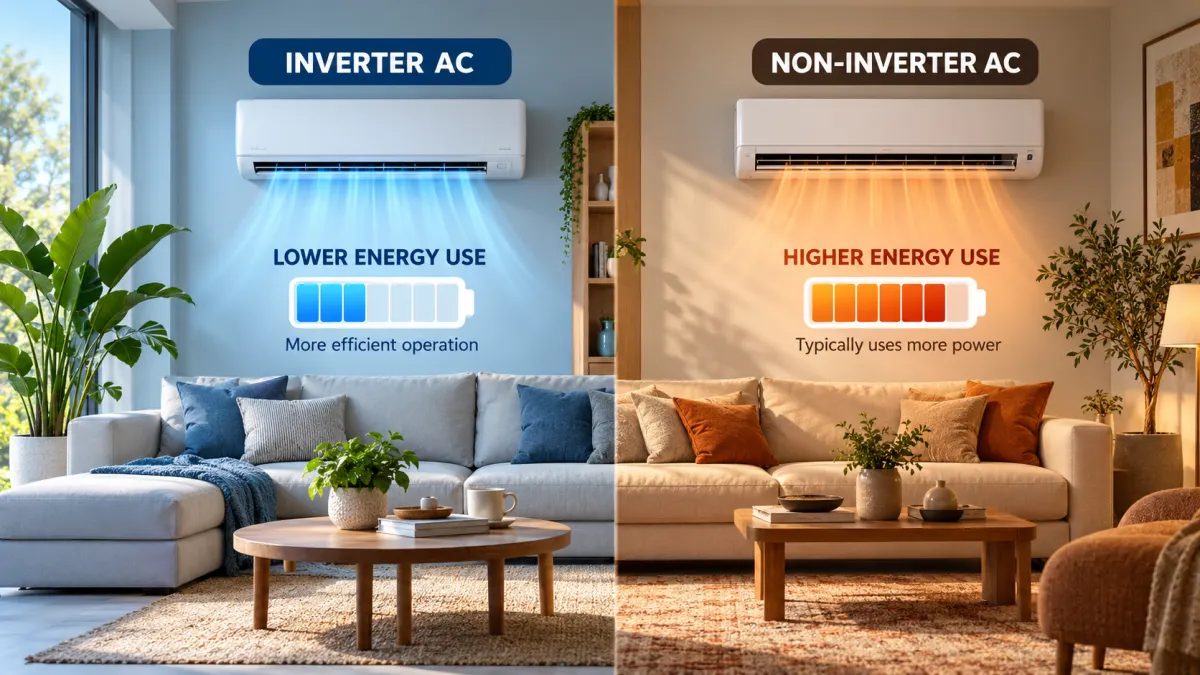

Air conditioning can make a home much more comfortable during the summer, but running it for hours every day can also increase household energy bills. For homeowners trying to keep cooling costs under control, choosing the right type of air conditioner can make a meaningful difference.
Two of the most common options are inverter and non-inverter air conditioners. Both can cool a room effectively, but they use different methods to control the compressor, which affects energy consumption, temperature consistency, noise levels, and overall running costs.
Read More
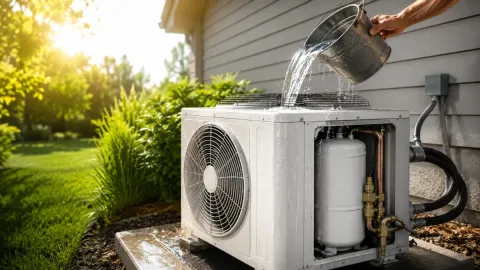

So, how much electricity can an inverter AC save, and is the higher upfront price worth paying? This guide explains the key differences, when inverter technology offers the greatest savings, and which type makes the most sense for your home.
Inverter vs. Non-Inverter AC: Key Differences
Before looking at electricity consumption in detail, it helps to understand how these two types of air conditioners operate.
| Comparison | Non-Inverter AC | Inverter AC |
|---|---|---|
| Compressor operation | Switches on and off to regulate temperature | Adjusts its speed to match cooling demand |
| Startup power demand | Can draw a relatively high current when starting | Generally manages startup more smoothly |
| Electricity consumption | Often higher during extended operation | Often lower under partial cooling loads |
| Temperature control | More noticeable temperature fluctuations | More consistent indoor temperatures |
| Operating noise | Compressor cycling can create noticeable noise | Often quieter once the room reaches the set temperature |
| Energy efficiency | Generally less efficient during prolonged use | Generally more efficient during prolonged use |
| Initial purchase price | Usually lower | Usually higher |
| Long-term running costs | Can be higher, depending on usage | Can be lower, depending on usage |
Actual performance depends on the model, cooling capacity, climate, installation quality, and how the air conditioner is used. A well-designed conventional unit may also outperform a poorly sized or inefficient inverter model.
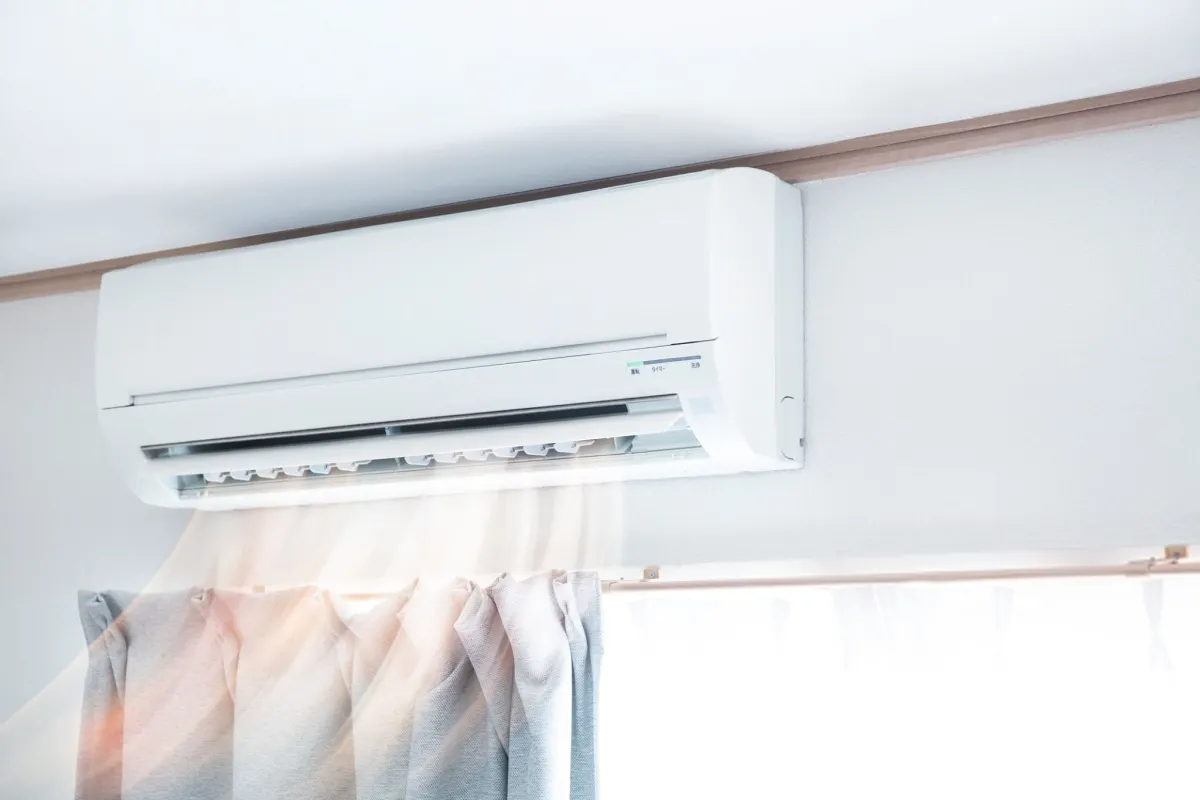
Why Do Inverter Air Conditioners Use Less Electricity?
The main difference comes down to how each system controls its compressor.
How a Non-Inverter Air Conditioner Works
A conventional air conditioner typically operates its compressor at a fixed speed. When the room temperature rises above the thermostat setting, the compressor switches on and runs at its operating capacity. Once the room becomes sufficiently cool, the compressor switches off.
As the temperature rises again, the compressor starts another cooling cycle.
This repeated on-and-off operation is known as compressor cycling. Starting the compressor can require a brief surge of electrical current, and frequent cycling can reduce efficiency under certain operating conditions.
The compressor also tends to deliver more cooling than the room needs toward the end of a cooling cycle, before shutting down. As a result, indoor temperatures may fluctuate more noticeably.
How an Inverter Air Conditioner Works
An inverter air conditioner uses electronic controls to vary the compressor's operating speed according to the cooling demand.
When you first switch it on, the compressor can run at a higher speed to bring the room toward the desired temperature. Once the room cools down, the system reduces compressor speed and continues running at a lower output to maintain comfortable conditions.
Rather than repeatedly stopping and restarting, the compressor can make gradual adjustments as the room's cooling requirements change.
This approach offers several advantages:
- Lower energy consumption: The compressor can use less power when the room needs only a small amount of cooling.
- More stable temperatures: Continuous adjustments help reduce the temperature swings associated with frequent compressor cycling.
- Quieter operation: Lower compressor speeds often produce less noise during steady-state operation.
- Reduced mechanical cycling: Fewer full stops and restarts can reduce some of the stress associated with repeated cycling.
Inverter technology does not eliminate startup electricity use, nor does it guarantee lower consumption in every situation. Its main advantage is the ability to match cooling output more closely to demand, particularly when an air conditioner operates for extended periods.
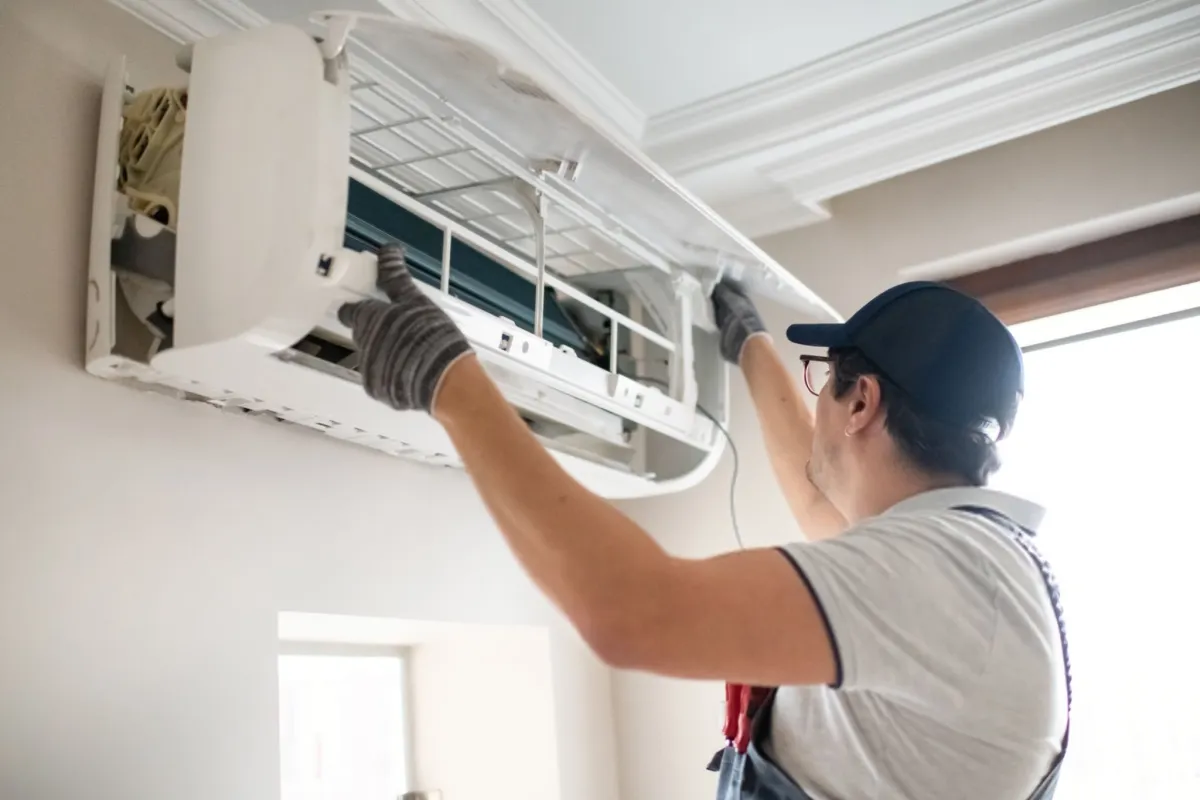
When Do Inverter Air Conditioners Save the Most Electricity?
Although inverter models are often more energy-efficient, the amount you save depends on your home, local climate, and cooling habits.
1. When You Run the AC for Long Periods
The longer your air conditioner operates, the more opportunities an inverter system has to benefit from variable-speed operation.
For example, if you keep your AC running throughout the afternoon and evening, an inverter model can cool the room initially and then reduce its output to maintain the set temperature.
A non-inverter model, by comparison, typically continues cycling its compressor on and off as the room warms and cools.
This makes inverter technology particularly attractive for households that rely heavily on air conditioning during summer.
If you use your AC for only short periods, however, the energy savings may be smaller, making the lower purchase price of a conventional model more appealing.
2. In Hot Climates and During Long Summers
Climate plays a major role in determining how much electricity an air conditioner uses.
In regions with long, hot summers, such as parts of the southern United States, the Mediterranean, and Australia, air conditioning may run for many hours each day.
Under these conditions, an inverter air conditioner can adjust its output continuously as outdoor temperatures and indoor cooling demands change.
A conventional unit may need to cycle frequently to maintain the desired temperature, while an inverter model can often operate more efficiently at a reduced speed once the room is cool.
However, extreme heat can increase electricity consumption for both types. The efficiency advantage of an inverter model depends on its design, operating conditions, and ability to meet the cooling load.
3. In Well-Insulated Homes
Insulation and air leakage can significantly affect cooling costs.
A home with insulated walls, energy-efficient windows, sealed gaps, and effective shading generally retains cool air more effectively than a poorly insulated property.
Once an inverter air conditioner reaches the desired temperature in a well-insulated room, it can often reduce compressor speed and use less power to maintain comfortable conditions.
In a home with poor insulation or substantial air leakage, the cooling system must work harder to replace the heat entering the room. This can reduce potential savings, regardless of whether the unit uses inverter technology.
To improve efficiency, consider sealing drafts, using blinds or curtains to block direct sunlight, and checking that your home has adequate insulation.
4. In Homes With the Right AC Capacity
Choosing the correct cooling capacity is just as important as choosing between inverter and non-inverter technology.
An undersized air conditioner may struggle to cool a room during hot weather, while an oversized system may cool the space too quickly without providing ideal comfort or humidity control.
Although inverter technology allows a compressor to adjust its output, every system has operating limits. A unit that is too small may run near maximum capacity for extended periods, while one that is too large may not operate within its most efficient range.
When choosing an air conditioner, consider room size, ceiling height, window exposure, insulation, occupancy, and local climate. For larger homes or commercial spaces, a properly designed multi-split or variable-capacity system may be more suitable than a single wall-mounted unit.

Is an Inverter AC Always More Energy-Efficient?
Not necessarily. Inverter models often have an advantage during extended operation, but that does not automatically make them the most economical choice for every household.
When a Non-Inverter AC May Make More Financial Sense
A conventional air conditioner may be worth considering when:
- You need cooling only occasionally, such as in a guest room used a few times a year.
- You run the unit for short periods rather than throughout the day.
- Your budget is limited and the upfront price difference is substantial.
- You have access to a reliable, inexpensive conventional model that meets your cooling needs.
In these situations, the lower initial cost may outweigh the potential electricity savings, particularly if the air conditioner is used infrequently.
However, short operating periods do not automatically mean a conventional model will consume less electricity. The result depends on the cooling load, the unit's efficiency, and the amount of cooling required.
When Inverter Technology May Offer Little Savings
Inverter technology is less likely to deliver its full potential when the air conditioner must operate near maximum capacity for most of the day.
For example, a shop with frequently opened exterior doors may constantly gain heat from outside. Similarly, a room exposed to intense sunlight with inadequate insulation may require continuous high-output cooling.
Under these conditions, an inverter compressor may have limited opportunity to reduce its speed. Electricity consumption can therefore be closer to that of a conventional system with comparable cooling capacity and efficiency.
This does not mean inverter technology stops working. It means that the conditions prevent the system from spending as much time operating at a lower output.
How Much Electricity Can an Inverter AC Save?
Inverter air conditioners are often advertised as using 30% to 50% less electricity than conventional models. Savings in this range are possible under suitable conditions, but they should not be treated as a guarantee.
Actual savings depend on several factors, including:
- The energy efficiency of the specific models being compared
- Outdoor temperature and humidity
- Daily operating hours
- The temperature setting
- Room insulation and air leakage
- Whether the unit is correctly sized
- Electricity prices and the structure of your utility tariff
For a more reliable comparison, look at the energy-efficiency ratings and annual energy consumption figures provided for the specific models you are considering.
In the United States, the yellow EnergyGuide label can help compare estimated annual energy costs for applicable products. Depending on the equipment category and market, ratings such as SEER2 and EER2 can also help you evaluate cooling efficiency.
In the UK and European markets, check the energy label, seasonal efficiency ratings, and manufacturer's stated energy consumption. Keep in mind that ratings and testing methods can differ between markets, so comparisons should be made using equivalent measures.
A Simple Example of Potential Savings
Suppose a conventional air conditioner uses 1,000 kWh of electricity over a particular period. If a comparable inverter model uses 30% less electricity under the same conditions, its consumption would be 700 kWh.
That would represent a saving of 300 kWh.
To estimate the financial benefit, multiply the electricity saved by your applicable electricity rate. For example, at an electricity price of $0.20 per kWh, saving 300 kWh would reduce the bill by $60 over that period.
These figures are illustrative rather than a prediction of actual performance. Your savings may be higher or lower depending on the equipment and operating conditions.
How to Choose the Right Air Conditioner for Your Home
If you're comparing inverter and conventional air conditioners, consider the following factors before making a purchase.
Compare efficiency ratings, not just technology. An inverter label alone does not guarantee that a unit is more efficient than every conventional alternative. Look at the specifications of the actual models.
Choose the correct capacity. An appropriately sized system can maintain comfort without unnecessary energy use. Follow the manufacturer's sizing guidance or consult a qualified HVAC professional.
Consider your local climate. If your summers are long and hot, the potential savings from efficient, variable-speed operation may be more valuable.
Check installation requirements. Incorrect refrigerant charging, poor airflow, unsuitable pipework, or inadequate installation can undermine efficiency and comfort.
Account for maintenance. Clean or replace filters as recommended, keep outdoor coils free of obstructions, and arrange professional servicing when necessary.
Calculate the payback period. Divide the additional upfront cost of the inverter model by its estimated annual electricity savings. This provides a rough estimate of how long it may take for the energy savings to offset the price difference.
For example, if an inverter model costs $250 more and saves an estimated $100 per year, the additional purchase cost would be recovered in approximately 2.5 years, assuming those savings remain consistent and excluding other costs.