
The Glowing Yellow Horseshoe on Your Dashboard
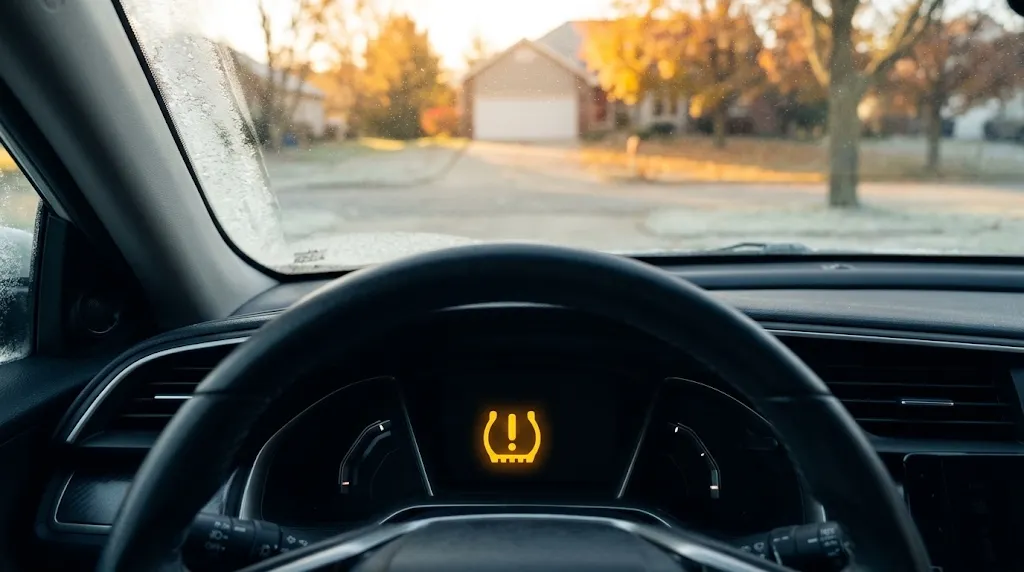
When the first cold morning of autumn rolls around, millions of drivers turn the key, glance down at their dashboard, and feel their stomach drop. A glowing yellow horseshoe with an exclamation point inside stares right back at them. The tire pressure warning light came on overnight.
Most folks assume they picked up a roofing nail on the highway yesterday afternoon or have a slow bead leak. They pull into the first gas station on their way to work, wait in line behind three trucks, and feed quarters into an air compressor without having any clue what actually happened to their tires.
A certified tire technician named Dave at a family-owned garage in Cleveland broke down the physics for me on a frosty morning last November. Dave grabbed a mechanical tire pressure gauge and pointed at a dark blue minivan sitting on the lift in bay two.
"Every autumn when the morning temperature drops thirty degrees, our shop phone rings non-stop," Dave told me. "People swear their tires have holes in them. But ninety-five percent of the time, not a single breath of air escaped from the valve stem. It is just basic gas physics that high school students learn in ninth-grade science class."
Venturi Effect and 300-Pound Shear Valves: The Hidden Engineering of Gas Stations
Why Air Molecules Huddle Together in the Cold
Air is made of gas molecules bouncing around inside your tire like tiny rubber balls. When outside air is hot in July, those molecules soak up thermal energy, vibrate like crazy, and push hard against the rubber inner liner. That outward push is what your tire gauge reads as pounds per square inch.
When winter weather rolls in and morning temps drop from seventy degrees down to thirty degrees, those gas molecules slow down. They lose heat energy, huddle closer together, and stop pushing as hard against the rubber walls.
Dave sketched a quick formula on a cardboard shipping box. "The golden rule of tire physics is dead simple," Dave explained. "For every ten degrees Fahrenheit the outside temperature drops, your tire pressure drops by roughly one pound per square inch."
"If you last checked your tires on an eighty-degree afternoon in August, and wake up to a thirty-degree frost in November, your tires have dropped five whole PSI without losing a single microscopic molecule of air."
The Dangerous Sidewall Number Trap
Dave walked me over to a Dodge pickup truck on a hydraulic lift. He wiped road grime off the tire sidewall with his work thumb to show me a mistake drivers make all the time.
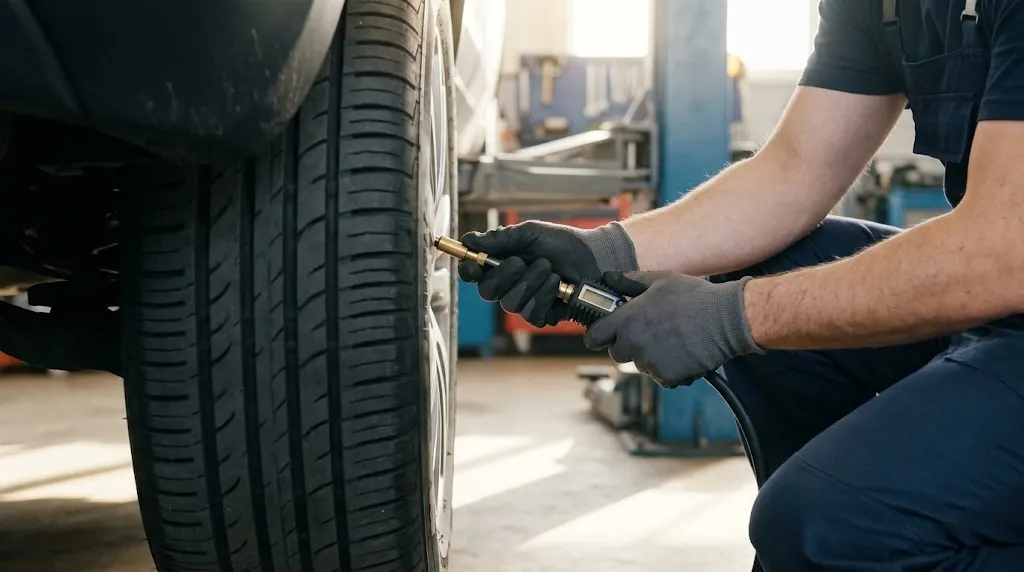
"See that little number molded in tiny rubber letters right here near the rim?" Dave asked. "It says fifty PSI max press. Drivers squint at that number with a phone flashlight, grab the gas station air hose, and pump air until their tires are rock-hard."
"That fifty PSI number is not what your car was engineered to run on," Dave warned. "That is the absolute burst limit before the tire carcass separates. Pumping a standard passenger tire to fifty PSI makes your car bounce over road bumps like a basketball, and it wears the center tread down to bare cords in six months."
Where the Real Pressure Number Hides
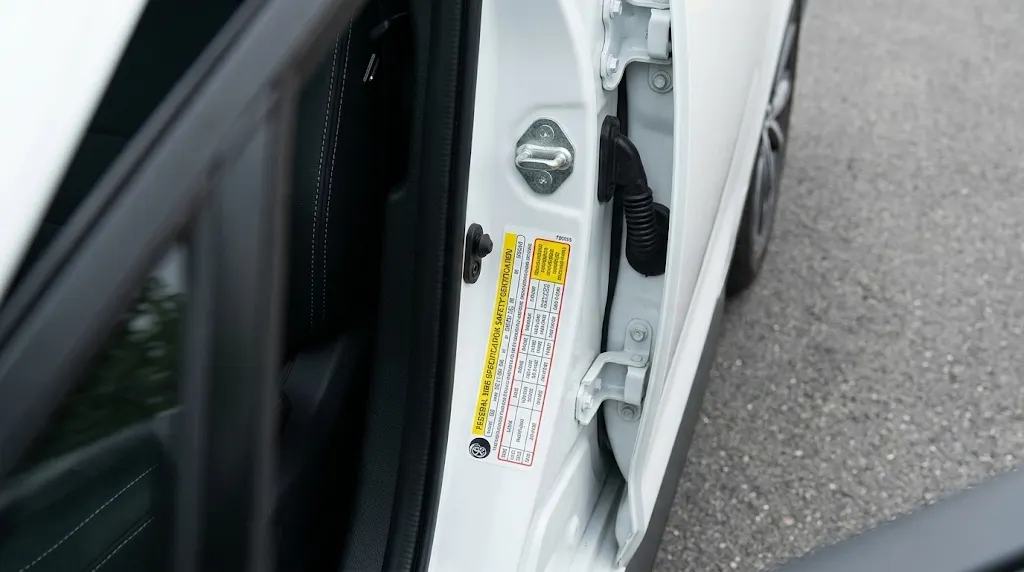
Dave opened the driver's door of the pickup and pointed to a rectangular aluminum sticker stuck inside the door frame.
"Every single car made has this federal safety placard on the driver door jamb," Dave told me. "It tells you the exact cold tire pressure calculated by the engineers who designed the suspension."
"On this truck, the factory sticker says thirty-two PSI. If you inflate it to thirty-two pounds when the rubber is cold in your driveway, the tire tread sits completely flat across the pavement. You get the shortest stopping distance and the longest tread life."
| Tire Condition | Cold Pressure Level | Tire Footprint on Road | Practical Everyday Impact |
|---|---|---|---|
| Door Sticker Spec | 32 to 35 PSI | Flat, full width contact | Best fuel mileage, even wear, safe wet braking |
| Cold Weather Drop | 24 to 28 PSI (-6 PSI) | Edges sag; center lifts | Burns 3% more gas; chews up shoulder tread |
| Sidewall Max Mistake | 44 to 50 PSI (+15 PSI) | Rounded like a balloon | Harsh bumpy ride; slides easily on wet asphalt |
Why Driving on Soft Tires Burns Extra Fuel
I asked Dave what happens if a driver simply ignores that yellow horseshoe dash light and keeps driving all winter on under-inflated tires.
Dave kicked an old radial tire sitting by the scrap pile. "An under-inflated tire sags in the center and rolls heavily on its outer shoulders," Dave explained. "That extra drag creates friction, forcing your car engine to work harder to push the car down the road."
"Running five pounds low burns about three percent more gasoline every mile," Dave said. "If you drive twelve thousand miles a year, you are literally throwing eighty bucks right out the exhaust pipe. Plus, you will destroy a set of six-hundred-dollar tires two years early."
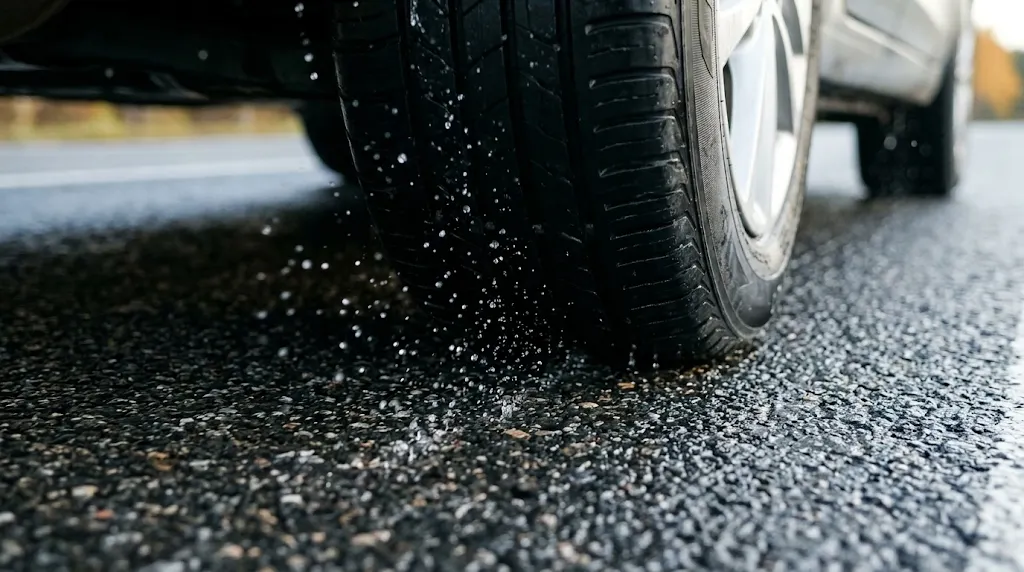
The Golden Rule of Checking Tires Cold
Dave emphasized that checking tire pressure after driving down the highway gives a completely false reading.
"Friction from high-speed driving heats the air inside the rubber by forty degrees," Dave pointed out. "That heat expands the air and adds three or four fake pounds to your gauge reading."
"If you check your tires at a rest stop on Interstate 80, the gauge might read thirty-four pounds and look fine. But the next morning on your cold driveway, that same tire drops back to thirty pounds."
The Ten-Dollar Tool for Your Glove Box
Dave pulled a small digital tire gauge with a brass chuck out of his shirt pocket. "Don't trust the air gauges attached to gas station pumps," Dave advised. "People drop those hoses in snow and run over them with pickup trucks. Half of them are off by four to six pounds."
"Spend ten bucks at any auto parts store on a decent digital tire gauge, and toss it in your glove compartment," Dave said. "Check your tires once a month on a Sunday morning before you back out of the driveway."
The next time that yellow dashboard warning light pops on during an autumn cold snap, don't panic. Grab your pressure gauge, check the yellow sticker inside your driver's door, and top off your tires. You will save money on gasoline, keep your tires wearing evenly, and stay safe on slick winter roads all season long.