
The Lost Diesel Submarine Three Miles Under the Pacific
On a stormy night in March 1968, a Soviet Golf-II class ballistic missile submarine designated K-129 slipped beneath the choppy swells northwest of Oahu, Hawaii. Armed with three nuclear-tipped ballistic missiles and two nuclear torpedoes, the diesel-electric boat was on routine patrol when disaster struck. Around midnight, acoustic monitoring stations operated by the US Navy across the Pacific rim recorded a violent double acoustic transient. The submarine vanished with all ninety-eight crewmen aboard, leaving the Soviet navy searching in vain for over two months across hundreds of square miles of open ocean.
While Moscow gave up the search, the American intelligence apparatus had secretly pinpointed the wreck using the SOSUS underwater hydrophone array. Resting sixteen thousand feet down on the abyssal plain, the broken hull held the ultimate prize: Soviet naval cryptographic codebooks, nuclear warheads, and intact cipher machinery.
The Pentagon turned to the CIA's Directorate of Science and Technology. To retrieve a three-thousand-ton submarine from three miles under water without alerting Soviet maritime surveillance, the agency hatched Project Azorian—a six-year, multi-hundred-million-dollar covert maritime salvage operation masquerading as a private deep-sea mining venture.
Why Airport Baggage Scanners Turn Everything Orange (and Why Blue Is Bad)
The Eccentric Billionaire's Manganese Cover Story
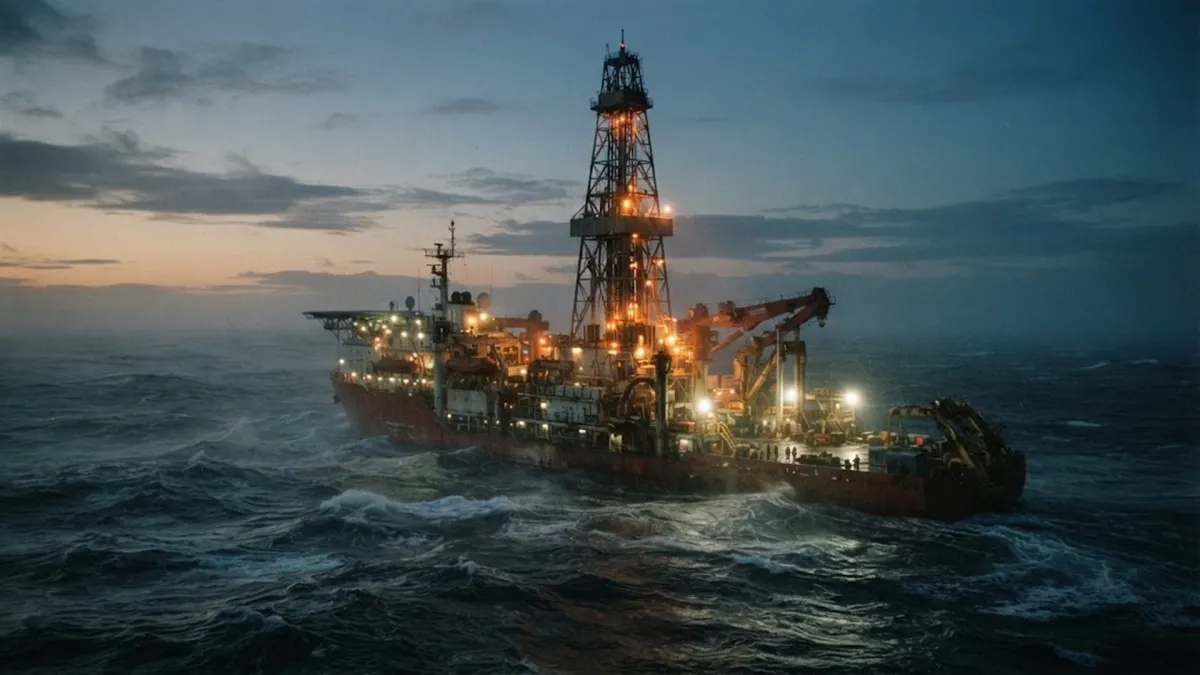
I spoke with naval historian and maritime recovery analyst Donald Vance, who has cataloged declassified naval intelligence archives at a defense research institute in Alexandria, Virginia. Vance spread out blueprints of an enormous 618-foot commercial vessel built specifically for the mission.
"The CIA knew they could never hide a massive salvage ship operating stationary in international waters for months," Vance told me, pointing to the ship's center derrick. "Every Soviet reconnaissance plane and spy trawler in the Pacific would photograph it. So the agency approached eccentric industrialist Howard Hughes. Hughes agreed to act as the public front, announcing that his company, Summa Corporation, was building a futuristic mining ship called the Hughes Glomar Explorer to harvest manganese nodules from the ocean floor."
The global press and the scientific community swallowed the story completely. Mining executives, marine biologists, and Wall Street investors watched with fascination as Hughes spent what appeared to be his own vast fortune on deep-sea mineral extraction technology.
| Operational Component | Cover Story (Public) | Actual CIA Mission | Technical Specifications |
|---|---|---|---|
| Hughes Glomar Explorer | Deep-sea manganese nodule miner | Heavy sub-surface recovery platform | 618 ft length; 51,000 tons displacement |
| The Clementine Claw | Seafloor mineral dredge scooper | Hydraulic capture vehicle | Heavy steel claw designed to cradle hull |
| The Moon Pool | Enclosed research sampling wet well | Submerged hangar for secret loading | 199 ft long x 74 ft wide internal bay |
| Cover Beneficiary | Howard Hughes / Summa Corp | CIA Directorate of Science & Tech | Budget: Over $800M in modern currency |
The Heavy Claw in the Moon Pool
Beneath the center of the ship lay the secret: the Moon Pool, an enormous submerged hangar open to the sea below. Inside this flooded well sat "Clementine," an immense mechanical claw outfitted with heavy hydraulic arms engineered to wrap around the shattered Soviet hull.
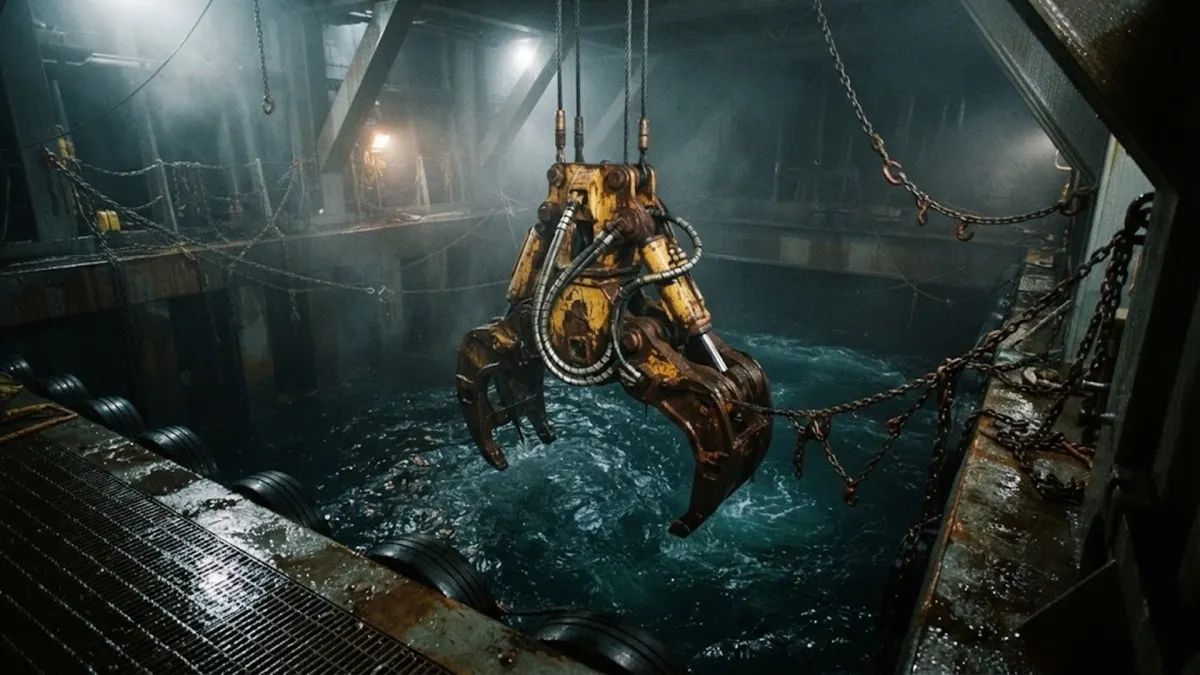
In the summer of 1974, the Hughes Glomar Explorer arrived over the wreck site fifteen hundred miles northwest of Hawaii. As Soviet naval tugs and reconnaissance flights circled nearby, CIA engineers spent three weeks slowly assembling three miles of thirty-foot steel pipe sections to lower Clementine down into the freezing abyss.
"Clementine reached the sea floor and successfully latched its hydraulic jaws around the forward section of K-129," Vance recounted. "Pumps hoisted thousands of feet of pipe back up into the derrick. But nine thousand feet above the bottom, catastrophe struck. Stress fractures ripped through three of the claw's steel capture tines. Two-thirds of the recovered submarine hull broke free, tumbling back down into the depths."
The Structural Failure
Metallurgical investigations later confirmed that high-strength steel used in the claw's lifting arms suffered hydrogen embrittlement under extreme hydrostatic pressure, causing the aft two-thirds of the submarine section to break off during the hoist.
What the CIA Brought Home
Despite the claw failure, the forward thirty-eight-foot section remained locked in the jaws and was hoisted into the Glomar Explorer's Moon Pool. Inside the recovered bow, technicians found two nuclear torpedoes, sonar apparatus, and the bodies of six Soviet submariners.
In accordance with maritime tradition, the American crew conducted an honorable military burial service on the aft deck, singing hymns in Russian and English before committing the sailors' remains to the Pacific deep. A color video of that solemn service was later formally presented to Russian President Boris Yeltsin in Moscow in 1992.
Intelligence Legacy
Project Azorian remains the most audacious ocean engineering feat in history. It revolutionized deep-sea salvage and gave birth to the famous legal phrase "neither confirm nor deny"—known worldwide today as the Glomar Response.