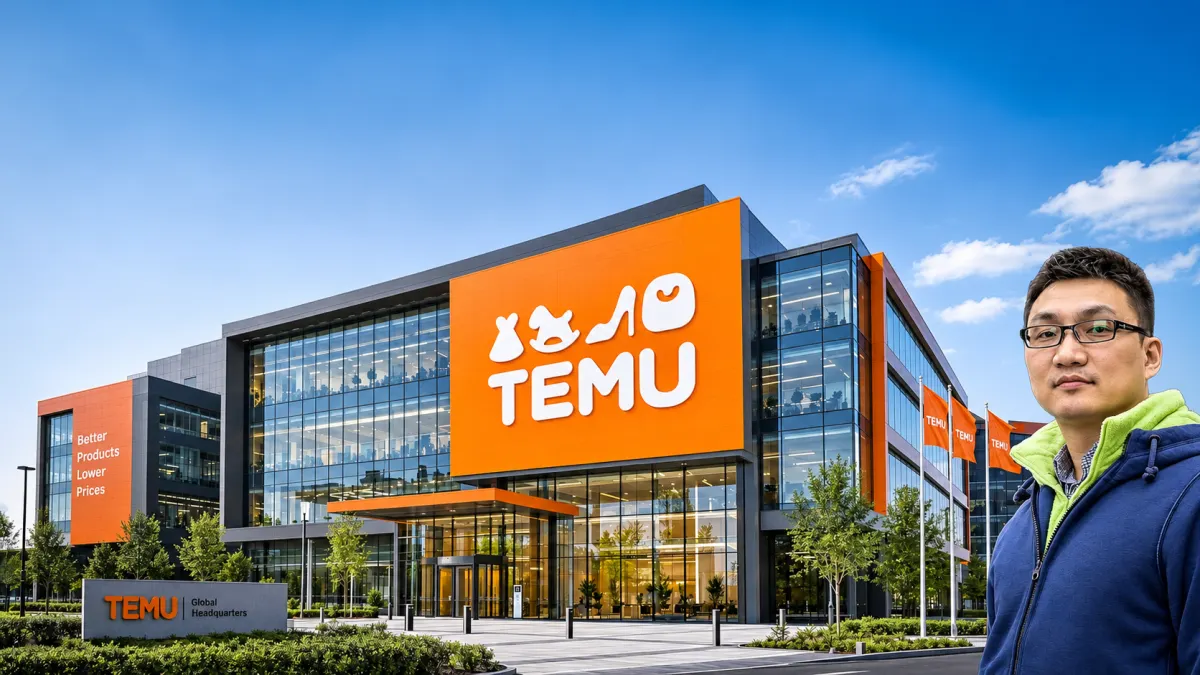

From a Modest Childhood in China to the Founder of One of the World's Fastest-Growing Shopping Platforms
What if the secret to building a global shopping empire wasn't selling better products, but finding a way to make everyday goods affordable to people who had been overlooked by the biggest online retailers?
The Story of YouTube: How Three Young Engineers Changed the Internet Forever
That question helps explain the rise of Colin Huang, the Chinese entrepreneur behind Pinduoduo and Temu. His journey took him from a modest upbringing near Hangzhou to the technology industry in the United States, through an early business setback, and eventually to the creation of a shopping platform that challenged some of the world's biggest e-commerce companies.
But Huang's success was not simply a story of cheap products or clever advertising. It was built around a different way of thinking about online shopping—one that combined manufacturers, social connections, group buying, and an aggressive approach to growth.
A Childhood That Shaped His Ambition

Colin Huang grew up near Hangzhou, China, in a family that understood the value of hard work. His parents held low-paying factory jobs, and their limited income meant that opportunities were not always easy to come by.
For Huang, however, mathematics and science offered a different path.
He distinguished himself academically and earned a place in a mathematics competition, eventually receiving a scholarship to study at Zhejiang University. There, he pursued computer science, developing the technical foundation that would later prove essential to his entrepreneurial ambitions.
His early achievements opened doors beyond his hometown. After completing his university studies, Huang moved to the United States to pursue graduate education in computer science at the University of Wisconsin.

The move exposed him to a technology ecosystem that was transforming how people communicated, worked, and bought products. It also placed him closer to the emerging internet economy, where ambitious engineers could help build companies with global reach.
Huang was no longer simply learning how technology worked. He was beginning to understand how it could change the way business worked.
From Google to His First Major Business Decision
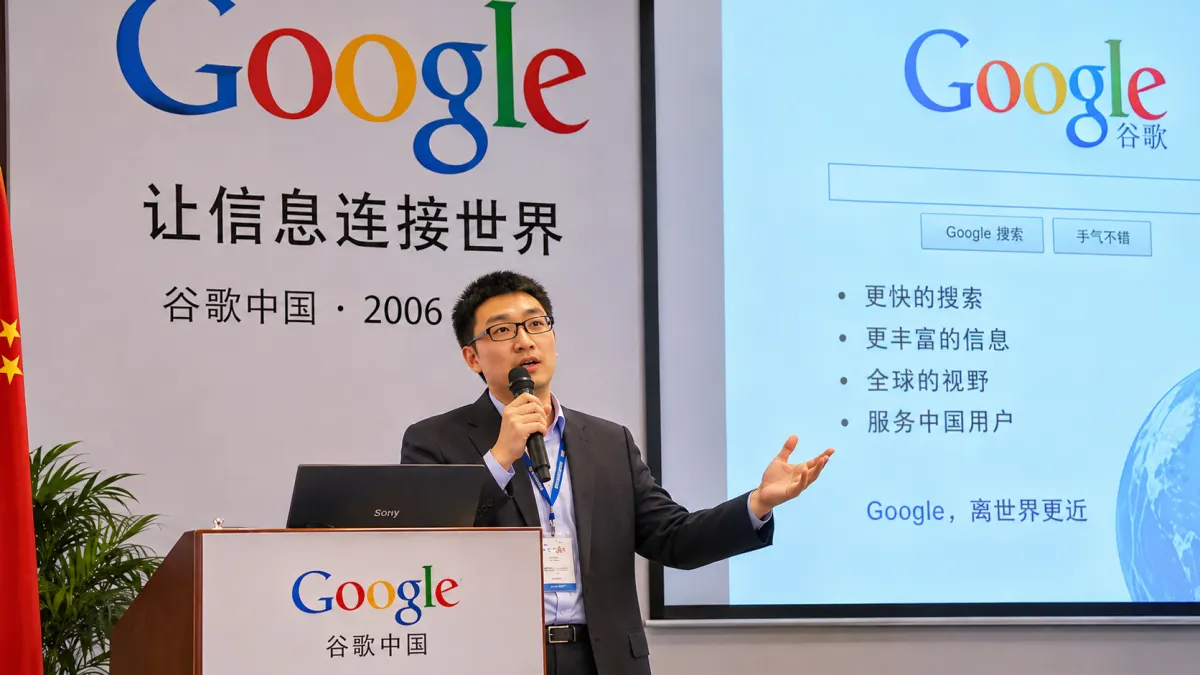
Huang eventually joined Google, gaining experience inside one of the world's most influential technology companies.
Working in the technology industry gave him a valuable combination of technical knowledge, professional connections, and exposure to the economics of rapidly growing businesses. He also benefited financially from company stock awarded as part of his compensation.
As Google's value increased, those shares reportedly grew to be worth around $2 million, providing Huang with capital that would later support his entrepreneurial ventures.
But a successful career at a major technology company was not the end of his ambitions.
In 2006, Huang returned to China and became involved in Google's efforts to expand its search business in the country. The opportunity looked promising, but the competitive environment proved difficult. Local rival Baidu had a strong position in China's search market, and Google struggled to establish the dominance it had achieved elsewhere.
For Huang, the experience offered an important lesson: a business model that works in one market does not necessarily succeed in another.
Rather than remaining in a corporate role, he turned his attention toward building businesses of his own.
Learning From Failure in China's Competitive E-Commerce Market
China's online shopping market was already developing into a fiercely competitive industry. Alibaba and JD.com were building powerful positions, connecting consumers with an expanding range of products and sellers.
Competing directly with established giants would not be easy for a newcomer.
Huang's first e-commerce venture, Ouku.com, gave him an opportunity to explore the market and learn how online retail worked. The business grew, but Huang wanted something bigger. He was interested not merely in running an online store, but in identifying a different way to connect consumers with products.
He eventually sold the business and used the proceeds to pursue new ideas.
His next ventures moved closer to the model that would define his later success: helping consumers find products while connecting online demand more directly with suppliers and manufacturers.
These early experiments mattered because they gave Huang something that money alone could not buy—practical experience with the challenges of online commerce.
He was learning where traditional retail models struggled, what customers valued, and how technology could reduce the distance between the people making products and the people buying them.

The Market Opportunity That Changed Everything
By the mid-2010s, China's e-commerce industry had become enormous. Yet Huang saw a problem hidden beneath its impressive growth.
The biggest platforms were serving millions of consumers, but not everyone found their prices attractive. Shoppers in smaller cities and rural communities often had different purchasing priorities and more limited budgets than consumers in wealthier urban areas.
Huang recognized that these customers represented an opportunity.
Instead of trying to persuade shoppers to pay for the same products through another online store, he wanted to create a platform built around affordability and collective purchasing power.
The idea was straightforward: if more people could be encouraged to buy the same product together, sellers could offer lower prices while still benefiting from a larger volume of orders.
In 2015, Huang founded Pinduoduo, a company designed around this principle.
Rather than treating shopping as an individual transaction, the platform made it a social activity. Users could share products with friends and family, invite others to join a purchase, and unlock discounts through group buying.
This approach changed the way customers interacted with an online marketplace.
A shopper was no longer just someone browsing a catalog. That shopper could also become a source of new customers, helping the platform grow through personal recommendations.
How Pinduoduo Turned Shopping Into a Social Experience
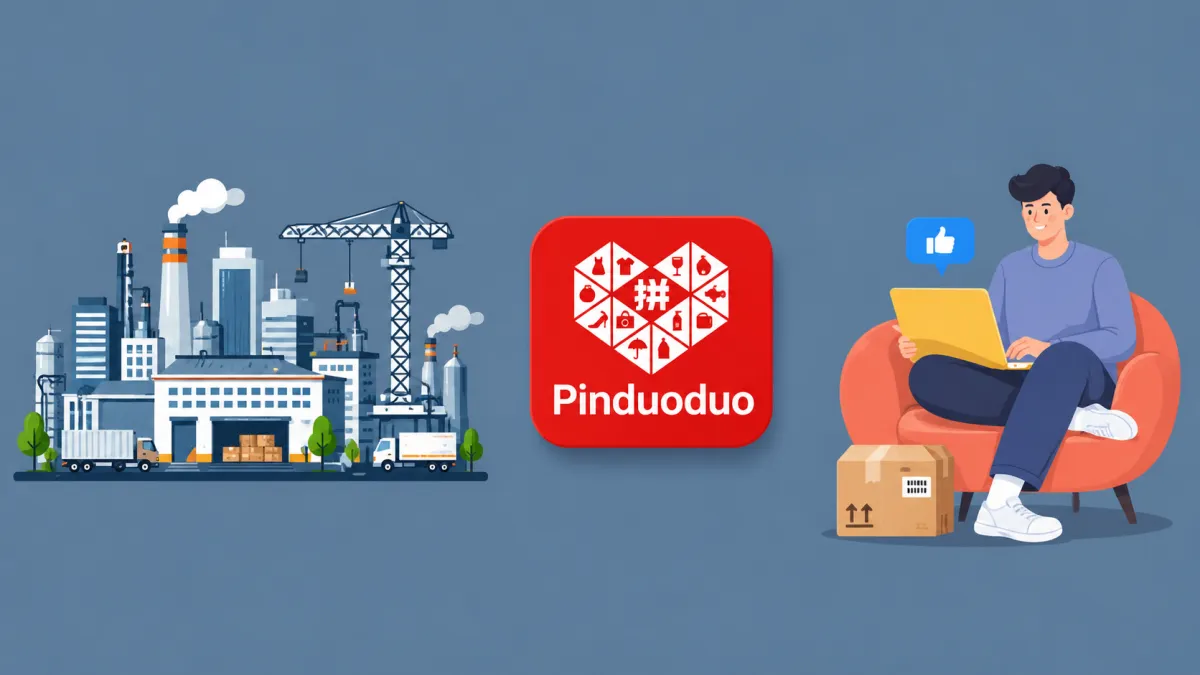
Pinduoduo's business model combined several ideas that worked particularly well together.
First, the company focused on competitive prices. By connecting demand with manufacturers and suppliers, it aimed to reduce unnecessary costs and make products accessible to price-sensitive consumers.
Second, it encouraged social sharing. Customers could send product links to friends, relatives, and other potential buyers, creating a network through which the platform could reach new audiences.
Third, it incorporated interactive features and incentives into the shopping experience. Discounts, group purchases, and promotional activities encouraged users to return to the app and invite others to participate.
These features helped create a powerful growth cycle. More users attracted more merchants, a wider selection of products attracted additional shoppers, and social referrals helped the platform reach customers without relying entirely on conventional advertising.
The model was especially appealing to consumers who had previously viewed the leading e-commerce platforms as too expensive or insufficiently suited to their needs.
Pinduoduo expanded rapidly, eventually becoming one of China's major e-commerce businesses. Its growth culminated in a listing on the Nasdaq stock exchange in the United States in 2018, marking a significant milestone for Huang and the company.
The business had demonstrated that challenging established market leaders did not always require copying their strategies. Sometimes, the opportunity lay in serving a different customer in a different way.
Why Huang Decided to Take the Model Global
Pinduoduo's success gave Huang a foundation for his next major ambition: bringing a similar approach to consumers outside China.
The opportunity was substantial. Online shopping had become part of everyday life across many countries, but consumers everywhere continued to look for lower prices, greater product variety, and convenient ways to discover new items.
In September 2022, Temu entered the market.
The platform brought elements of Pinduoduo's approach to an international audience, offering a broad range of products at highly competitive prices. Its model relied on connections with suppliers and manufacturers, while its shopping experience incorporated promotional incentives and referral-based growth.
But expanding internationally required more than translating a Chinese shopping app into English.
Temu needed to introduce an unfamiliar brand to consumers, compete with established retailers, and persuade shoppers to download another app in a crowded marketplace.
Huang's team pursued an aggressive growth strategy, combining low prices with digital marketing, promotional campaigns, and high-profile advertising.
The objective was to make Temu recognizable quickly—and give consumers a compelling reason to try it.
The Advertising Strategy That Put Temu in the Spotlight
Temu's international expansion attracted attention partly because of the scale of its marketing efforts.
One of its most visible moves was advertising during the Super Bowl, the annual American football championship watched by a massive television audience. Super Bowl advertising is among the most expensive forms of mainstream advertising in the United States, making it a bold choice for a relatively new shopping brand.
The strategy helped put Temu in front of consumers who might never have encountered the platform through ordinary online searches.
At the same time, digital advertising, promotional offers, and referral incentives helped spread awareness across social media and other online channels.
Temu's approach reflected a central principle of the business: rapid growth could justify substantial upfront investment if it brought a large number of potential customers onto the platform.
That strategy helped turn the orange Temu brand into a familiar name in international e-commerce.
However, rapid expansion also brought difficult questions. Competing primarily on price can place pressure on margins, while spending heavily to acquire customers creates a need to convert initial curiosity into repeat purchases.
A large audience is valuable, but lasting success depends on whether a company can retain customers, maintain competitive prices, and operate its supply chain efficiently.
For Temu, the challenge was no longer simply attracting attention. It was building a durable position in global retail.

The Business Philosophy Behind the Temu Phenomenon
Huang's career reveals several ideas that help explain how relatively new companies can challenge established competitors.
He looked for customers others were not serving well. Rather than competing exclusively for affluent urban shoppers, Pinduoduo focused on consumers who cared deeply about affordability.
He changed the shopping experience itself. Group buying and social referrals made customers active participants in the platform's growth rather than simply buyers at the end of a transaction.
He used technology to support a different business model. Software was not just a way to display products. It helped coordinate purchasing behavior, connect demand with supply, and encourage repeat engagement.
He treated growth as a strategic priority. From his early ventures to Temu's international expansion, Huang repeatedly pursued opportunities that could scale beyond a conventional online store.
None of these ideas guarantees success on its own. Their impact came from combining them into a business model that appealed to a large group of consumers.
What Comes Next for the Founder Behind Temu?
Colin Huang's story is often framed as a journey from modest beginnings to extraordinary wealth. Yet the more revealing part of his career is how repeatedly he changed direction.
He moved from computer science to technology employment, from a corporate career to entrepreneurship, and from conventional e-commerce experiments to a social shopping platform. He then helped establish the foundation for Temu's international expansion.
Each stage built on the previous one, even when an earlier project failed to achieve its original goal.
His experience also illustrates how much the internet economy has changed. The companies competing for consumers' attention are no longer limited to traditional retailers or familiar American technology brands. Businesses built around different consumer behaviors can emerge from one market and rapidly become global competitors.
Temu's future will depend on more than its ability to offer inexpensive products or buy prominent advertising space. Customer trust, product quality, delivery reliability, competition, and the economics of international retail will all influence its long-term position.
For Huang, the larger achievement is the business model that helped make the expansion possible: a system designed to connect large numbers of consumers with a vast network of suppliers through technology, pricing, and social engagement.
The journey from a modest childhood near Hangzhou to the businesses behind Pinduoduo and Temu is ultimately a story about recognizing an overlooked market—and finding a new way to serve it.
In a world where established companies often appear impossible to challenge, Huang's career offers a different lesson: the biggest opportunity may not be to build another version of what already exists, but to understand why millions of people still feel that the existing options are not built for them.