


 25 November 2026
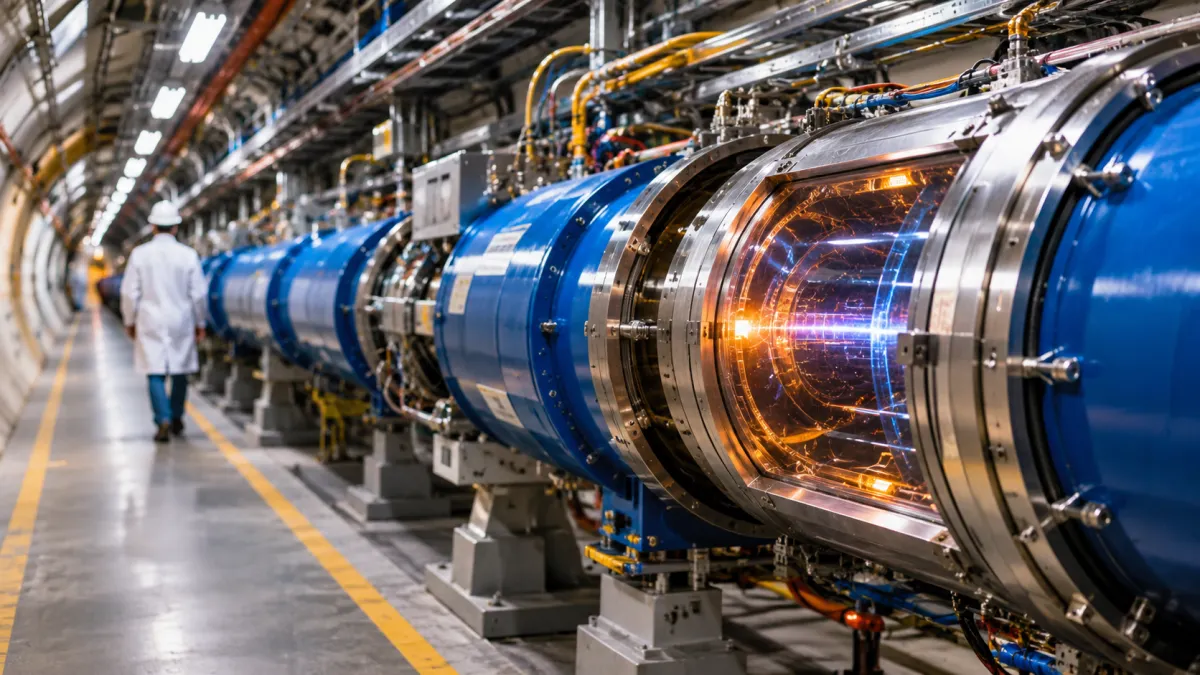
A particle accelerator is a powerful machine that uses electromagnetic fields to accelerate charged particles to extremely high speeds.
From investigating the smallest building blocks of matter to treating cancer, producing medical isotopes, and improving industrial materials, these machines have become essential tools across modern science and technology.
14 Important Types and Applications of Particle Accelerators
17 Essential Medical Diagnostic Devices Every Healthcare Professional Should Know About
 Inside the List
13 Items
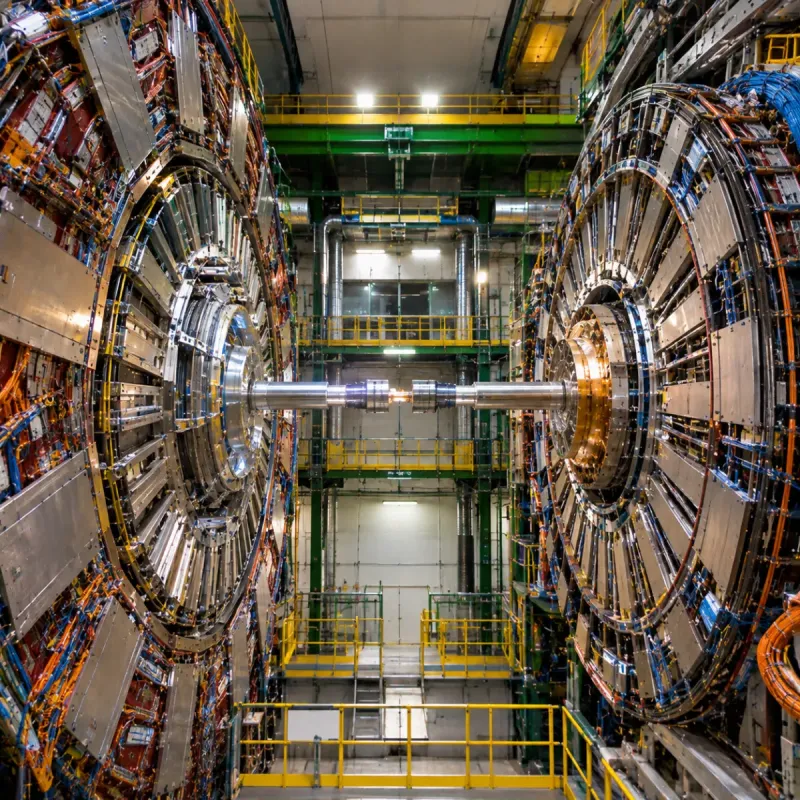
Particle Colliders
Design: Opposing particle beams
Particle colliders accelerate two beams in opposite directions and bring them together for head-on collisions. Unlike fixed-target experiments, colliders combine the energy of both beams, providing more collision energy to produce and study new particles.
- Head-on collisions
- High-energy collisions
- New particle research
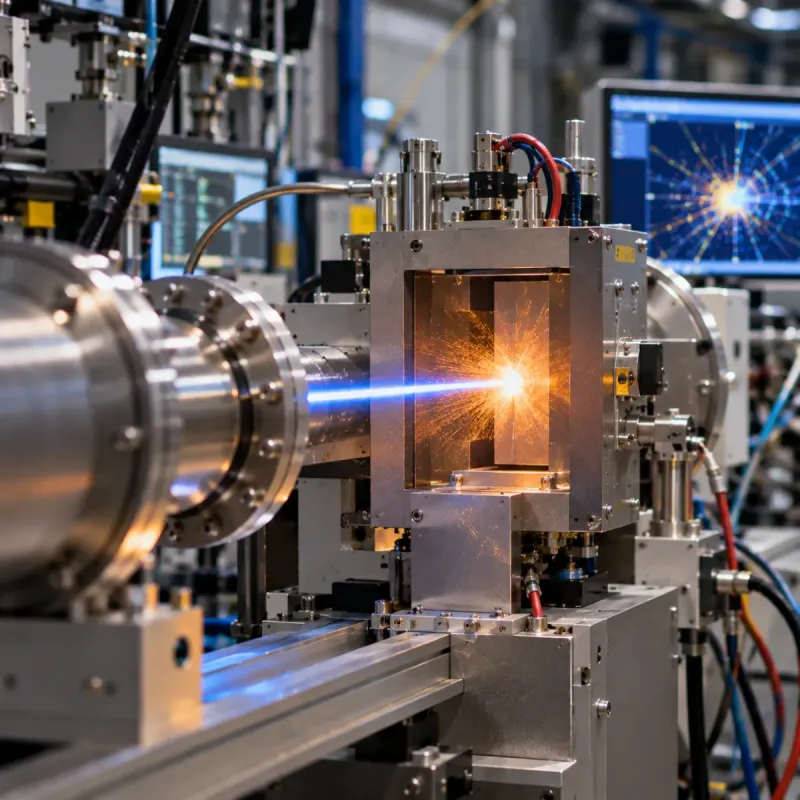
Fixed-Target Accelerators
Design: Beam-to-target collision
Fixed-target experiments direct an accelerated particle beam toward a stationary material or sample. These interactions let researchers investigate particle properties, study nuclear reactions, and produce secondary particles for specialized experiments.
- Fixed targets
- Particle interactions
- Nuclear experiments
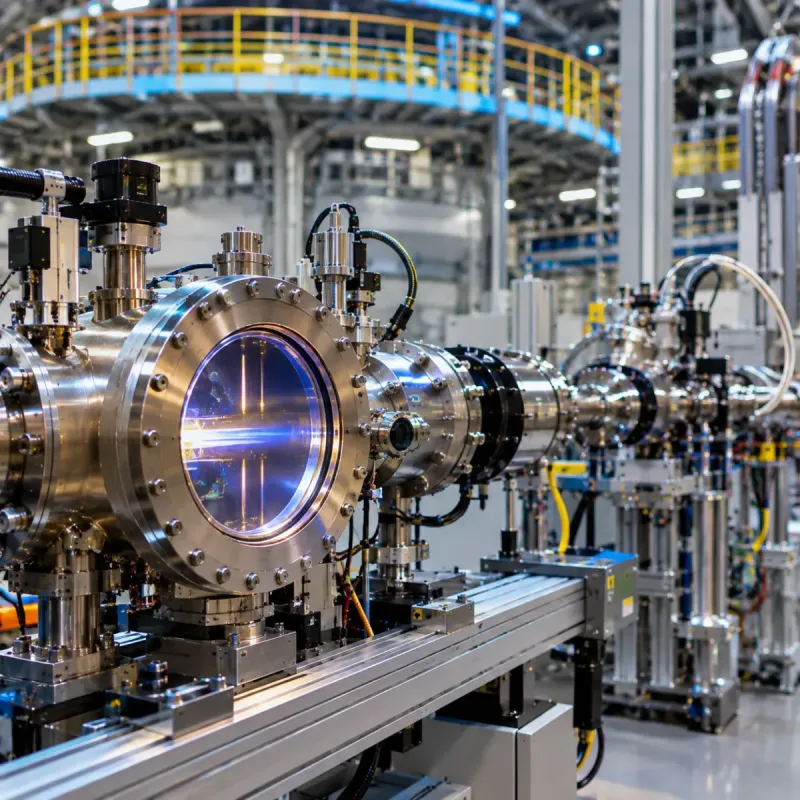
Synchrotron Light Sources
Design: Electron storage ring
Synchrotron light sources use accelerated charged particles, particularly electrons, to produce intense electromagnetic radiation. Scientists use this radiation to examine the structure and properties of materials, biological samples, and chemical compounds at very small scales.
- Synchrotron radiation
- Materials analysis
- Molecular research
Proton Synchrotrons
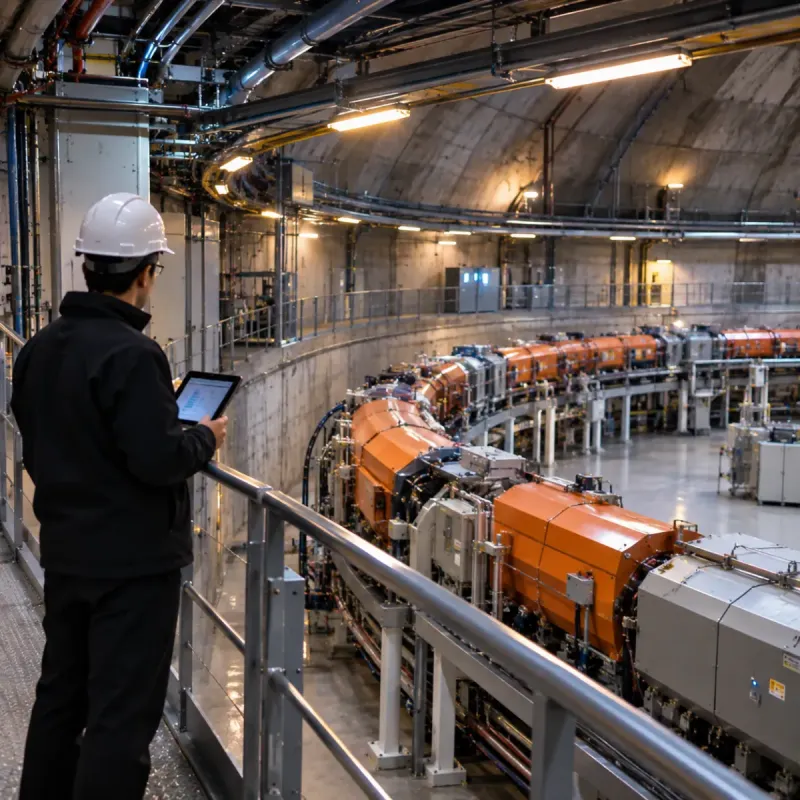
Design: Synchronized magnetic system
A proton synchrotron is a circular accelerator that increases the energy of proton beams while synchronizing the magnetic fields with the particles' motion. CERN's Proton Synchrotron is part of the accelerator chain that prepares particles for larger machines, including the LHC.
- Proton beams
- Magnetic synchronization
- Accelerator chain
The Large Hadron Collider (LHC)
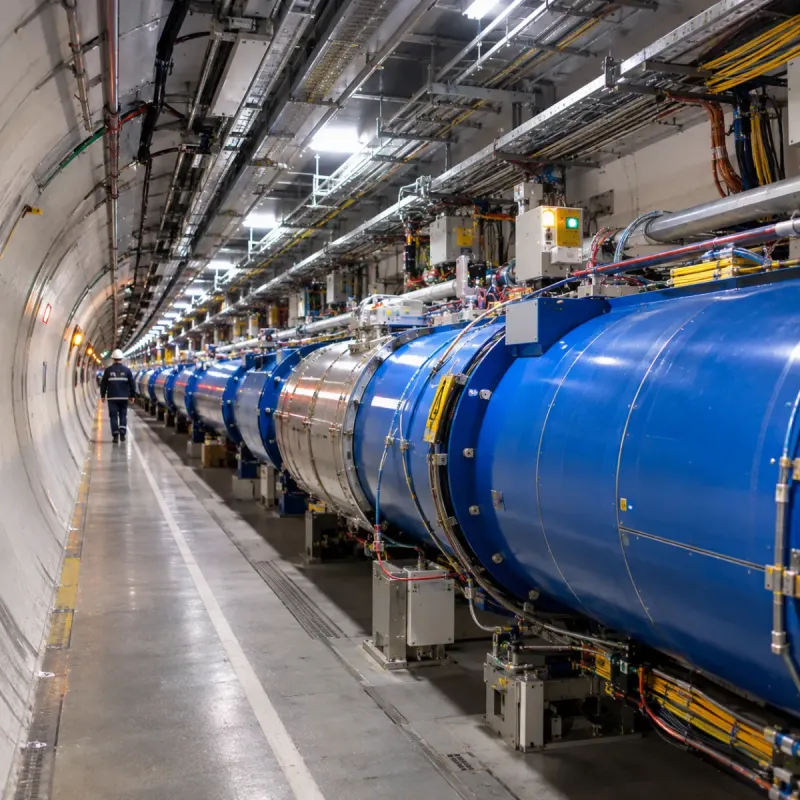
Design: 27-kilometre ring
The Large Hadron Collider is the world's largest and most powerful particle accelerator. Located at CERN, it uses a 27-kilometre circular tunnel and powerful superconducting magnets to accelerate protons or heavy ions, then collide opposing beams.
- Proton collisions
- Superconducting magnets
- High-energy physics
Proton Accelerators
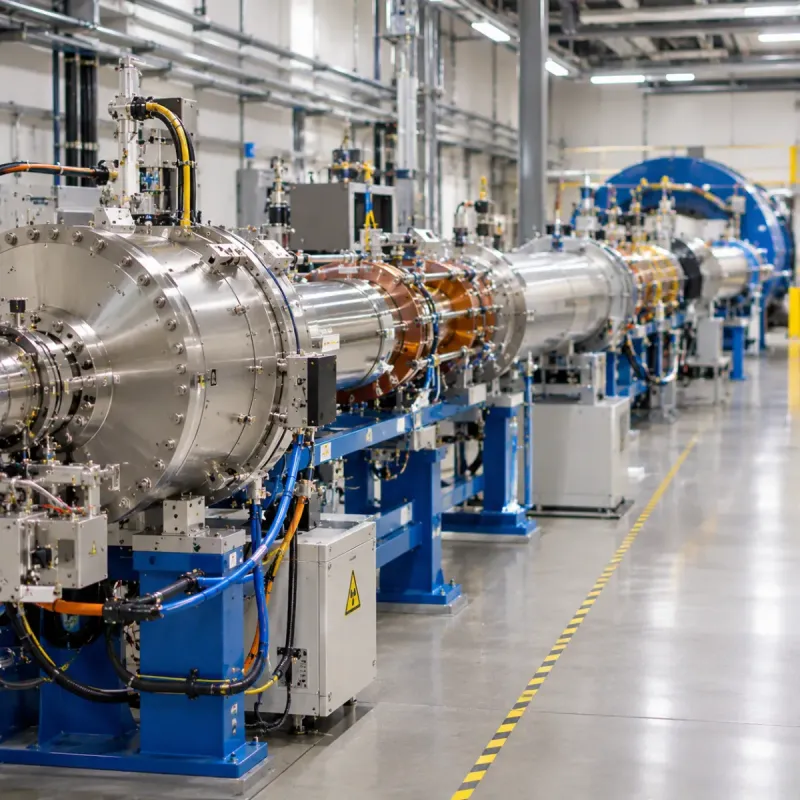
Design: Charged-particle beam
Proton accelerators produce high-energy beams of positively charged particles for scientific and medical applications. Depending on their design and energy, they can support nuclear physics research, produce medical isotopes, or provide beams for proton therapy.
- Proton acceleration
- Nuclear research
- Medical applications
Medical Linear Accelerators
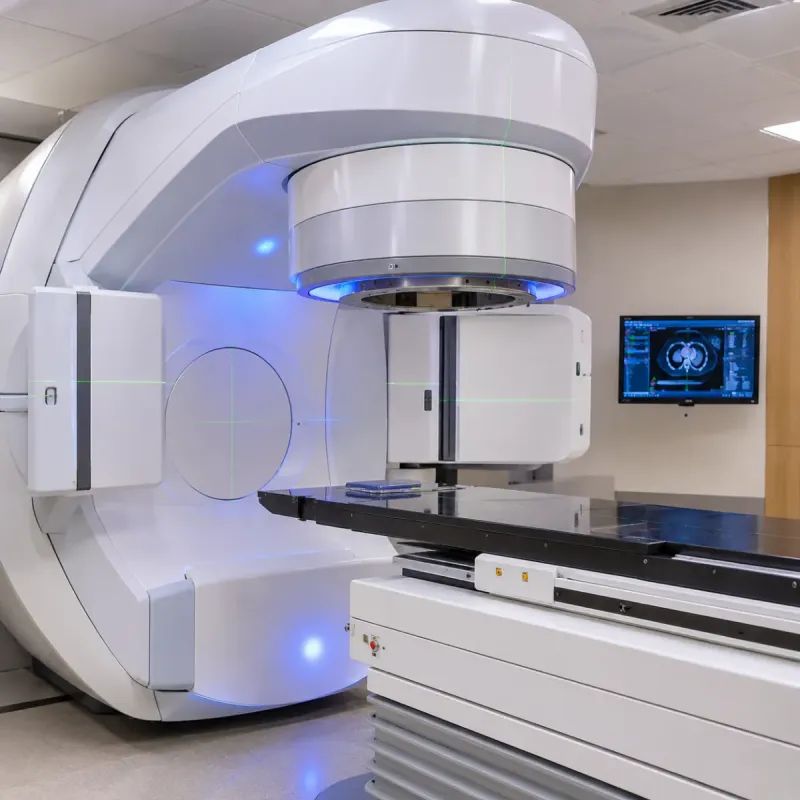
Design: Linear electron acceleration
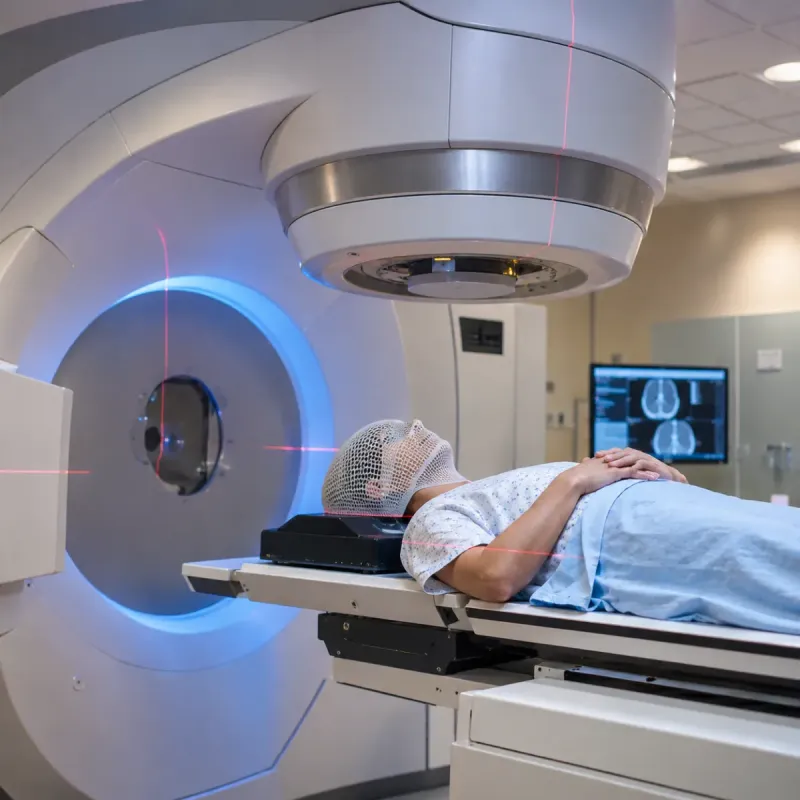
Medical linear accelerators, commonly called medical linacs, generate high-energy X-rays directed at cancerous tissue. Hospitals use them in external-beam radiotherapy to damage cancer cells' DNA and help control tumour growth.
- High-energy X-rays
- Targeted radiation
- Medical treatment

Electron Beam Accelerators
Design: Directed electron beam
Electron beam accelerators generate high-energy electron beams for industrial processing and sterilization. They help improve material durability, disinfect products, sterilize medical equipment, and treat certain foods without making them radioactive.
- Product sterilization
- Food processing
- Material enhancement
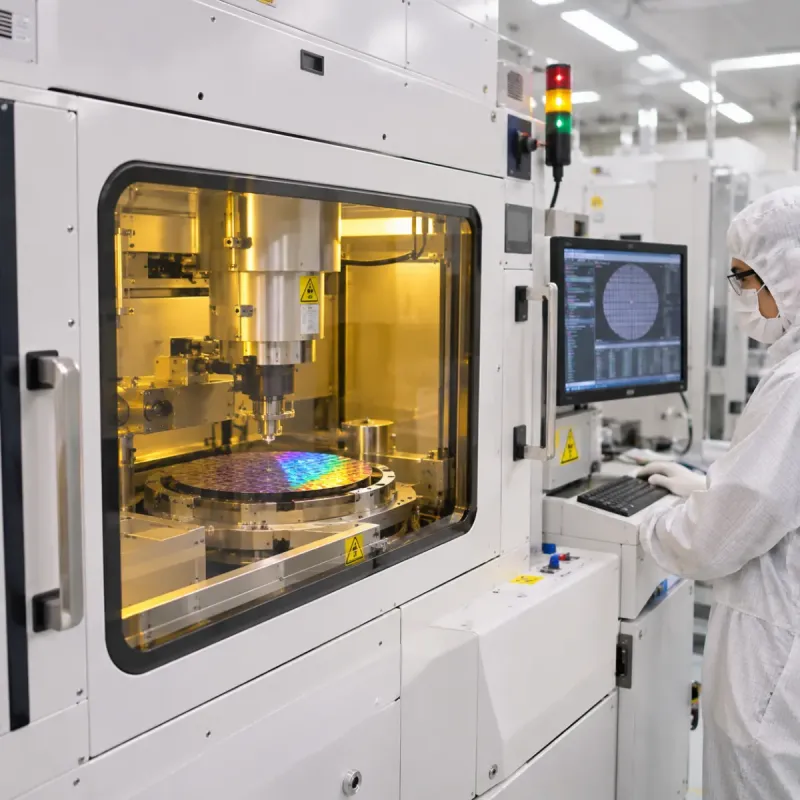
Ion Implanters
Design: Focused ion beam
Ion implanters accelerate ions and direct them into a material's surface, changing its physical properties. This technology is especially important in semiconductor manufacturing, where it helps modify silicon and other materials used in electronic devices.
- Ion implantation
- Semiconductor manufacturing
- Surface hardening
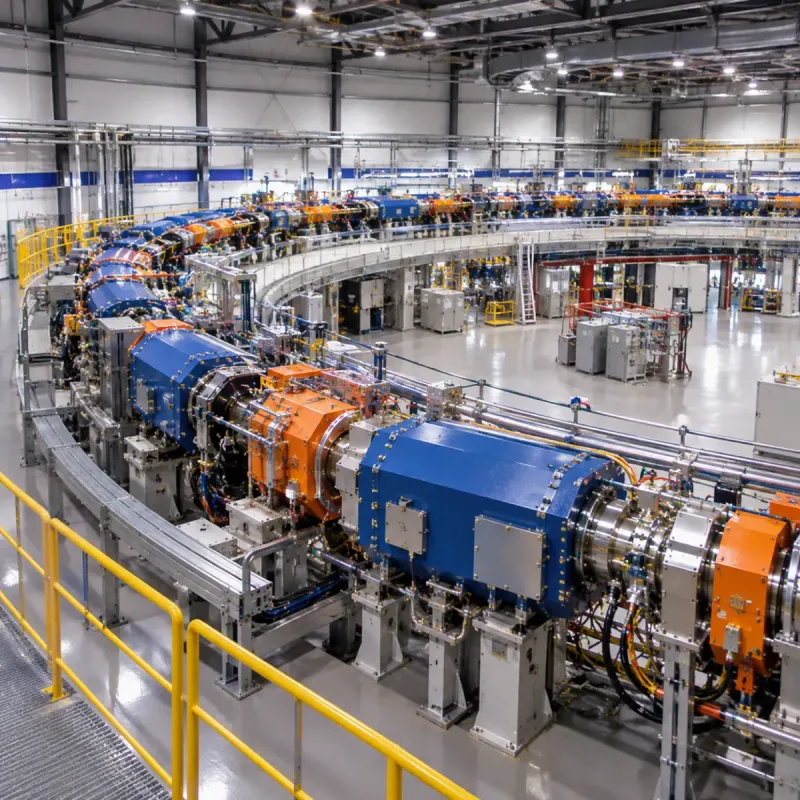
Synchrotrons
Design: Synchronized magnetic fields
Synchrotrons accelerate particles along a circular path, adjusting magnetic fields to keep them on track as their energy increases. These large facilities support research into fundamental physics, chemistry, biology, materials, and cultural heritage.
- Variable magnetic fields
- High-energy beams
- Scientific experiments
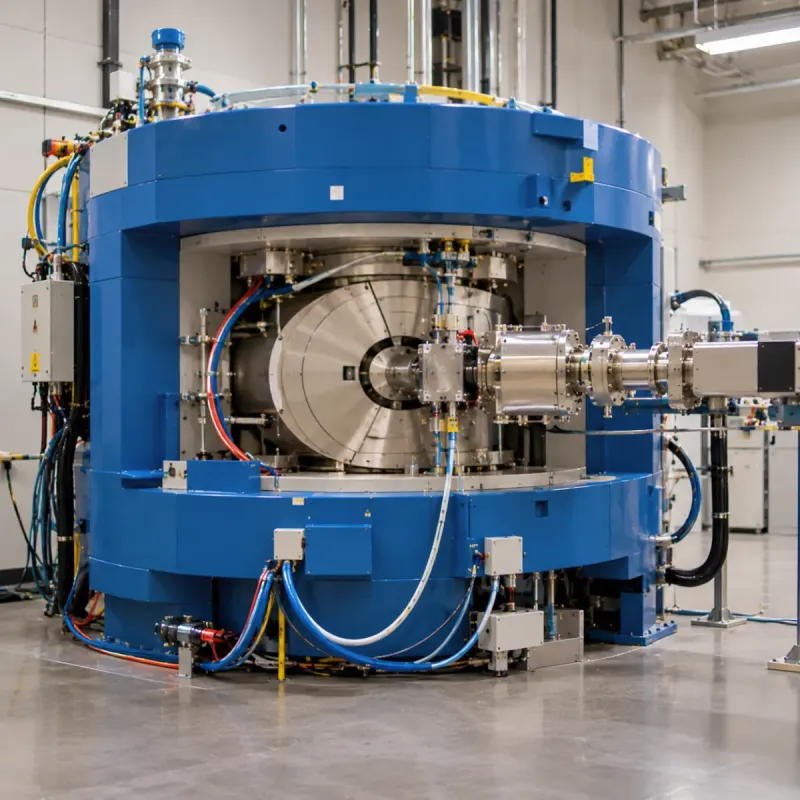
Cyclotrons
Design: Spiral particle path
Cyclotrons use a magnetic field and an alternating electric field to move charged particles along an expanding spiral path. They are widely used in medicine to produce radioisotopes for diagnostic imaging and cancer-related treatments.
- Magnetic guidance
- Radioisotope production
- Medical applications
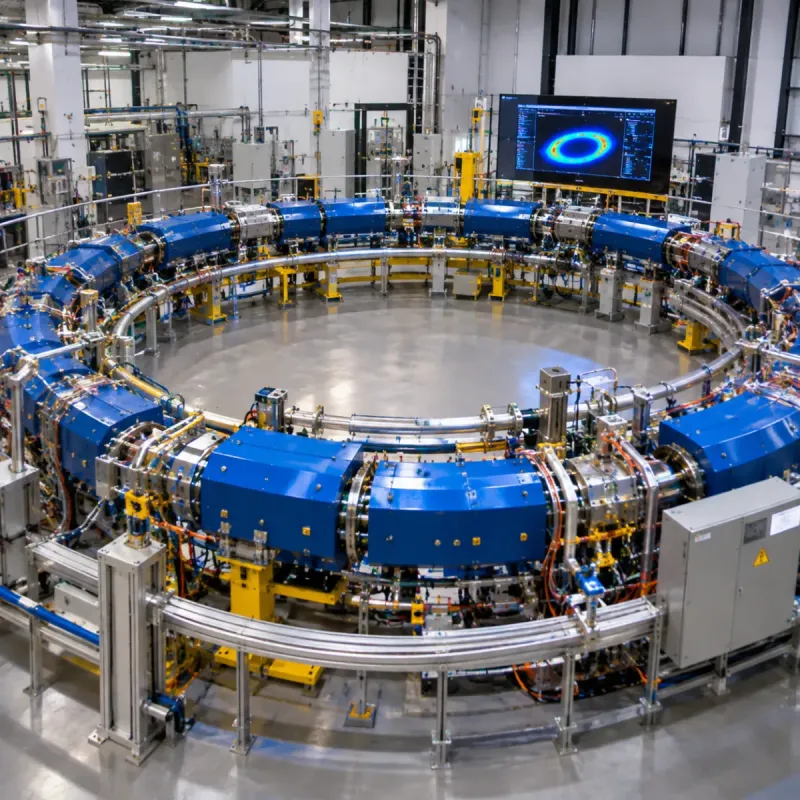
Circular Particle Accelerators
Design: Closed-loop trajectory
Circular accelerators move particles around a closed path, allowing them to receive repeated energy boosts. Magnets continuously bend and focus the beams, making this design suitable for reaching high particle energies within a relatively compact path.
- Repeated acceleration
- Magnetic steering
- High-energy beams
Linear Particle Accelerators (Linacs)
Design: Straight beamline
Linear accelerators propel charged particles along a straight path using electric fields. They are used in scientific experiments, industrial applications, and hospitals, where medical linacs generate X-rays for cancer radiotherapy.
- Straight trajectory
- Electric acceleration
- Medical applications