
 22 November 2026
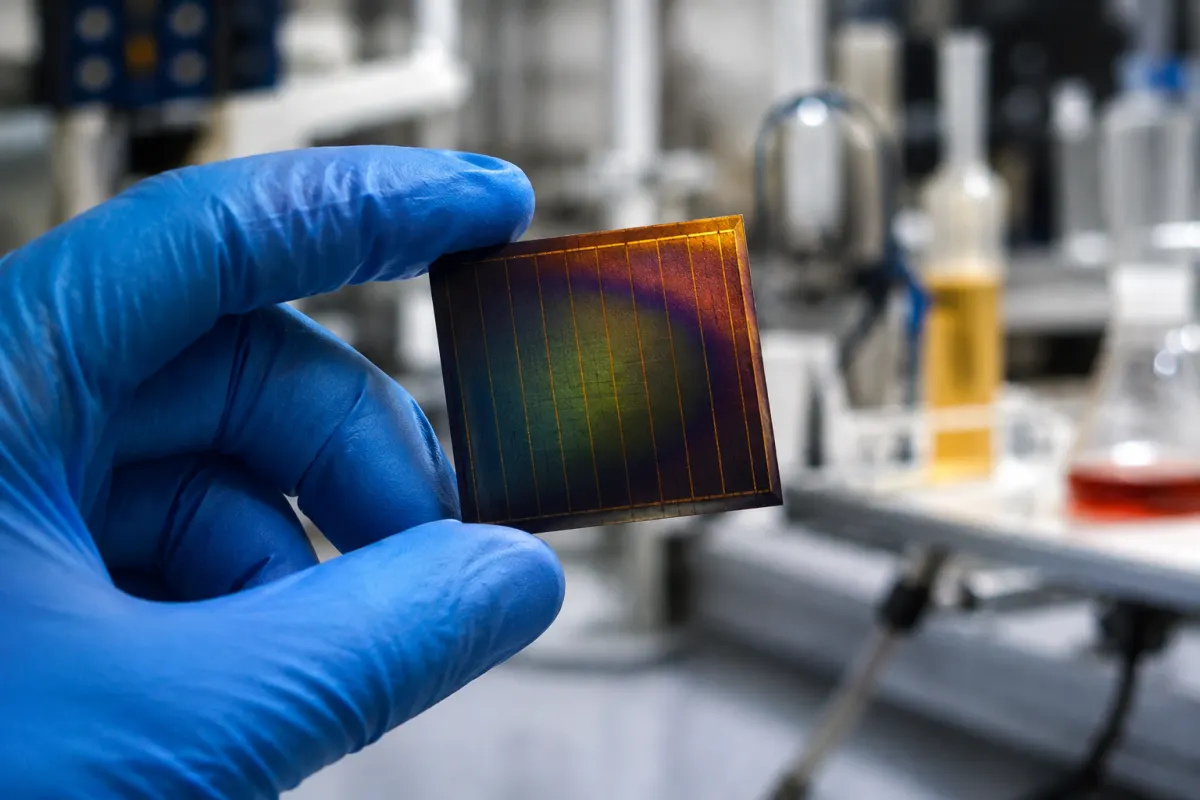
Perovskite solar cells are an emerging photovoltaic technology that uses specially structured materials to convert sunlight into electricity.
Their potential for high efficiency, lightweight designs, and adaptable manufacturing has attracted significant research interest, although durability and large-scale production remain major challenges.
12 Key Things to Know About Perovskite Solar Cells
Read More


 Inside the List
12 Items

Still Need Large-Scale Manufacturing Improvements
Main Purpose: Market readiness
High-performing laboratory cells do not automatically translate into reliable commercial solar modules. Manufacturers and researchers must demonstrate consistent production, durable large-area devices, and dependable performance before perovskite technology can compete widely in the solar market.
- Manufacturing scale
- Module durability
- Performance validation

Face Challenges with Stability and Durability
Main Purpose: Longer operating life
Perovskite materials can degrade when exposed to moisture, oxygen, heat, and prolonged light exposure. Researchers are testing improved material compositions, protective coatings, and encapsulation methods to extend their operating lifetimes.
- Moisture protection
- Heat resistance
- Encapsulation methods

Can Be Designed to Let Light Pass Through
Main Purpose: Building integration
Some perovskite solar cells can be made semi-transparent while still generating electricity. This characteristic creates potential applications in windows, building facades, and other surfaces where conventional opaque solar panels may not be suitable.
- Solar windows
- Transparent designs
- Building facades
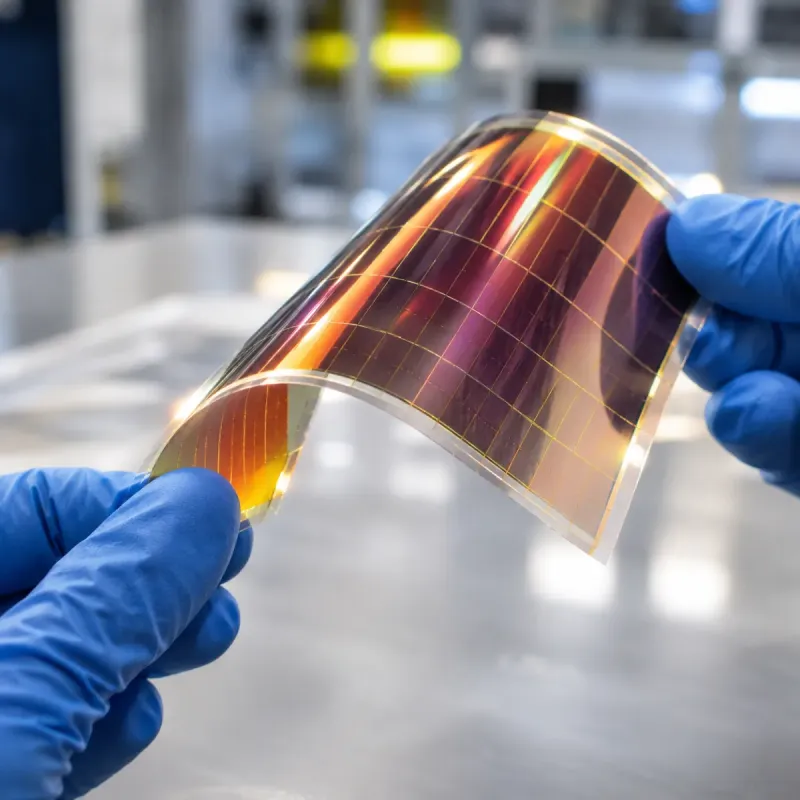
Can Be Made Flexible and Lightweight
Main Purpose: Adaptable energy generation
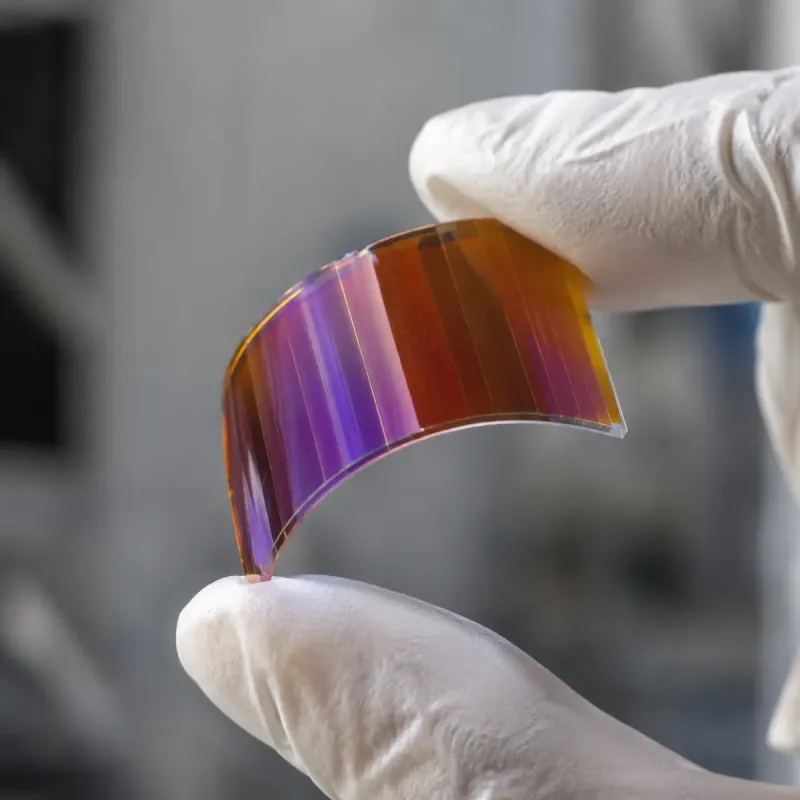
Researchers have produced perovskite solar devices on flexible plastic substrates, creating possibilities beyond traditional rigid panels. Their lightweight construction could make them suitable for applications where conventional silicon modules are difficult to install.
- Flexible surfaces
- Lightweight design
- Portable applications

Can Be Combined with Silicon in Tandem Cells
Main Purpose: Higher efficiency
Perovskite-silicon tandem solar cells stack a perovskite absorber on top of a silicon cell. Because the materials can capture different parts of the sunlight spectrum, the combined device can generate more electricity than either layer alone.
- Silicon pairing
- Multiple absorbers
- Broader light spectrum
Have Achieved High Laboratory Efficiency
Main Purpose: Solar conversion
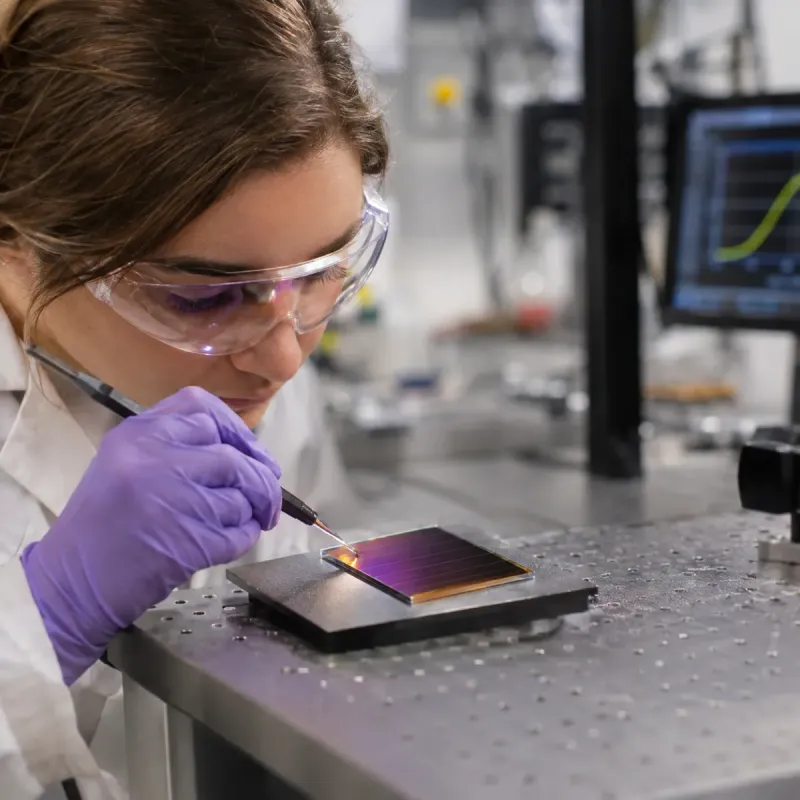
Perovskite solar cells have improved rapidly in laboratory testing, with small research devices achieving conversion efficiencies above 26%. However, these results should not be confused with the performance of commercially manufactured, full-size solar panels.
- High efficiency
- Rapid progress
- Lab records
Offer Potential for Lower-Cost Manufacturing
Main Purpose: Cost reduction
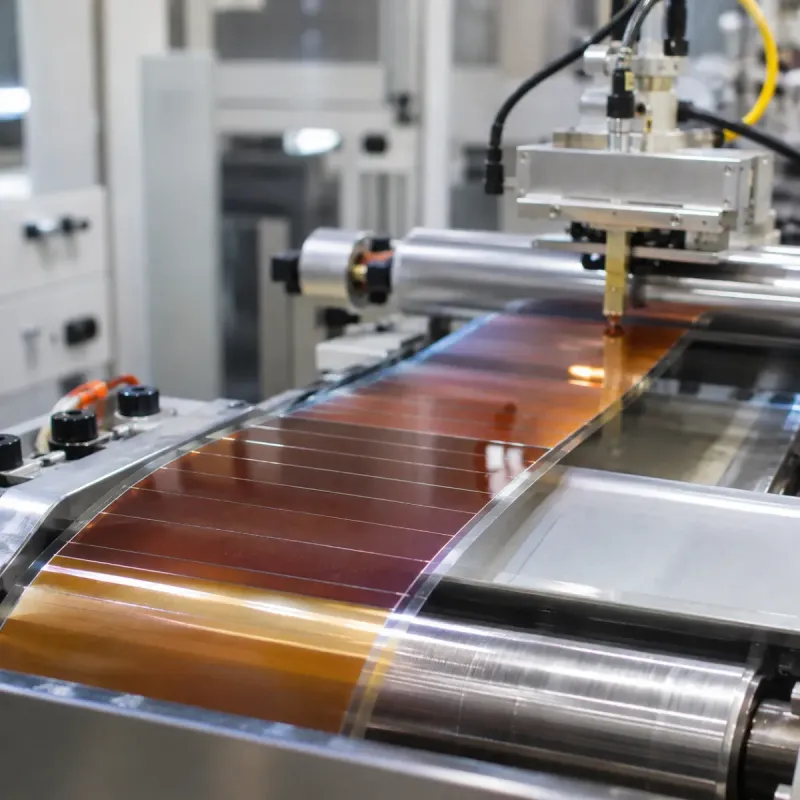
Perovskite solar technology can use lower-temperature processing and potentially simpler production methods than some conventional photovoltaic approaches. If successfully scaled, these characteristics could reduce manufacturing energy requirements and production costs.
- Lower temperatures
- Fewer steps
- Printing potential

Can Be Manufactured Through Solution Processing
Main Purpose: Thin-film production
Some perovskite materials can be prepared as liquid precursor solutions and deposited onto a surface to form thin films. Researchers use techniques such as spin coating, slot-die coating, and spray coating.
- Liquid precursors
- Film coating
- Scalable methods
Contain Multiple Functional Layers
Main Purpose: Charge collection
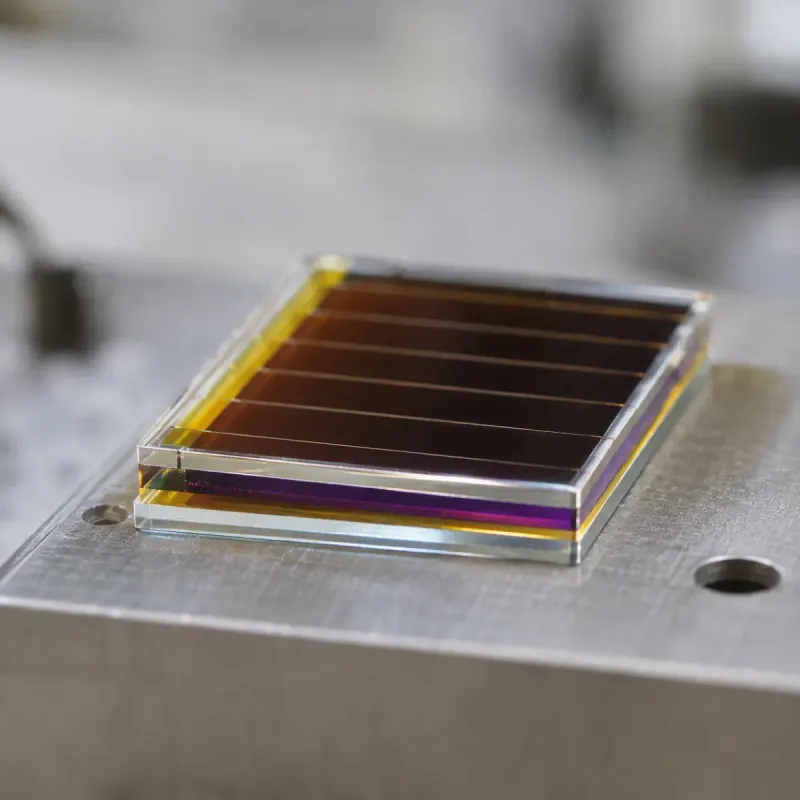
A typical perovskite solar cell contains an absorber layer positioned between electron- and hole-transport layers, along with electrodes and a supporting substrate. Each layer helps manage electrical charges so they can be collected as usable current.
- Absorber layer
- Charge transport layers
- Electrical contacts
Require Extremely Thin Active Layers
Main Purpose: Efficient light capture
Unlike conventional crystalline silicon cells, perovskite solar cells can use very thin light-absorbing layers, often less than one micrometre thick. This reduces the amount of active material needed within the photovoltaic device.
- Thin materials
- Lightweight structure
- Compact layers

Convert Sunlight into Electricity
Main Purpose: Electricity generation
The perovskite layer acts as the active material that absorbs sunlight. This energy excites electrons, which other layers and electrical contacts then collect to generate an electric current.
- Light absorption
- Electron excitation
- Current generation
Use a Special Crystal Structure
Main Purpose: Light absorption
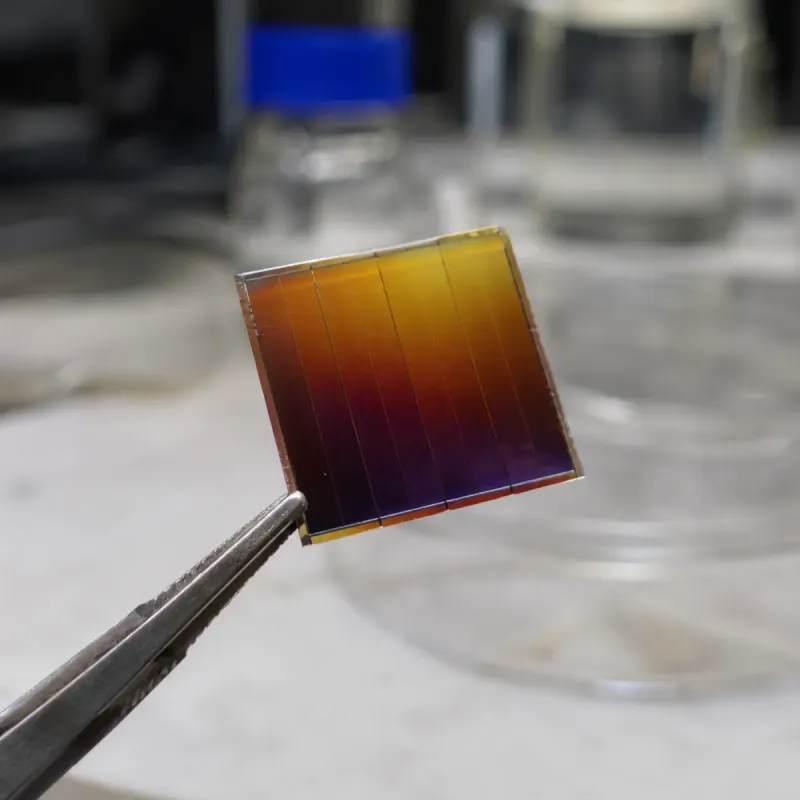
Perovskite solar cells use materials with a particular crystal structure commonly represented by the formula ABX₃. In photovoltaic applications, metal-halide perovskites are widely studied because of their useful optical and electronic properties.
- Crystal structure
- Metal halides
- Tunable composition