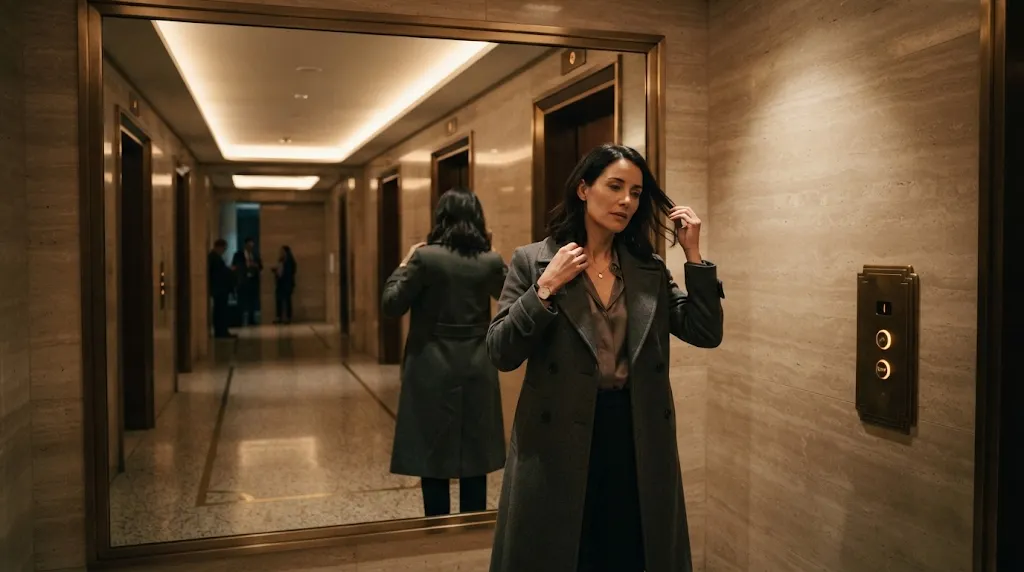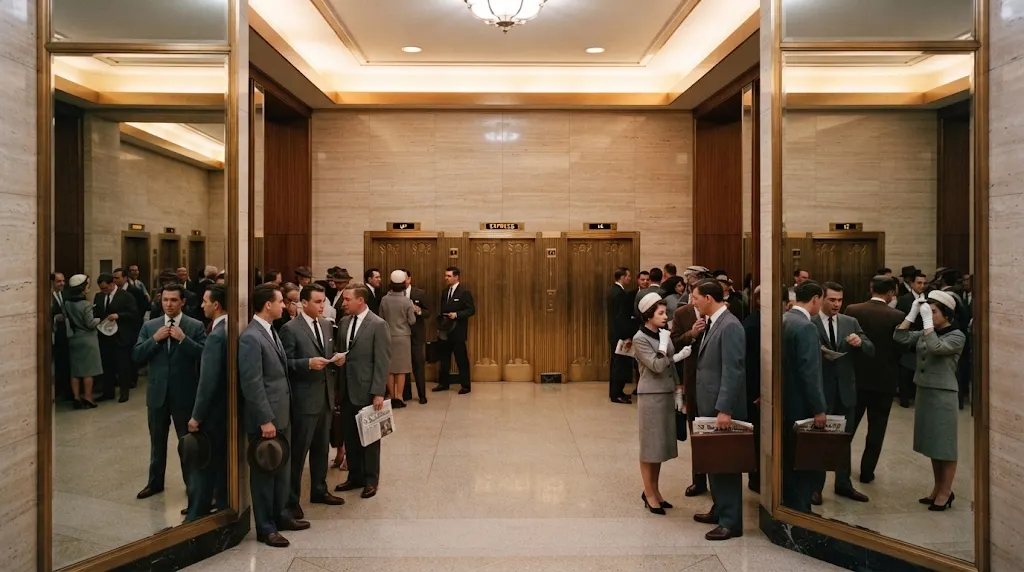

During the post-war skyscraper boom in New York, property managers faced furious tenant mutinies over slow elevators, with mechanical engineers quoting hundreds of thousands of dollars for new motors. Instead, an industrial psychologist proposed installing full-length mirrors next to the doors—and complaints vanished overnight.
The Stack of Angry Letters on Harold's Desk
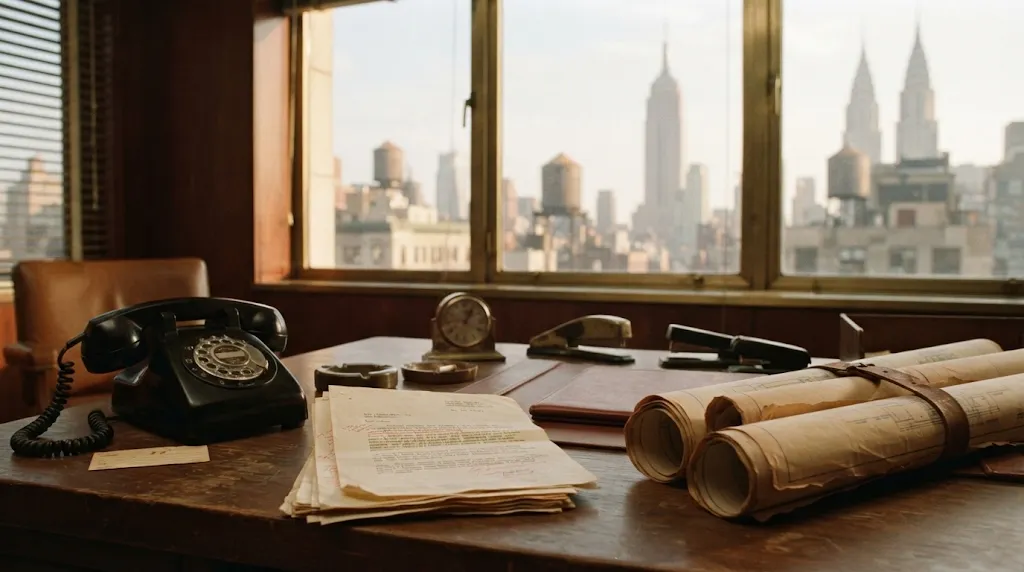
In the sweltering summer of 1951, a commercial building manager named Harold Vance sat behind a mahogany desk in the lobby office of an eighteen-story office building in downtown Manhattan, staring at a stack of twenty-two written tenant complaint letters. Every single letter said the exact same thing: the building's passenger elevators were intolerably, agonizingly slow. Tenants complained that they were waiting five to eight minutes on the seventh floor just to ride down to the street to grab a sandwich at noon. Law firms on the sixteenth floor threatened to break their commercial leases unless the building owners installed modern, high-speed electric motors.Gas Stations Barely Make Money on Gas. The Real Profit Engine Is the Snack Aisle
The Three-Hundred-Thousand Dollar Estimate
Harold called in two senior mechanical engineers from an elevator manufacturing firm in New Jersey to inspect the roof motor room. The engineers spent three days testing the steel cable hoists, measuring counterweights, and checking electrical relays. At the end of the week, the lead engineer handed Harold a written estimate that made his jaw clench: replacing the hoist motors and rewiring the elevator shafts with modern high-speed gear would cost more than three hundred thousand dollars—over three million dollars in modern currency—and would require shutting down the building's elevator shafts for six straight months. Harold couldn't afford three hundred thousand dollars, and his tenants would riot if the elevator shafts were closed for six months. Desperate for a workable solution, Harold called an old college classmate named Edward, who worked as an industrial psychologist for commercial retail stores in Brooklyn. Edward didn't go up to the roof motor room to look at the cables. Instead, he pulled up a wooden chair in the building lobby and spent two straight days watching people wait for the elevator doors to open. Edward noticed that people weren't actually standing in front of the elevator doors for an unreasonable amount of time. A stopwatch showed the average wait was barely eighty seconds. The real problem was sensory boredom. When busy office workers stood in a bare, empty hallway with nothing to do, eighty seconds felt like ten minutes. People stared blankly at the floor, tapped their shoes, checked their wristwatches every six seconds, and let their minds stew in frustration. Edward handed Harold an absurdly simple suggestion: don't touch the hoist cables or the electric motors. Instead, hire a local glass contractor to install full-length plate glass mirrors along the lobby walls and right next to every elevator call button on every floor. Harold thought his friend was losing his mind, but with zero other options, he spent four hundred dollars on framed glass mirrors. The result astonished everyone in the building. The moment the mirrors were mounted on the walls, tenant complaints dropped to zero overnight. When people walked up to the elevator doors, they didn't stare at their wristwatches or tap their toes in anger anymore. They adjusted their neckties, checked their hair, straightened their jacket lapels, and covertly glanced at the reflection of other passengers standing in the hall. Before they even finished fixing their collars, the elevator chime sounded and the doors slid open. The elevators hadn't gotten a single second faster, but human perception of time had been completely transformed.| Waiting Environment | Sensory Condition | Perceived Time vs Clock Time | Tenant Complaint Volume |
|---|---|---|---|
| Bare Hallway (Pre-1951) | Zero visual stimulation; watch staring | 80-second wait feels like 5 minutes | Dozens of lease termination threats |
| Mirrored Lobby (Post-1951) | Active reflection grooming & social glance | 80-second wait feels effortless | Zero recorded tenant complaints |
| Modern Winding Concourse | Baggage claim walking path diversion | 6-minute walk eliminates belt wait | Spikes airline customer satisfaction |