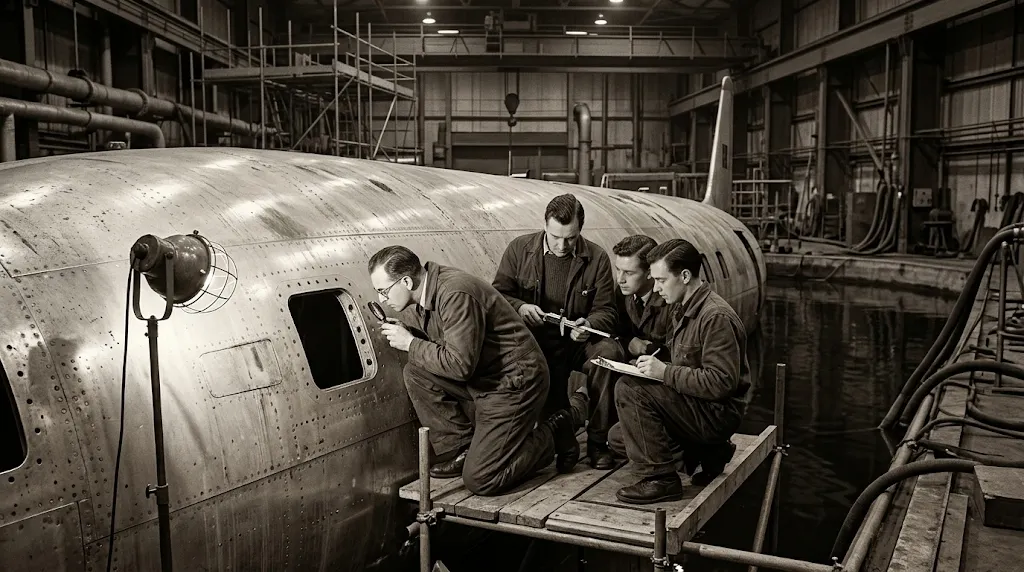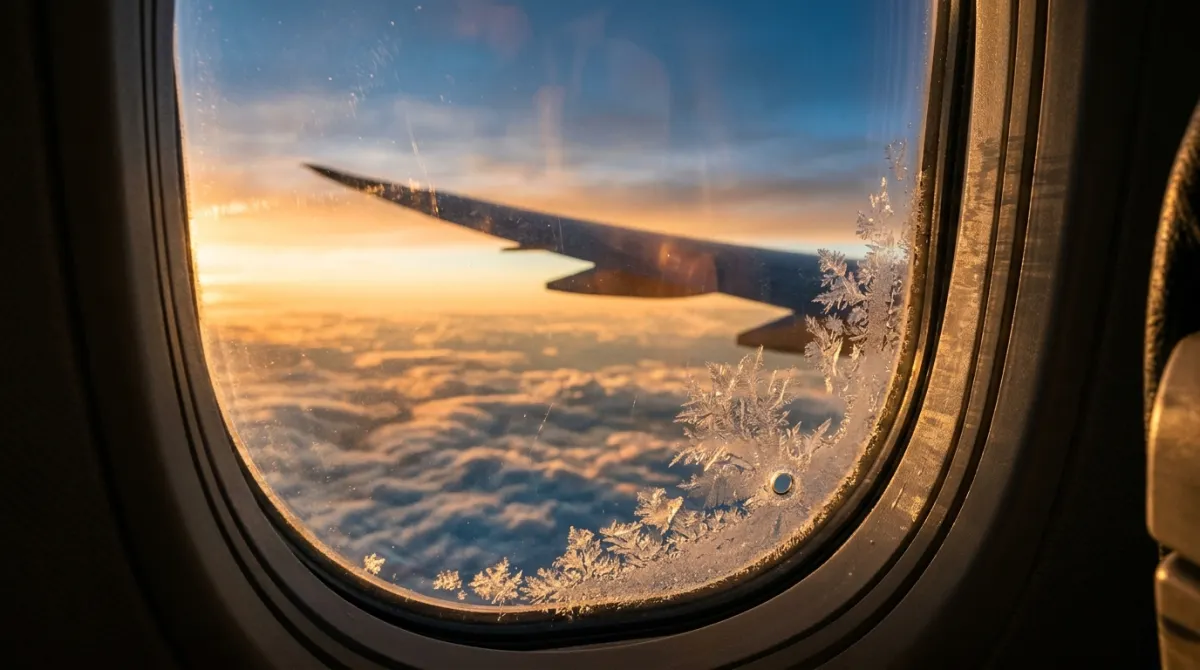

Next time you sit by an airplane window, look closely at the bottom edge. That tiny pinhole and rounded oval shape are not design accidents; they are life-saving engineering fixes born from a deadly 1954 jet disaster.
The Tiny Pinhole Holding Back Thirty Thousand Feet of Air
I was walking through an aircraft maintenance hangar at Indianapolis International Airport on a rainy Thursday morning in October with my uncle's old friend, Pete, who spent thirty-four years working as an airframe structural inspector for major commercial carriers. We were standing on a yellow rolling scaffold next to a Boeing 767 that had been stripped down to bare metal for a heavy maintenance overhaul. While Pete was checking the aluminum rivet lines along the fuselage with a small flashlight, I leaned over and tapped a tiny, round pinhole drilled near the bottom edge of a passenger window pane. The hole was barely larger than the lead tip of a wooden pencil. When I asked Pete if a careless mechanic had nicked the acrylic plastic with a drill bit during installation, he let out a loud laugh that echoed off the metal hangar walls. "Every rookie asks that same question," he said, wiping a smudge of hydraulic grease off his glasses. "They think someone slipped with a power tool, or they worry that cabin air is going to whistle out into the clouds at thirty thousand feet. But if that little hole wasn't there, the cabin pressure difference between inside and outside would blow that window right out of the frame before the pilots ever reached cruising altitude."What Actually Happens to Your Phone When You Tap the Airplane Icon
The Three-Layer Sandwich Inside Every Window
Pete walked me over to a long wooden workbench covered in disassembled aircraft parts to show me how the assembly actually works. He set down an entire passenger window unit that had just been pulled from the cabin door. To almost every traveler who flies on vacation, an airplane window looks like a single thick slab of glass you rest your forehead against when you want to take a nap. But when Pete turned the unit sideways on the bench, I could see it was actually three distinct sheets of clear plastic separated by small rubber gaskets. "Rule number one," Pete explained, tapping the thinnest layer of plastic on the inside face. "This inside piece you touch with your fingers is called the scratch pane. It doesn't carry a single pound of air pressure. Airlines put it there for one reason: passengers. People scratch windows with wedding rings, kids poke them with plastic toys, and folks kick them with their shoes. You could take a hammer and smash this inner scratch pane to pieces right now, and the airplane wouldn't lose an ounce of cabin air." The real engineering takes place in the middle and outer panes. The heavy outer pane sits flush against the outside skin of the airplane, taking the full brunt of freezing eighty-mile-an-hour headwinds and temperatures dropping below sixty degrees below zero. The middle pane sits right behind it, separated by an air gap of about half an inch. Pete pointed the beam of his flashlight directly at the tiny hole. It was drilled straight through the middle pane. "This is called a bleed hole or a breather hole," Pete said. "Look at what happens when a jet climbs out of Chicago. Down on the runway, the air pressure inside the cabin and the air pressure outside the plane are equal. But when you climb up to thirty-five thousand feet, the air outside gets incredibly thin. The compressors in the jet's engines have to pump warm air into the cabin so passengers can breathe normally, keeping the inside pressure at the equivalent of about seven thousand feet above sea level." That difference creates thousands of pounds of outward force pressing against the aircraft skin. Because of that tiny bleed hole, air from the passenger cabin slips through the middle pane and pushes directly against the heavy outer pane. "Under normal conditions," Pete told me, "the thick outer glass takes one hundred percent of that outward load. The middle pane just sits there completely relaxed with zero strain on it. But if a bird, a rogue piece of hail, or runway gravel ever smacks the outer window and cracks it open at cruising height, that middle pane instantly catches the full pressure load on its own. The bleed hole is so small it only lets out a faint whisper of air. It gives the flight crew twenty minutes to drop down to ten thousand feet where everybody can breathe outside air safely without an emergency mask."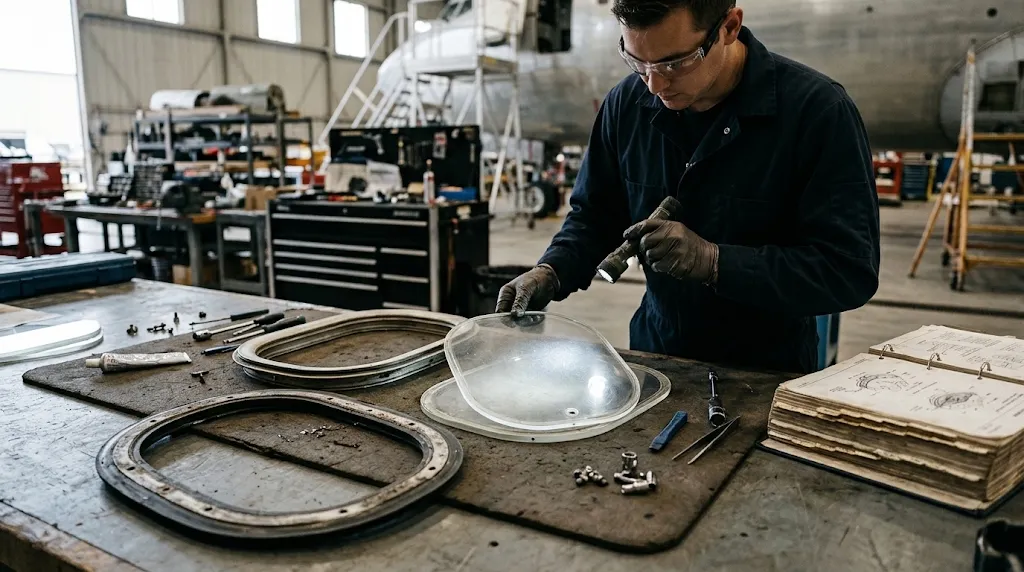
| Window Layer Component | Material Used | Structural Role During Flight | Reaction If Compromised |
|---|---|---|---|
| Inner Scratch Pane | Lightweight clear plastic | Protects structural panes from scuffs | Replaceable at gate; zero cabin leak |
| Middle Breather Pane | Stretched acrylic plastic | Emergency failsafe holding 1.5x pressure | Takes instant load if outer pane cracks |
| Outer Structural Pane | Heavy aerospace acrylic | Carries 100% of flight pressure and cold | Absorbs cold wind, exterior debris, and load |
| Cavity Bleed Hole | Precision pinhole orifice | Balances cavity air and vents moisture | Prevents frost and pressure traps |