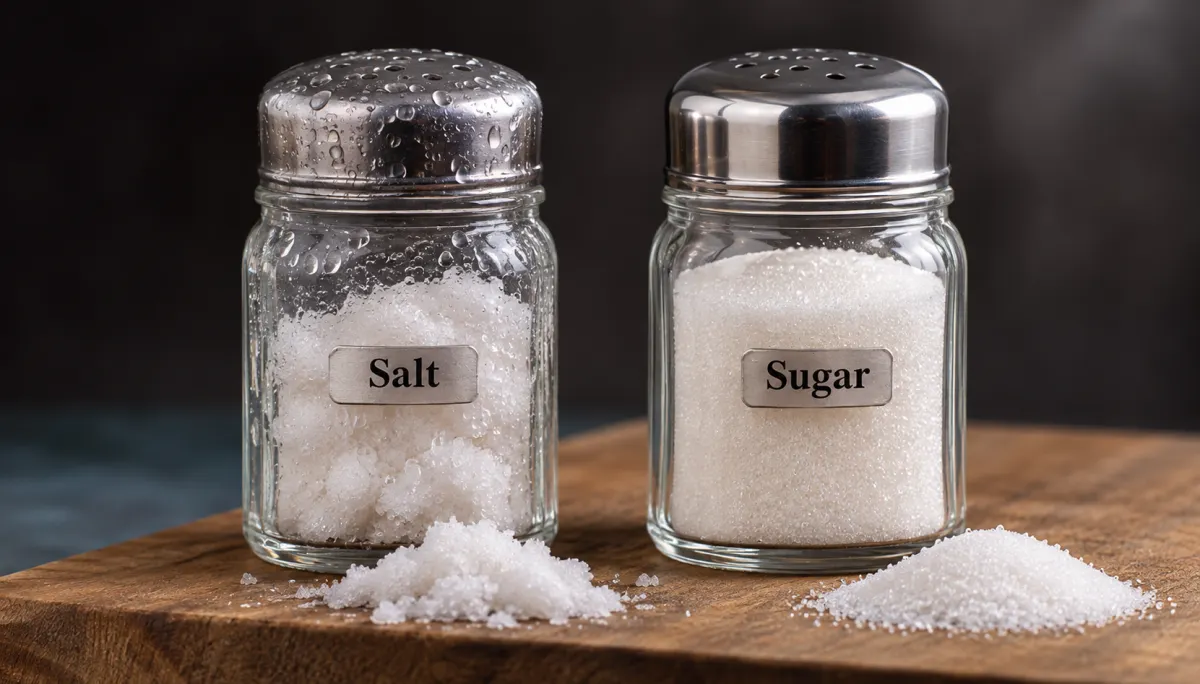

Have you ever noticed that salt can become damp and clumpy in humid weather while sugar often stays dry? The reason comes down to how these two common kitchen ingredients interact with moisture in the air.
Why Does Salt Absorb Moisture?
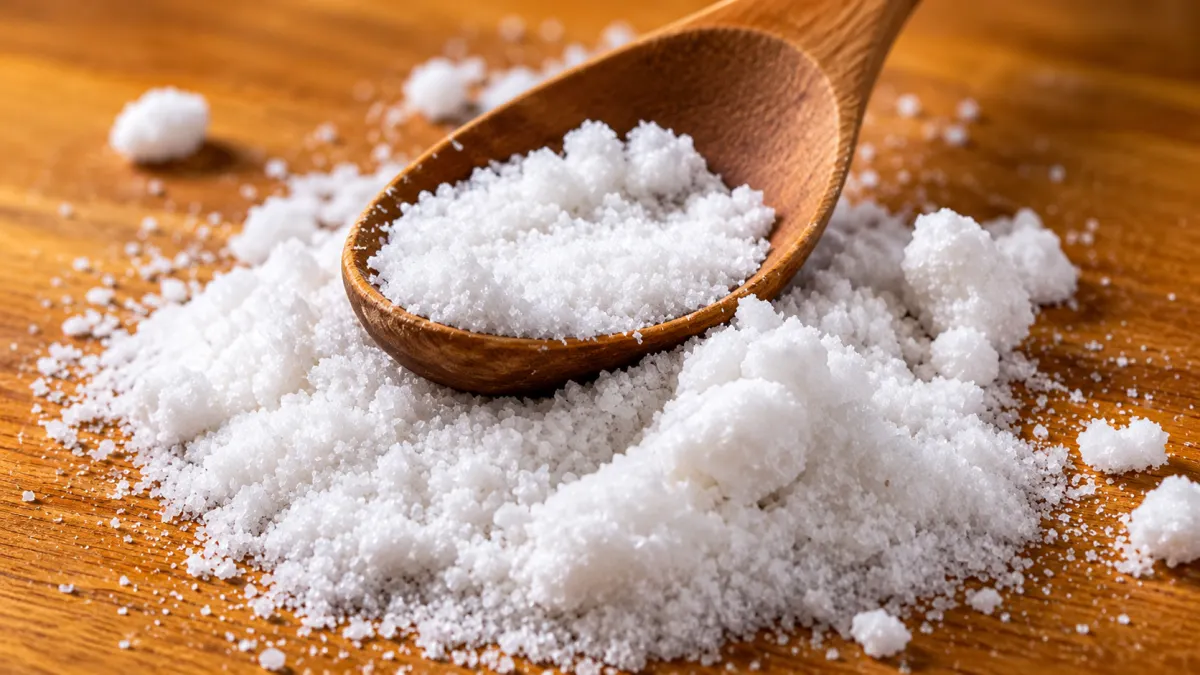
Table salt is mainly made of sodium chloride (NaCl). Pure salt does not absorb much moisture under normal humidity conditions. However, when relative humidity rises above roughly 75%, salt can start absorbing water and eventually become wet.
Impurities such as magnesium chloride can make a difference, too. These compounds attract moisture more easily, which explains why some types of salt become damp faster than others.
Why Does Sugar Behave Differently?
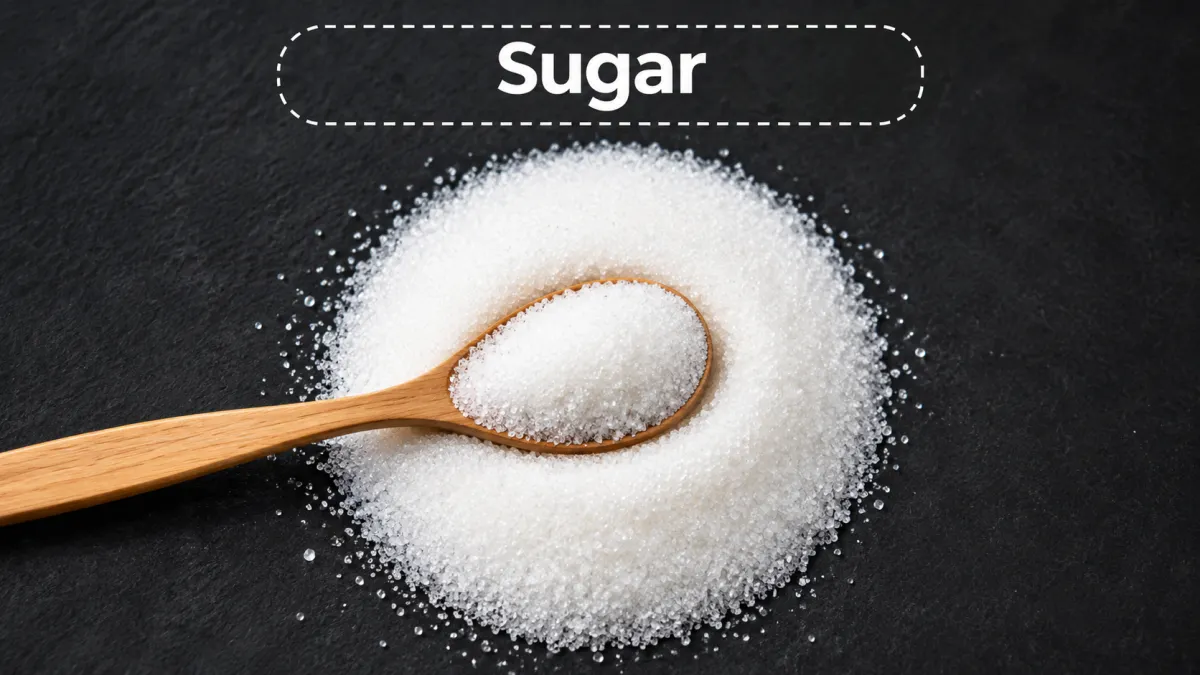
Regular table sugar is made of sucrose. Although sugar can interact with water, dry sugar crystals usually remain free-flowing under moderate humidity.
However, sugar isn't completely moisture-proof. It can absorb water and become sticky or form lumps, especially when humidity is high. Temperature, crystal size, and storage conditions also affect how it behaves.
Read More

Why Does Salt Often Get Wet First?
Several factors can explain why salt sometimes seems to absorb more moisture than sugar:
- Impurities: Some salts contain moisture-attracting compounds, such as magnesium chloride.
- Type of salt: Sea salt and less-refined salts may behave differently from highly purified table salt.
- Storage conditions: Steam from cooking, damp surfaces, and poor storage can make salt wet.
- Anti-caking agents: Some commercial salts contain additives that help prevent clumping.
The Science Behind It
Interestingly, salt doesn't always absorb more moisture than sugar. Under the same conditions, the results depend on their purity, composition, and the humidity level. Sugar can also absorb significant moisture and become sticky when the air is very humid.
The bottom line: Salt and sugar react differently to moisture, but neither is completely immune to humid air. Their ingredients, additives, and storage conditions all play a part in how quickly they become damp or clumpy.