
The Diamond in the Glass and the Mystery of White Frost
My older brother, Mark, spent nine years managing the bar program at a historic steakhouse near the river in downtown Chicago. Whenever I stopped by his restaurant during his afternoon prep shifts, he would pull giant blocks of crystal ice out of a commercial insulated storage bin. Those four-inch cubes were so transparent you could set one down on top of a printed newspaper and read every single line of the stock tables through the frozen water.
Whenever I tried freezing ice cubes at home in my standard plastic refrigerator trays, they came out milky white, cloudy in the center, and tasted faintly like whatever leftovers were sitting in the freezer door.
I asked Mark if the steakhouse bought expensive artisan spring water from Switzerland or boiled their tap water three times on the kitchen stove before freezing it.
Mark laughed and tossed a clean bar rag over his shoulder. "Boiling your water is an old wives' tale that home cooks have been repeating for forty years," he told me, setting a crystal-clear ice block on a heavy cutting board. "You can boil water until the kettle runs dry, and your ice cubes will still turn out cloudy in a home freezer. The difference between milky white ice and crystal-clear bar ice has nothing to do with fancy filters; it comes down to a law of physics called directional freezing."
Stop Searing Your Steaks to 'Lock in Juices': The Chemistry Myth Kitchens Keep Repeating
Why Refrigerator Freezers Freeze Water Inside Out
Mark grabbed a paring knife and scored a shallow line across the top of the crystal block to split it into cocktail cubes.
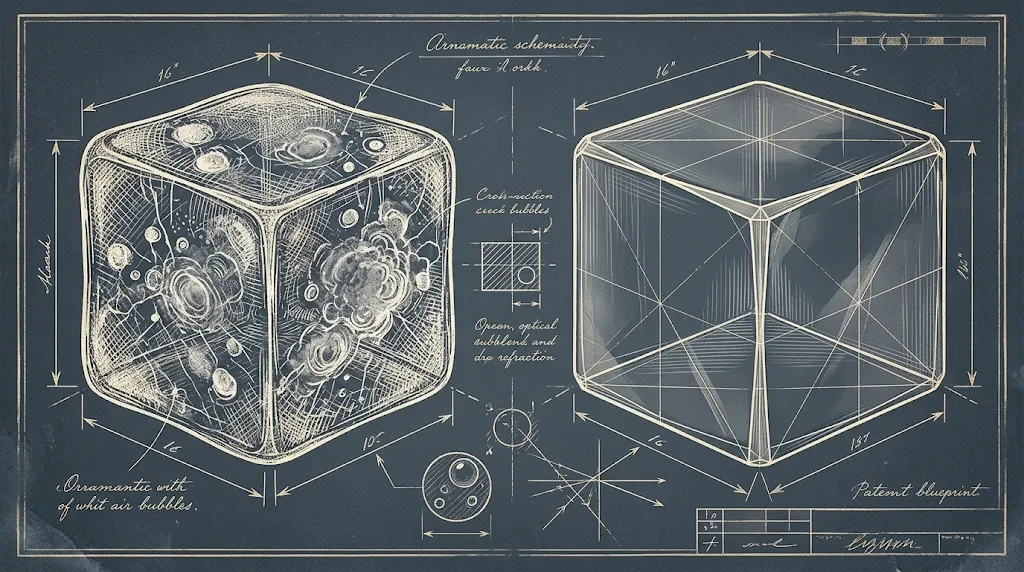
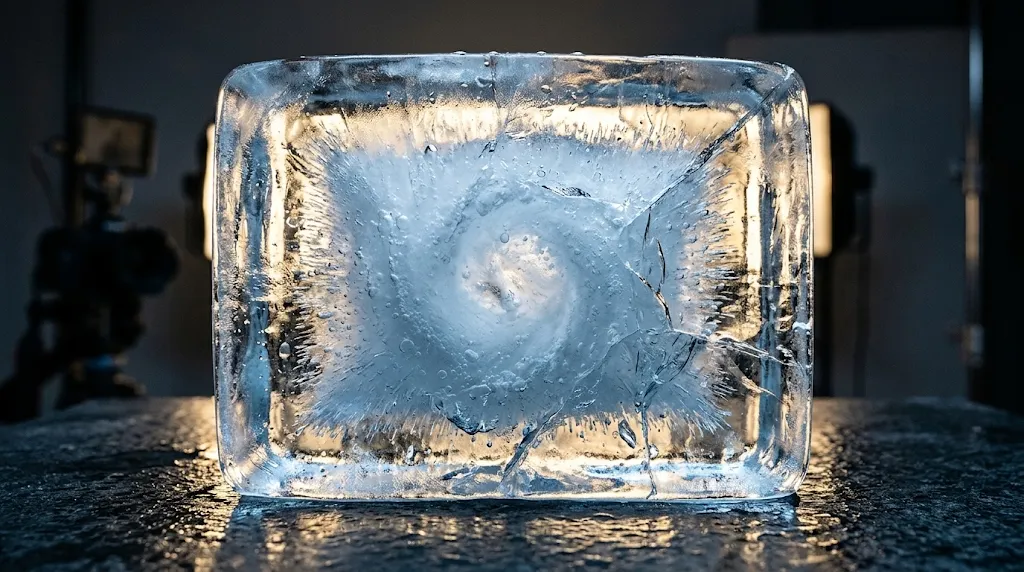
"Every drop of tap water coming out of that prep sink has air dissolved in it," Mark told me, pointing a stainless steel ice pick at the sink faucet. "You can't see the air when water is liquid at room temperature. But when you put a plastic tray in your freezer at home, freezing air attacks the water from all six directions at once: top, bottom, and all four plastic sides."
Mark took a pencil and sketched a square on a paper napkin. "Pure water freezes first around the outside walls," he said. "As that ice wall freezes inward toward the center, it drives all the trapped air bubbles and mineral lime ahead of it. By the time the cube freezes solid, all those millions of microscopic bubbles get squeezed into a tight fist in the dead center. That trapped ball of air scatters light, which is why your home ice looks like white milk."
"Look at how nature makes ice on a frozen country pond in northern Illinois during January," Mark explained, pointing his knife out the window toward the winter snow. "Cold winter air only blows across the open top surface of the pond, while deep liquid water keeps the bottom warm. Because freezing only happens in one single direction from the top down, pure ice crystals form across the surface first."
As that ice layer grows thicker over several days, it gently pushes all the trapped air bubbles and loose sediment downward into the deep liquid pond. When you look down at a frozen winter pond, the top three inches of ice are as clear as fine glass.
| Freezing Technique | Cold Direction | Trapped Bubble Location | Melting Duration in Drink |
|---|---|---|---|
| Standard Plastic Tray | Cold from all 6 sides inward | Dense milky core in center | Fast melting; waters down drink |
| Boiled Tap Water Tray | Cold from all sides inward | Slightly smaller cloudy knot | Moderate dilution rate |
| Top-Down Insulated Cooler | Insulated walls, open top | Pushed entirely to bottom liquid | Slow, even exterior melt |
| Commercial Clinebell Box | Circulating pump cold plate | Zero bubbles; 100% crystal clear | Maximum chill with minimal water |
Why Clear Ice Tastes and Chills Better
Mark showed me the restaurant's commercial Clinebell ice machine in the back hallway. "See that cold plate at the bottom?" he asked, lifting the stainless steel lid. "Water pumps circulate fresh liquid over the freezing plate continuously. The moving current washes the tiny bubbles away before they can stick. All the minerals drain out the bottom overflow pipe, leaving behind three hundred pounds of pure solid glass."
Mark warned me that cloudy ice actually ruins high-end drinks. "Cloudy ice is full of air pockets and micro-cracks," he said, tapping a cloudy cube with his tongs. "The second you pour warm soda or whiskey over it, liquid floods those cracks and fractures the cube with a loud pop. That triples the surface area and melts the ice in four minutes, turning a great drink into watery soup. Solid clear ice melts evenly from the outside only, chilling your glass without watering it down."
"Clear ice is far more than an aesthetic garnish in an expensive tumbler. Without millions of trapped air bubbles and hairline cracks, dense solid ice chills your drink to near-freezing without watering down its flavor."
How to Make Clear Ice in an Ordinary Kitchen
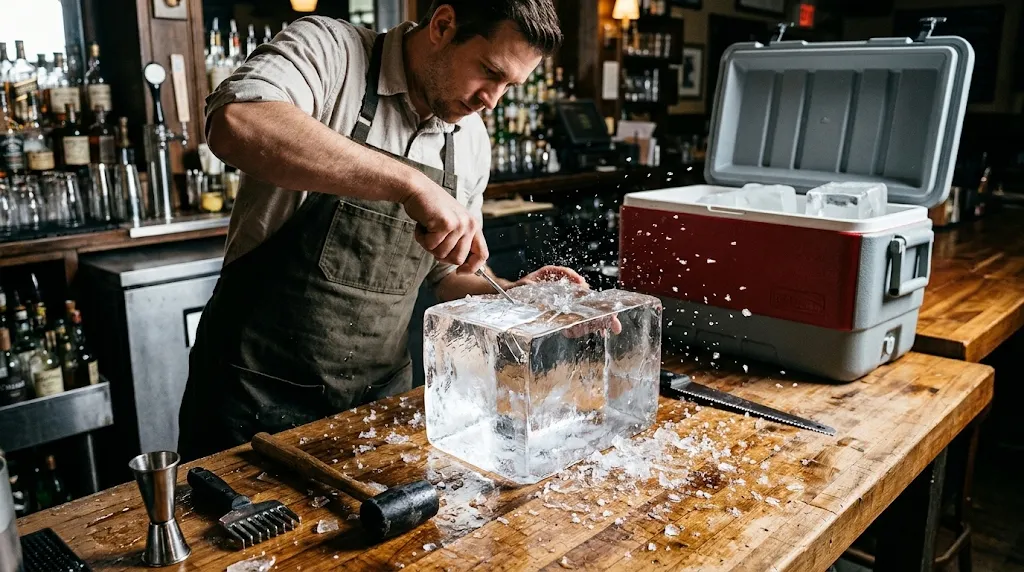
Mark showed me how to make restaurant-grade ice at home using an ordinary ten-dollar plastic lunch cooler.
"Take the lid completely off a small plastic cooler," Mark told me. "Fill the open cooler with warm tap water, and set the whole thing right onto your freezer shelf. The insulated walls and bottom keep cold air away from the sides, forcing the water to freeze only from the open top down, just like that country pond."
Leave the cooler in your freezer for about sixteen to eighteen hours. When you pull it out, the top half will have frozen into a pristine, crystal clear block of glass-like ice, while the bottom third remains liquid water holding all the trapped air and mineral salts. Pour off the cloudy liquid, carve your clear ice block into cubes with a serrated bread knife, and you will have bar-quality ice right in your own kitchen.
Mark tapped the side of his glass with a swizzle stick. "Once you get used to drinking iced tea or a highball with real solid ice," he told me, "you can never go back to cloudy refrigerator cubes. It takes forty seconds to fill an insulated lunch cooler, but it turns an ordinary backyard drink into something extraordinary."