
The Emergency Table on Michigan Avenue
I was volunteering at an animal rescue shelter off Michigan Avenue in Chicago when a technician brought in an orange stray cat that had been hit by a delivery bicycle. The cat was trembling, his pupils were huge, and he had a deep gash along his left hip. But while two of us held him still on the metal table so the vet could wash the wound, the cat started purring so loudly that the metal examination table hummed against our forearms.
A young volunteer standing beside me smiled and whispered that the cat was thanking us. The vet looked up over his glasses and told her immediately: cats do not purr when they are bleeding out because they are happy.
The Laryngeal Oscillator: A 25-Hertz Physical Therapy Unit
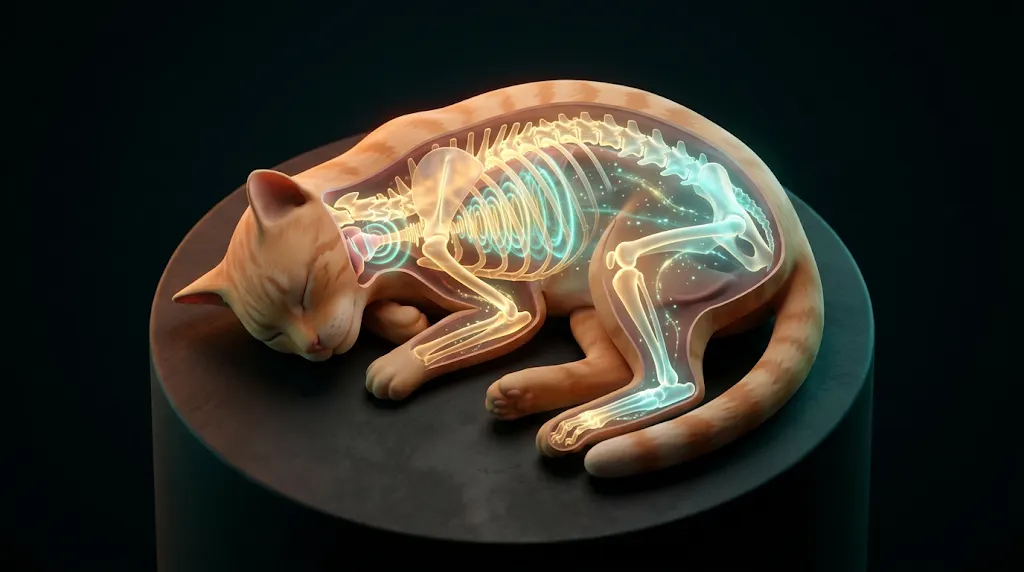
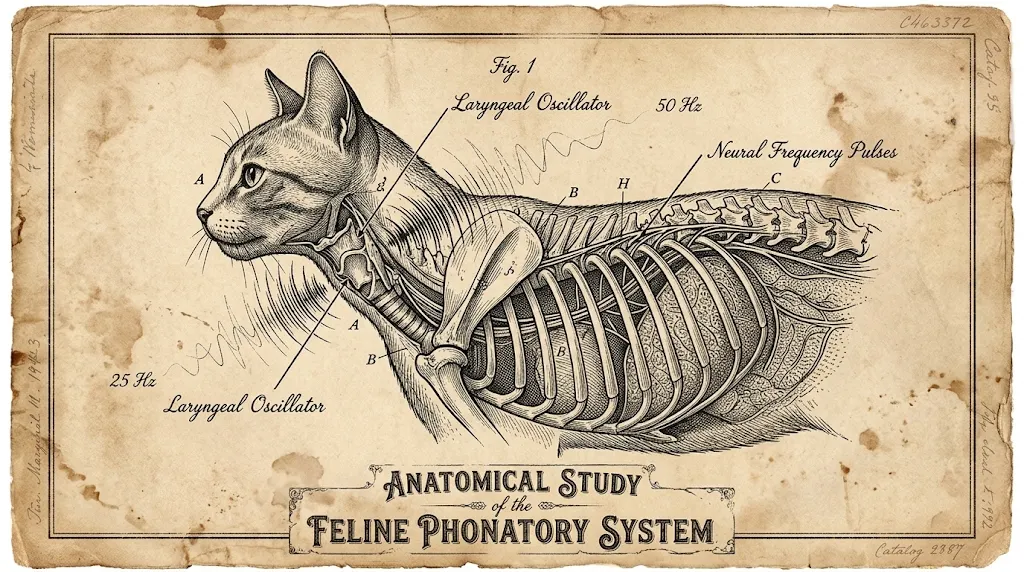
The vet put his stethoscope into his coat pocket and looked at the two of us across the table. "You two probably think he's wagging his tail," he said with a dry laugh. "He has two cracked pelvic bones. That rumble you feel in his ribs is his body running physical therapy. A cat's vocal cords don't work like yours or mine. A nerve behind his ears pulses thirty times every second, snapping the muscles in his throat back and forth. It turns his breath into a steady 25-Hertz jackhammer that vibrates straight through his skeleton."
That specific frequency band—right around 25 to 50 Hertz—is an extraordinary piece of evolutionary engineering. Human sports physicians and orthopedic surgeons have used low-frequency acoustic vibration therapy for decades to help injured athletes recover from stress fractures and torn Achilles tendons.
Cellular Remodeling and Bone Mineralization
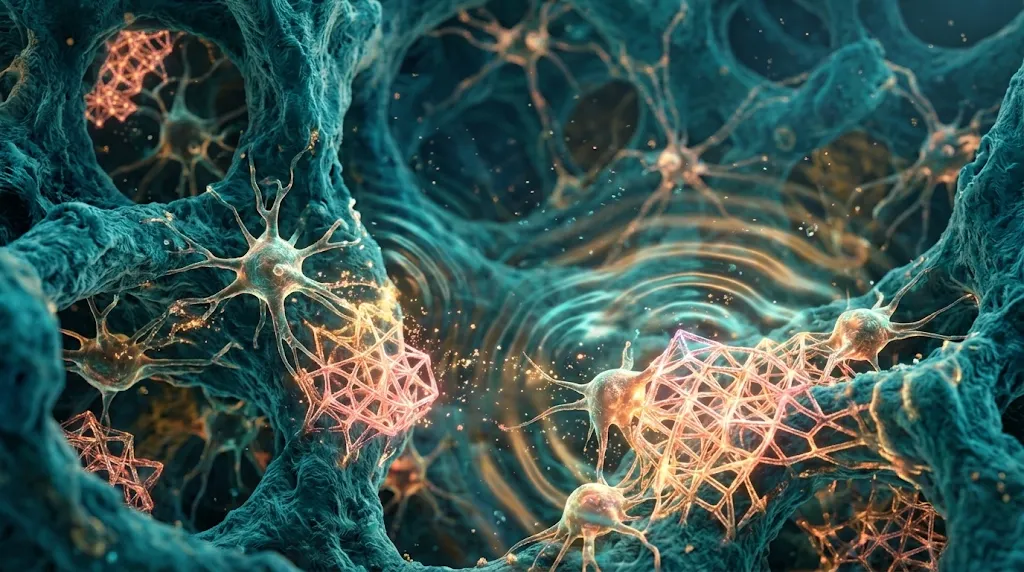
"Bone is living tissue," the vet explained as he wrapped a gauze bandage around the stray's hind leg. "When you send a 25-Hertz vibration through bone cells, it triggers osteoblasts to pull calcium out of the blood and pack it into the fractures. Researchers in North Carolina proved twenty years ago that a cat's purr lands right in the sweet spot that boosts bone density by twenty percent. This little guy isn't smiling at us. He's trying to glue his pelvis back together before infection sets in."
"When you feel a cat purring in trauma, that rhythmic hum is not an emotional display. It is an internal acoustic bone-density therapy program running at 25 cycles per second."
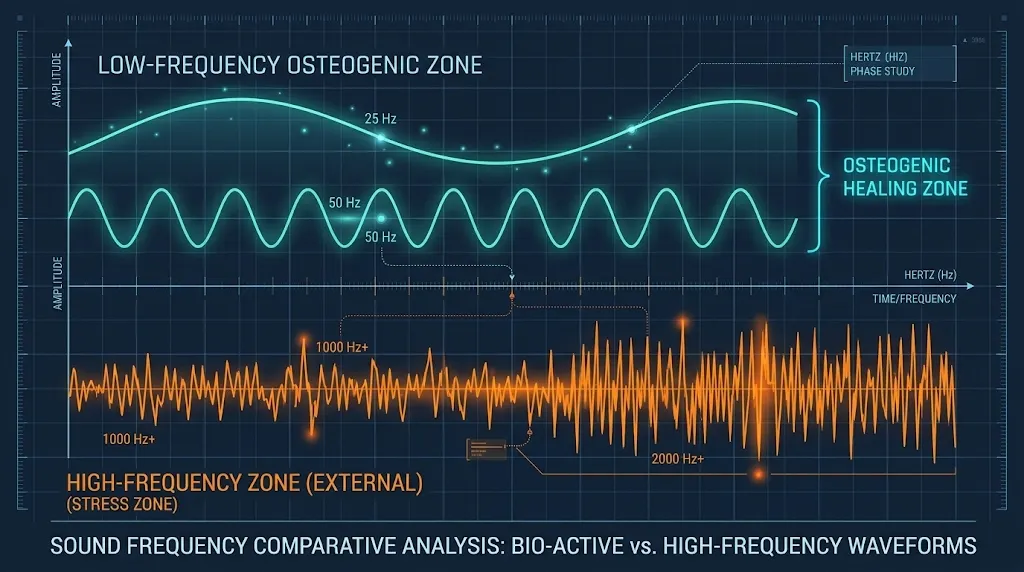
| Sound Frequency Range | Primary Biological Function | Observed Medical Effect |
|---|---|---|
| 20 – 35 Hz | Bone Density & Skeletal Repair | Speeds up osteoblast activity and bone mineralization |
| 50 – 100 Hz | Soft Tissue & Muscle Recovery | Eases muscle spasms, boosts blood flow to torn tendons |
| 100 – 140 Hz | Joint Mobility & Pain Reduction | Lowers local inflammation, triggers natural endorphin release |
| Above 250 Hz | Distress & Nursing Signals | Solicits food and attention from human caretakers |
The Ambush Predator Paradox: Preserving Bone Density Without Movement
I saw this same reflex in my own apartment three years ago with my eight-year-old cat Barnaby. He got his tail caught in a heavy sliding screen door on my balcony. The tail swelled up and he wouldn't let me touch him. But the moment I wrapped him in an old bath towel to drive him to the emergency vet, he purred like an idling lawnmower. He was terrified, his ears were pinned flat, but the purr was flooding his body with natural endorphins to take the edge off the pain.
I talked with Dr. Robert Miller at a veterinary clinic in Portland, Oregon last summer about this exact thing. He had spent twenty-five years treating working farm cats and rescue animals in rural Oregon. He told me that whenever an outdoor barn cat got kicked by a horse or had a run-in with a coyote, the animal would crawl behind a stack of hay bales and just lie there vibrating for two or three days straight.
"People think the cat is giving up or in shock," Dr. Miller told me while pulling out an x-ray of an outdoor cat with cracked ribs. "What is actually happening is mechanical physical therapy. The cat is vibrating its own ribcage back together."
Dr. Miller leaned back against his metal medicine cabinet and showed me a radiograph from two autumns ago. A small black cat named Pepper had been dropped off in a cardboard box after getting clipped by a hay mower. "Look right along the femur here," he pointed out with the tip of a ballpoint pen. "You can see where the bone cracked straight across. We put a cast on it, but the cat spent the next four weeks purring nonstop in his cage. When we took the cast off twenty-eight days later, the bone had bridged completely. It healed nearly thirty percent faster than a dog with the exact same injury."
Look at how a bobcat or a farm cat hunts compared to a wolf. Canines hunt by running down deer across open prairies for miles. That physical pounding keeps their leg bones dense and thick. But a cat is an ambush hunter. A farm cat spends sixteen hours a day sitting completely still in tall weeds waiting for a field mouse to run past.
That quiet lifestyle creates an unexpected health danger. If you lie in bed for three months without walking, your bones lose calcium rapidly. An ambush hunter that rests all day faces that exact same risk of weak, brittle bones.
Nature's Built-In Workout Machine
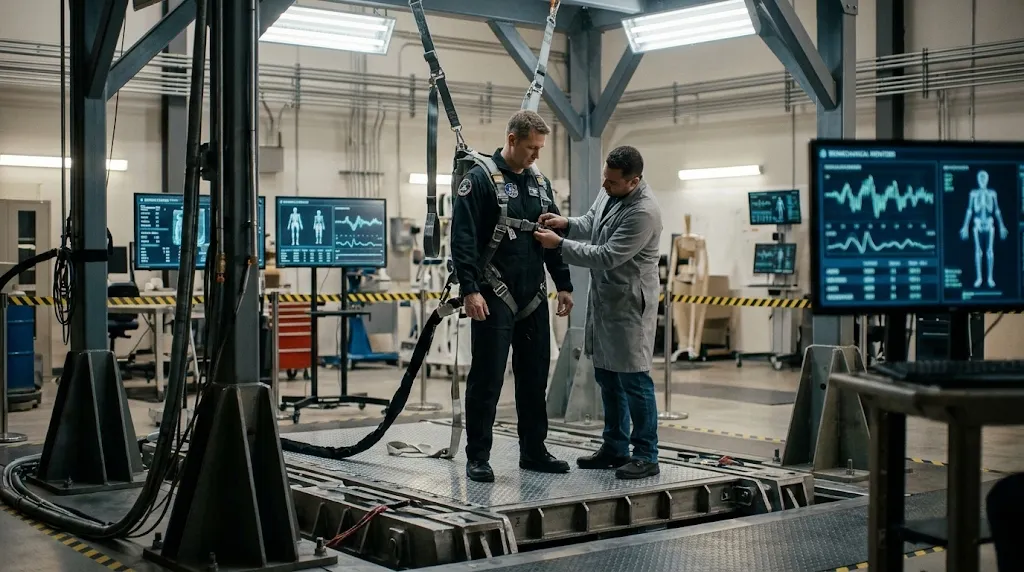
By purring while resting, felines send constant mechanical vibrations through their bones without burning calories running through the brush. It is nature's workout platform: a built-in vibration plate that keeps feline bones dense, joints flexible, and muscles toned while resting.
Dr. Miller also told me that mother cats purr during labor in dark barns. The continuous vibration drowns out any whimpers that might alert coyotes, pushes natural endorphins into her blood to take the edge off contractions, and gives newborn kittens a vibrating beacon to find milk.
And when an elderly cat reaches the very end of its life, it often purrs until its breathing stops. It isn't happiness. It is an instinctual flood of neurological comfort designed to lower blood pressure, soothe pain, and bring comfort in the dark.
The next time your cat curls up on your chest on a Sunday afternoon and begins to rumble, remember what you are feeling. You are resting on top of an ancient 25-Hertz healing machine that has kept felines alive on this planet for millions of years.