
The Saturday Night Spaghetti Disaster
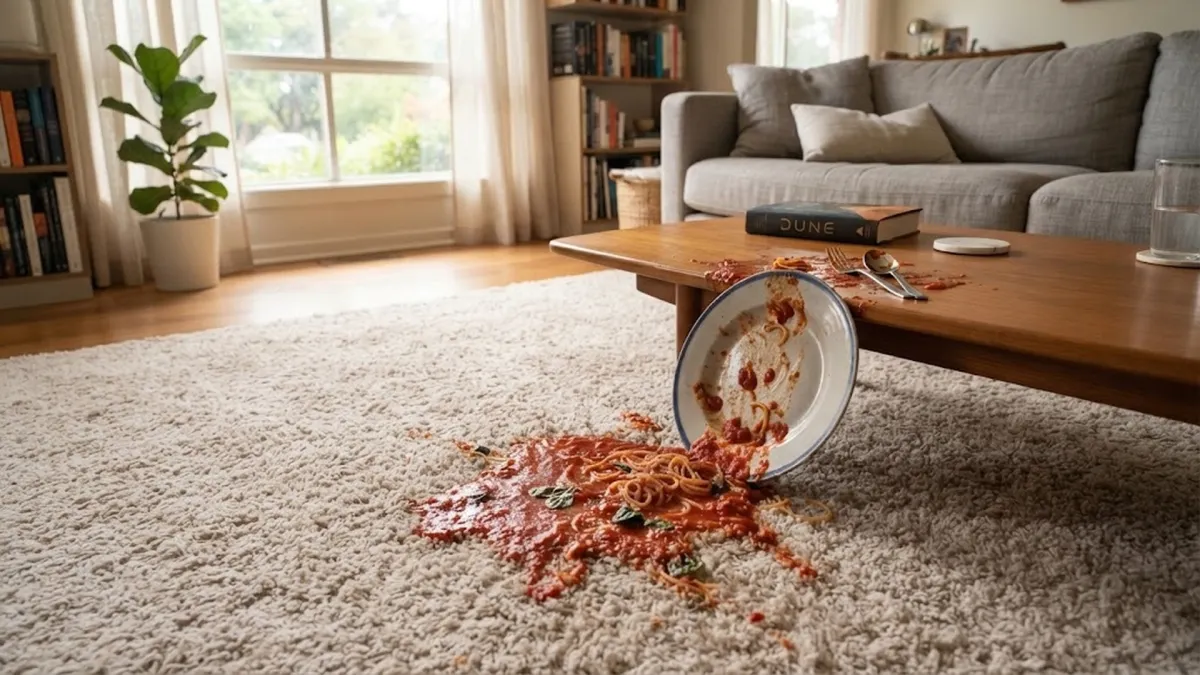
My brother once tripped over a floor lamp in his living room holding a plate of leftover rigatoni with spicy arrabbiata sauce. The plate hit the edge of a glass coffee table, bounced, and dumped a pint of oily red tomato paste directly into the middle of his wife's cream-colored wool carpet. You could hear a pin drop in that room. His immediate reaction was pure panic. He sprinted into the utility closet, grabbed an aerosol can of bathroom tile bleach, and started scrubbing the spot with an old gym sock. Within two minutes, he made things ten times worse. The frantic rubbing ground the tomato grease all the way down into the jute backing under the rug. And the bleach burned the wool, turning a three-inch sauce smudge into an ugly permanent pale yellow ring that stayed there until they moved out two years later.
Every homeowner knows that instant pit in the stomach when food hits the floor. You stand there watching a puddle of marinara or tikka masala soak into clean rug fibers, wondering if your security deposit just vanished. But carpet cleaning does not require expensive commercial machinery or twenty-dollar specialty stain removers loaded with fumes. If you keep your head cool and reach for basic kitchen items instead of harsh detergents, you can lift almost any fresh red stain in about fifteen minutes.
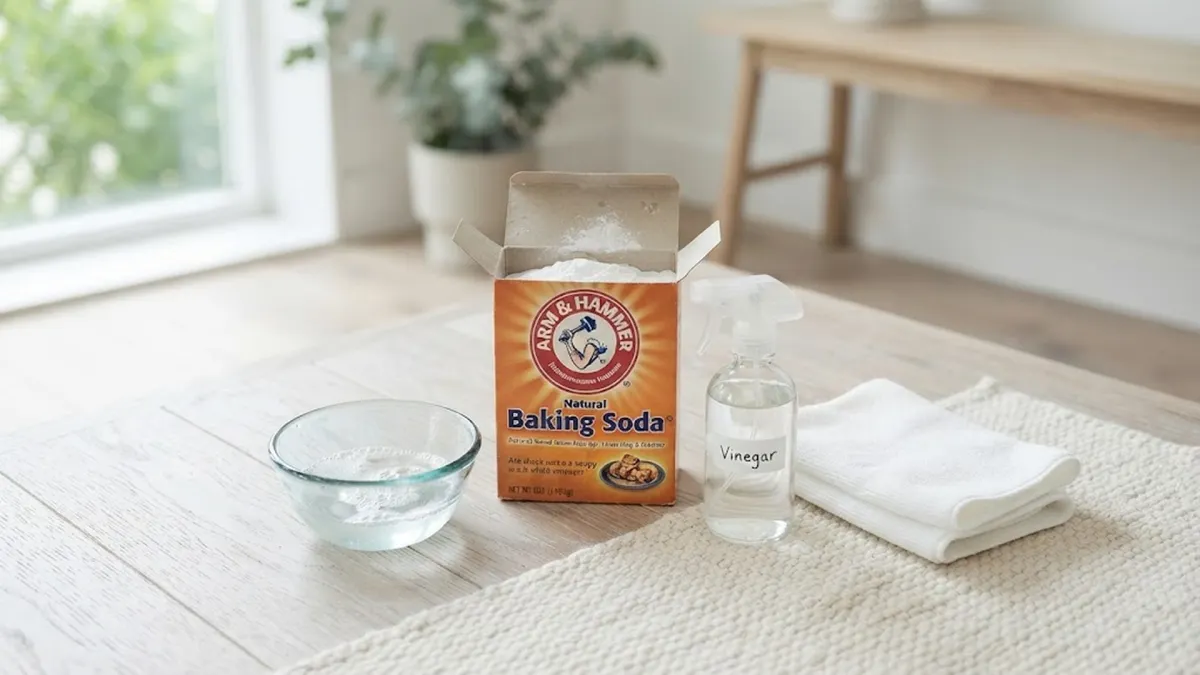
The entire fix relies on stuff you already have in your cupboards: an ordinary soup spoon, clear dishwashing soap, white vinegar, and a small box of baking soda. No steam extractors, no toxic sprays, and definitely no bleach.
Why Door Shelves Spoil Milk Faster (and the 34-Degree Refrigerator Secret)
How Chewing Qat Took Over Yemen's Economy and Sucked an Ancient Country Dry
Why Red Sauce Fights Back So Hard
To beat a stain without damaging your flooring, you need to know what you are actually fighting. Ripe tomatoes get their deep red pigment from a natural chemical called lycopene. Lycopene is what chemists call hydrophobic, meaning it flatly refuses to dissolve in plain water. It behaves a lot like wax or grease. When you splash tap water on a tomato spot, the water molecules simply bead up and glide over the pigment without loosening it.
On top of that, nobody eats dry tomatoes. Pasta sauce, curry, and pizza toppings are loaded with olive oil, butter, and rendered meat fats. When that hot grease hits carpet yarn, it coats the fibers and acts like an industrial glue, locking the red lycopene deep inside the weave. If you only use cold water, the grease shrugs it off. You need an alkaline surfactant to slice through the oil barrier first, followed by a light organic acid to break down the vegetable dye, and finally an absorbent powder to pull all that moisture out of the underlay.
| Cleaning Phase | The Winning Move | The Costly Mistake |
|---|---|---|
| Initial Lift | Scrape solids gently with an old spoon | Scrubbing back and forth with a damp towel |
| Oil Breakdown | Clear dish soap mixed in cool tap water | Colored hand soaps that leave artificial blue dyes |
| Color Neutralizer | Distilled white vinegar dabbed lightly | Bleach or ammonia that destroys natural rug dye |
| Drying & Extraction | Baking soda left to draw out deep dampness | Leaving carpet wet, inviting mold under the backing |
The 4-Step Emergency Clean Protocol
When dinner spills, do not touch a cloth until you have cleared the top layer. Grab a spoon, take a slow breath, and work through these steps in exact order:
Step 1: The Spoon Scoop Technique
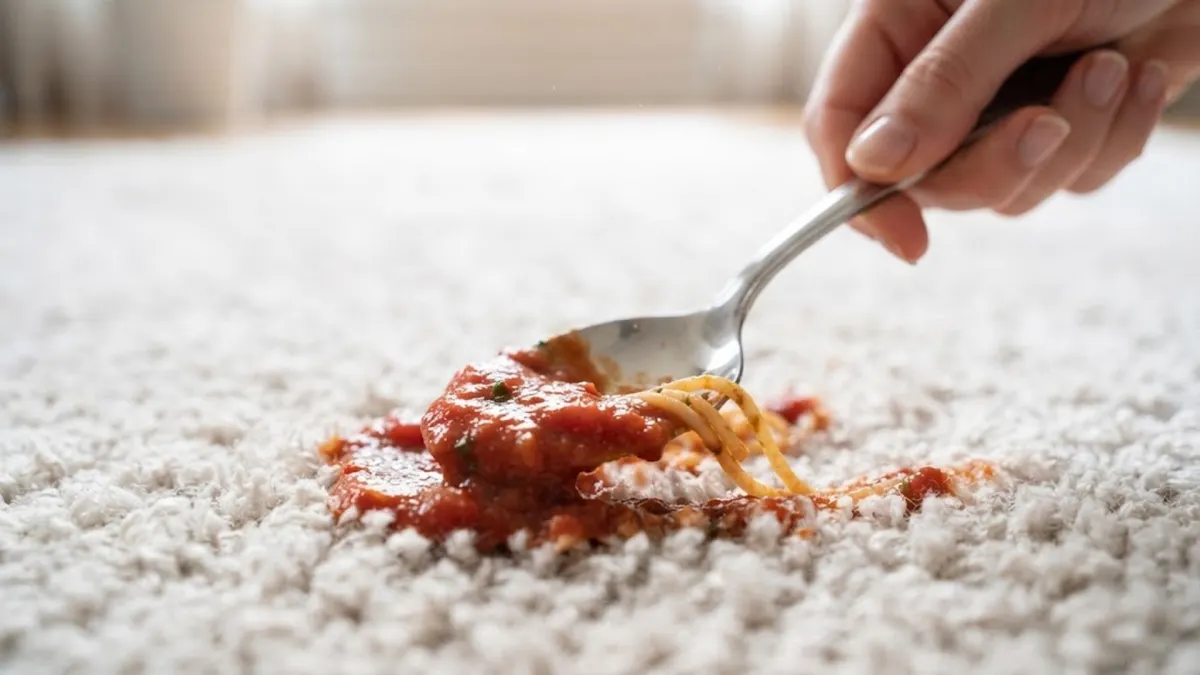
Before adding any water or spray, pick up a rounded soup spoon or a butter knife. Slide the edge along the carpet pile, working from the outer rim of the spill inward toward the center. Scoop up the loose chunks of tomato, melted cheese, and ground meat, wiping the spoon clean on paper towels after every pass. Never sweep outwards, or you will double the size of the spill zone. Once all solid debris is off the rug, take a stack of plain white paper towels and press straight down into the damp spot using your open palm. Press, hold for five seconds, lift, and throw away. Do this until the paper towels come up mostly dry.
Step 2: Clear Dish Soap and Cool Water
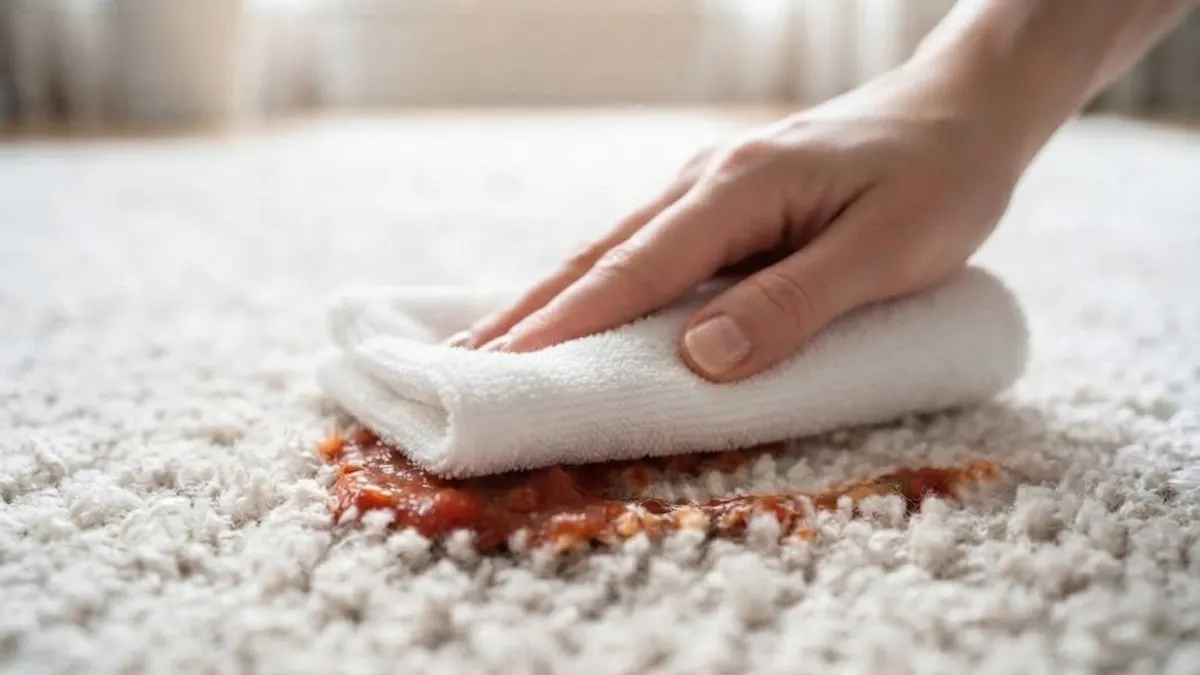
Fill an ordinary ceramic mug with cool water and stir in half a teaspoon of clear dishwashing soap. Do not use green apple or blue mountain dish liquids; those bright dyes can tint a cream carpet permanently. Dip a clean white cotton rag into the bowl, wring it out so it does not drip, and press it firmly against the stained pile. Tap and blot rather than dragging the cloth. The soap cuts straight through the cooking oils, unlocking the red lycopene from synthetic fibers like nylon and polyester.
The Outside-In Golden Rule
Always work your cleaning rag from the outer perimeter of the spot inward toward the middle. Wiping outward pushes diluted red liquid across clean carpet threads, spreading a small accident across a huge patch of floor.
Step 3: The Diluted Vinegar Blot
Even after the grease is gone, tomato acids often leave behind a faint orange-pink ghost ring on light carpets. Mix equal parts cold water and distilled white vinegar in a cup. Moisten a fresh section of your rag and dab the pink outline. Vinegar provides mild acetic acid that breaks down organic plant pigments without bleaching your carpet yarn. Within a few dabs, you will see the orange pigment lift right onto the white cotton cloth.
Spot Testing Antique Wool and Silk
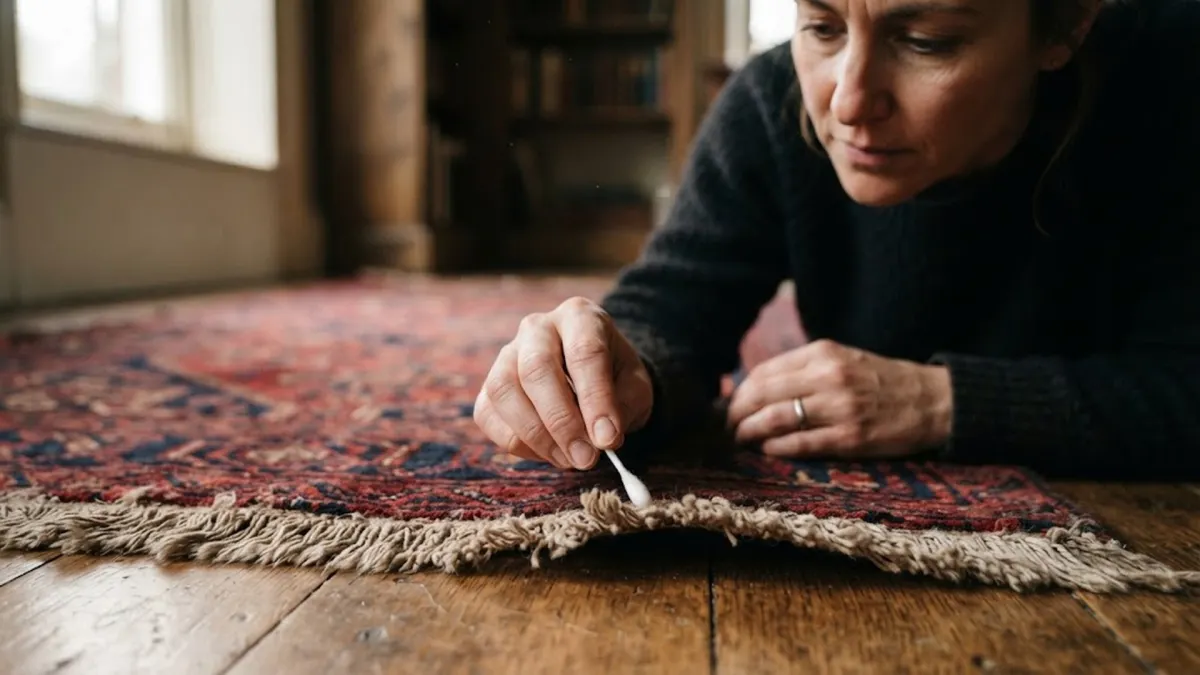
If your floor features a vintage handmade Persian rug or oriental runner, dab a drop of your vinegar solution onto a hidden corner first—such as under a sofa leg. Wait two minutes and press a dry tissue against it to ensure the natural wool dyes do not run.
Step 4: The Baking Soda Extraction Trap
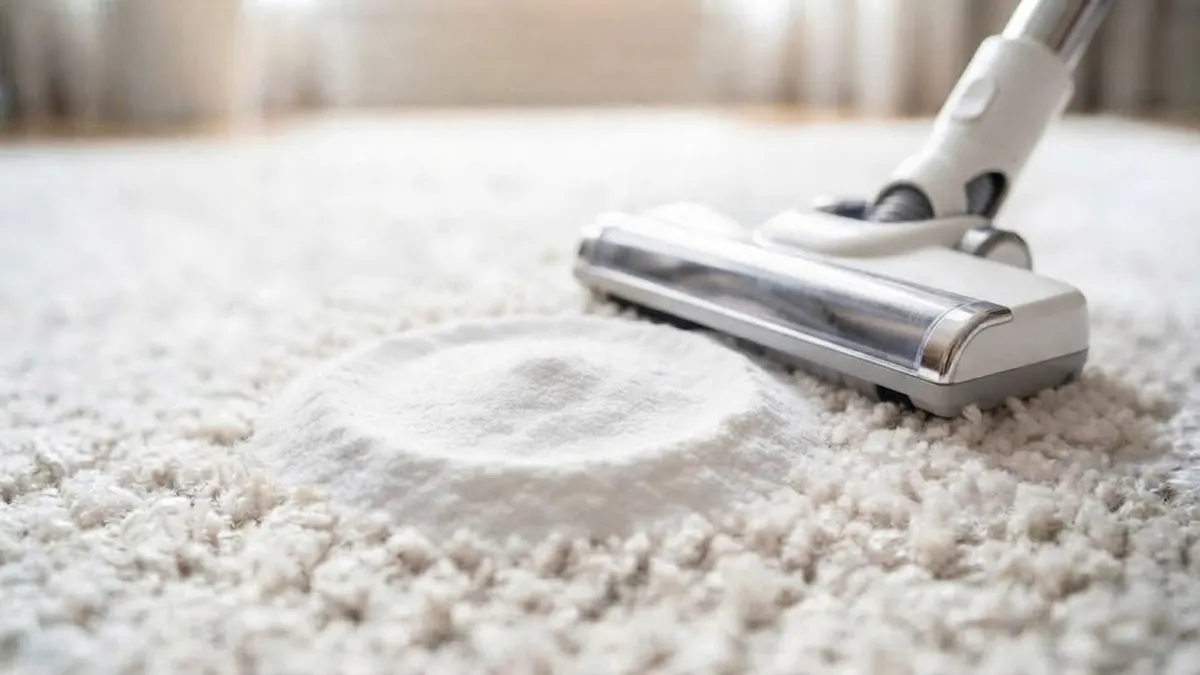
Once the visible color is gone, your carpet fibers will still be slightly damp. If you walk away now, hidden tomato oils sitting in the lower backing will slowly creep back to the surface as water evaporates, creating an ugly shadow tomorrow morning. Dump a thick mound of dry baking soda over the entire treated patch until the carpet pile is completely covered. Baking soda functions like millions of tiny mineral sponges, pulling lingering moisture and microscopic pigment particles up out of the subfloor. Let it sit for about an hour until it forms a dry, chalky crust, then run your vacuum over it. The baking soda vacuums away effortlessly, leaving the rug soft, dry, and fresh smelling.
How to Deal with Stains That Dried Days Ago
Sometimes you do not notice a spill right away. A child drops a slice of pizza behind an armchair, or a dropped chicken wing sits behind a television stand over a holiday weekend. By the time you spot it on Monday, the tomato sauce has baked into a rock-hard reddish brown shell glued to the floor.
Do not pull out a stiff wire brush, because you will fray the carpet pile. Instead, rehydrate the crust using common 3% hydrogen peroxide from your home first-aid cabinet. Add two drops of clear dish soap into two tablespoons of hydrogen peroxide. Use an eyedropper or a cotton swab to apply the mixture directly to the dried crust. Let it bubble for ten minutes. The released oxygen lifts the baked tomato sugars from the fibers. Once softened, blot away the paste with paper towels, finish with your vinegar dab, and dust with baking soda. The carpet will look as good as new.
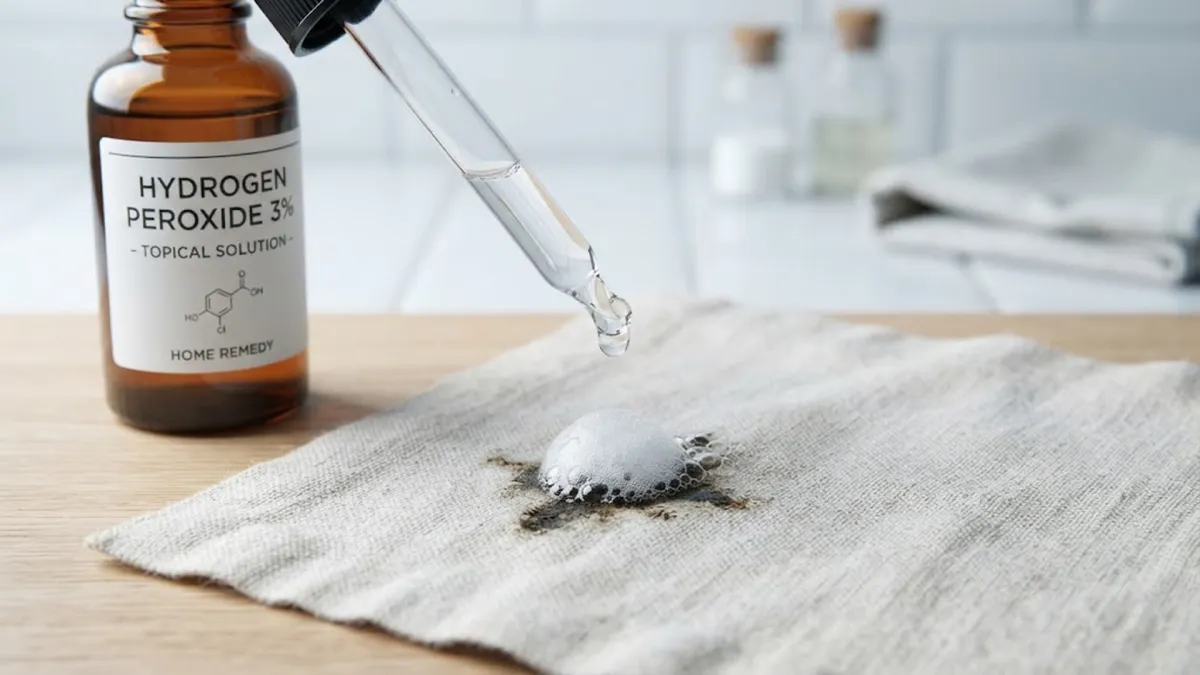
With four simple pantry staples, you never have to panic when a plate slips off your lap. Understanding basic kitchen chemistry saves your carpets, protects your bank account, and keeps your living room looking spotless.
Quick Pantry Emergency Kit
Rule of Thumb: Never scrub in circles, avoid colored dish soaps, and always blot from the outside inward to protect your carpet backing.
- Clear Dish Soap + Cool Water: Cuts vegetable and meat cooking fats immediately.
- Distilled White Vinegar: Breaks down stubborn organic lycopene tannins.
- Dry Baking Soda: Microscopic absorbent sponges that draw out trapped moisture.