

The Chlorine Bleach Yellowing Trap
My aunt operated an old three-story bed and breakfast in Vermont for nearly thirty years, washing stacks of white cotton bedsheets and waffle-weave bath towels every morning before breakfast. She never kept a single jug of chlorine bleach anywhere near her basement laundry room. When curious summer guests asked how her cotton linens stayed snowy bright year after year, she always pointed to three ordinary kitchen supplies: an orange box of Arm and Hammer baking soda, regular coarse table salt, and a bottle of clear distilled white vinegar.
Every homeowner knows that frustrating moment when an expensive white cotton dress shirt or favorite workout t-shirt starts looking dull and gray around the collar. The automatic reaction is pouring half a cup of liquid chlorine bleach directly into the washing drum, expecting miraculous brightness. But two washes later, the shirt comes out looking worse: a dreary, dingy pale yellow that no amount of hot water can ever reverse.
Chlorine bleach is not a gentle brightener; it is a harsh corrosive oxidizer. When chlorine contacts natural cotton cellulose, it strips away the microscopic protective coating of the yarn. More importantly, chlorine reacts chemically with human body oils, sweat proteins, and trace iron minerals in your tap water, permanently scorching the yellow pigments into the inner core of the cotton threads.
How to Get Stubborn Red Sauce and Grease Out of Carpets in 10 Minutes (Without Bleach)
What Actually Makes White Fabrics Turn Gray
To restore dingy fabrics without damaging them, you have to look at what causes the discoloration in the first place. White clothes do not lose their brightness simply from being worn. They turn dull because of a sticky, invisible microscopic film that builds up layer by layer across routine washing cycles.
The first culprit is human sebum. Your skin naturally secretes tiny amounts of fatty oils and sweat salts throughout the day, especially along your neck, underarms, and wrists. Standard laundry detergents are formulated to lift loose surface dirt, but they often glide right over oily lipid barriers, leaving body oils trapped deep inside the cotton weave.
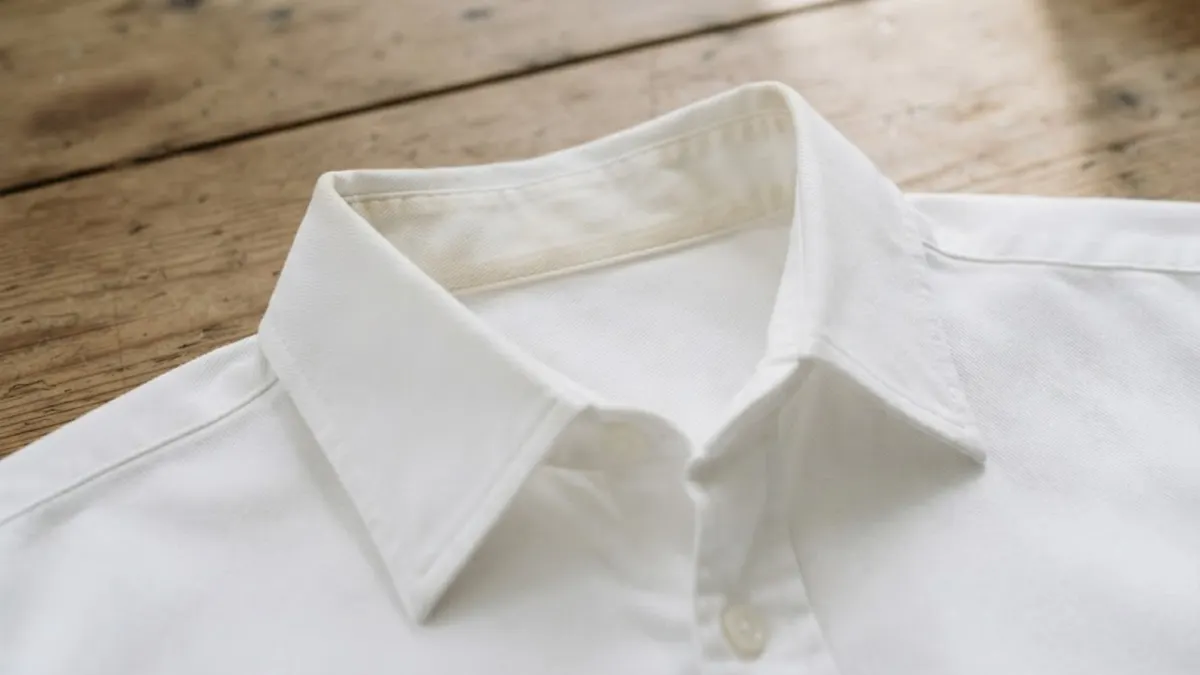
The second culprit is detergent overdosing. Most people assume that pouring an extra capful of blue liquid detergent makes dirty laundry cleaner. In reality, modern high-efficiency washing machines use very little water. When you pour too much thick soap into the dispenser, the rinse cycle cannot wash it away. A thin, waxy coating of soap scum dries directly onto your clothes, acting like a magnet that attracts dust and dissolved minerals out of your tap water every single time you do laundry.
| Whitening Method | Chemical Mechanism | Fabric Safety & Durability |
|---|---|---|
| Chlorine Bleach | Harsh oxidation that burns fibers | Fibers weaken; reacts with sweat to create permanent yellowing |
| Baking Soda Soak | Mild alkaline buffer dissolves body grease | 100% safe on cotton and linen; neutralizes stubborn locker odors |
| Table Salt Addition | Ionic mineral binder pulls out water hardness | Gentle natural scouring action that frees trapped soap residue |
| Distilled White Vinegar | Acetic acid strips away waxy detergent film | Natural fabric softener; leaves zero artificial perfume odors |
The 3-Ingredient Pantry Protocol
Instead of relying on industrial chemicals that fill your laundry room with noxious fumes, you can completely reset graying white cotton using three common ingredients sitting in your kitchen cupboards right now. Each ingredient plays a specific, calculated role in breaking down grime.
Baking soda provides a gentle alkaline buffer with a pH of roughly 8.5. This mild alkalinity breaks apart fatty lipid chains from skin oils without fraying delicate cotton threads. Coarse table salt acts as a natural water softener, binding with calcium and magnesium ions in hard municipal water so detergent can rinse away freely. Distilled white vinegar provides mild acetic acid that cuts through waxy soap scum during the final rinse.
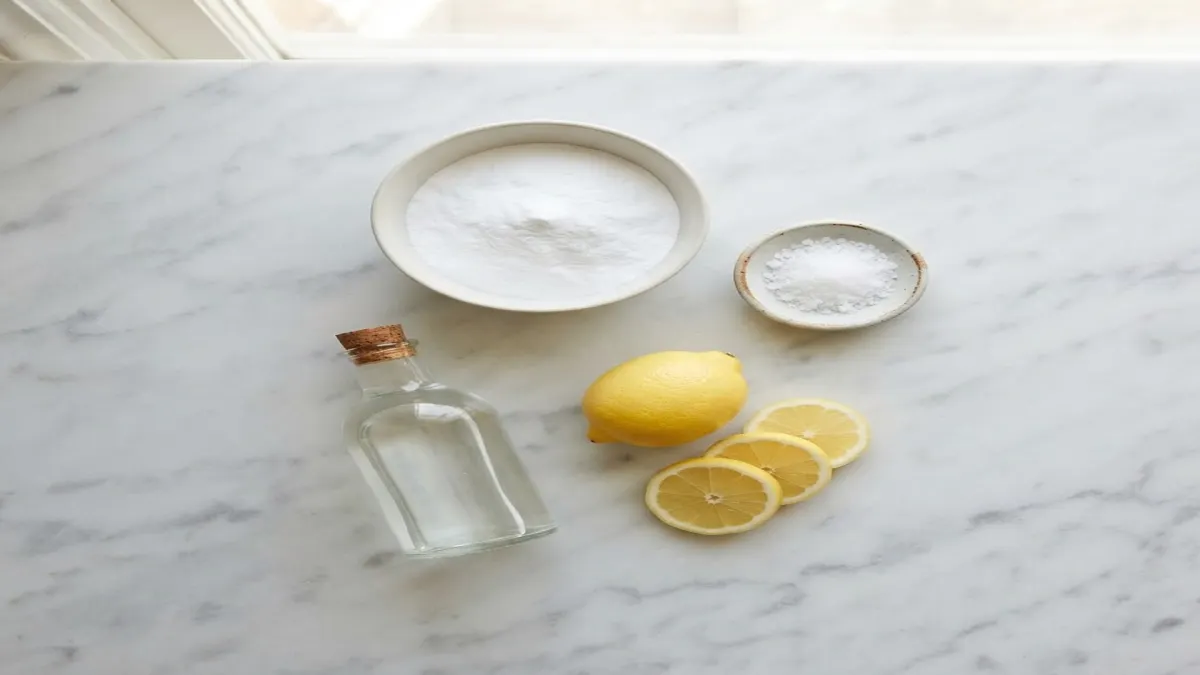
Here is the exact step-by-step restoration routine to bring dingy cotton back to life:
Step 1: The Warm Mineral Pre-Soak
Fill a clean bucket, laundry basin, or utility sink with about two gallons of very warm tap water. Add half a cup of plain baking soda and two generous tablespoons of coarse table salt. Stir the water with your hand or a wooden spoon until the white crystals dissolve completely. If you are dealing with heavy underarm stains, squeeze the juice of one fresh lemon directly into the basin; the natural citric acid gives stubborn grease an extra nudge.
Step 2: Submerging and Waiting
Drop your dingy white t-shirts, socks, pillowcases, or cotton towels into the water. Press them down firmly so the mineral solution penetrates deep into every seam and hem. Walk away and let the basin sit for forty-five minutes to an hour. You will notice the clear water slowly turning a cloudy, grayish tint as trapped body oils and old laundry detergent float out of the fabric.
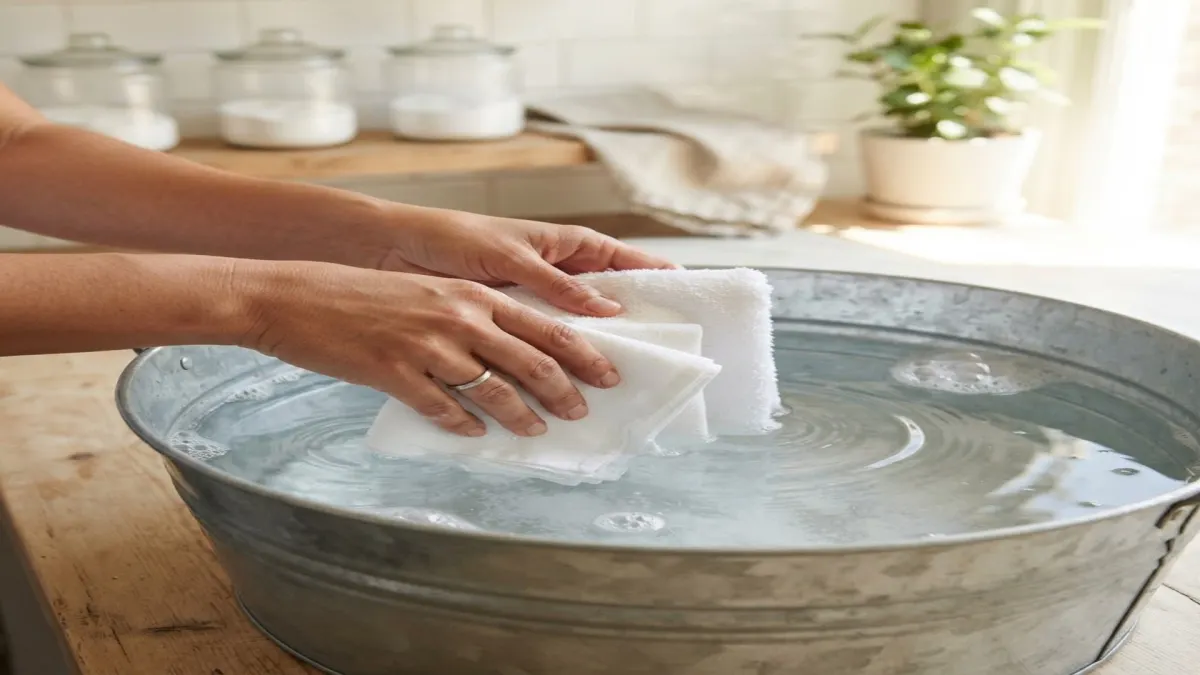
Step 3: The Normal Machine Cycle with a Vinegar Rinse
Once the soak is finished, wring out the excess water and transfer the garments directly into your washing machine. Add your normal measure of laundry detergent, but reduce the scoop by half to prevent fresh soap buildup. Pour half a cup of distilled white vinegar straight into the fabric softener compartment. During the final cold rinse cycle, the machine automatically flushes the vinegar through the tub, stripping away the last traces of alkaline minerals and leaving the cotton fibers exceptionally soft.
The Vinegar Smell Question
Do not worry about your clothes smelling like a pickle jar. As soon as the fabric dries completely, whether on a sunny clothesline or in a warm dryer, the faint acetic scent completely evaporates, leaving behind a crisp, neutral, unscented freshness.
The Power of Natural Outdoor Sun Bleaching
If you have access to a sunny backyard clothesline or apartment balcony drying rack, take advantage of the most powerful natural fabric brightener on Earth: direct ultraviolet sunlight. Solar UV radiation acts as a natural photocatalyst, gently breaking down organic stain molecules and killing lingering odor-causing bacteria without weakening cotton threads.
Hanging your freshly washed white shirts outside on a bright sunny afternoon for two hours accomplishes more whitening than an entire bottle of chemical booster. The combination of gentle kitchen minerals and natural outdoor light leaves your whites looking crisp, bright, and brand new for years of comfortable wear.
The Snowy Whites Checklist
Rule of Thumb: Never pour chlorine bleach on sweat stains; dissolve the underlying oils naturally.
- Half-Dose Detergent: Cut your detergent cup in half to stop soap scum from acting like a dirt magnet.
- The Vinegar Rinse: Use half a cup of white vinegar in the softener drawer to strip hard tap water minerals.
- Baking Soda Soak: Give dingy collars a forty-minute warm soak once a month to reset cotton fibers.
- Sun Dry When Possible: Let outdoor ultraviolet rays brighten white cotton naturally without chemical heat.