
The Waterloo Bridge Puncture
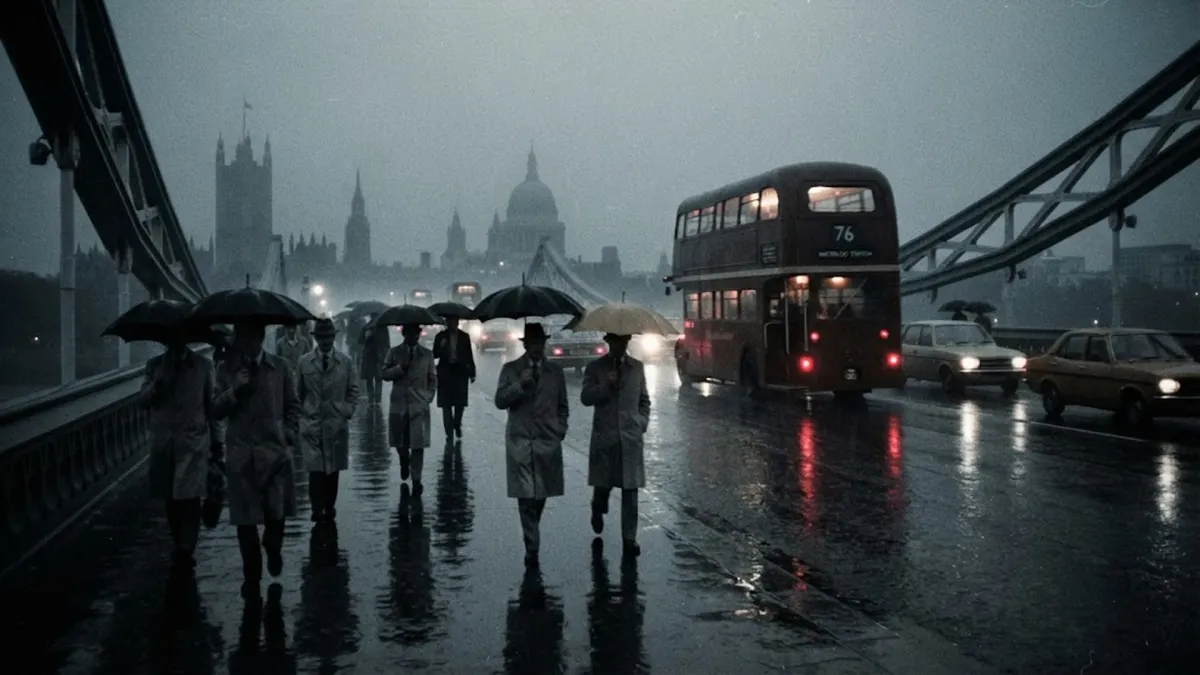
The autumn rain had turned the London evening greasy and dim as Georgi Markov crossed Waterloo Bridge. It was September 7, 1978. Markov was forty-nine years old, a former Sofia playwright who had defected to the West nearly a decade earlier. He earned his living producing weekly broadcasts for the BBC World Service, reading acerbic commentaries that mocked the personal excesses of Bulgaria's communist leadership. He was hurrying toward his usual bus stop to make the six o'clock evening broadcast at Bush House.
Right near the bus shelter, surrounded by home-bound commuters, he caught a sudden jab in the back of his right thigh. It stung sharply, like an electric shock or a wasp. Markov whipped around. A stocky, heavily built man was stooping over the wet sidewalk to pick up a black umbrella that had slipped from his grip. The stranger mumbled an apology in a heavy foreign accent, dashed through traffic across the road, and climbed into an idling black cab. The taxi accelerated into the gloom toward the Strand.
Markov rubbed the back of his leg through his tweed trousers. By the time he walked into the BBC studios, the pain had spread into an angry ache. He showed a producer a red welt about the size of a five-pence coin, with an unmistakable puncture mark dead center. Within eight hours, his body temperature soared past 104 degrees. His white blood cell count skyrocketed. His blood pressure collapsed. Three days later, with doctors at St. George's Hospital frantically trying to diagnose what looked like an unknown tropical fever, Markov's heart gave out.
The 1963 Great Train Robbery: How 15 Men Stole 2.6 Million Pounds Without Firing a Single Shot
The Speck in the Flesh
Scotland Yard's Counter Terrorism Command took charge of the body. Markov had told his doctors before losing consciousness that he had been poisoned by the Bulgarian secret service. Pathologist Rufus Crompton carved out a block of inflamed tissue from the right thigh and placed it beneath a magnifying lens.
Embedded in the subcutaneous fat lay a tiny metallic bead. It was so minute that ordinary mortuary forceps almost crushed it. Detectives immediately rushed the sample under armed motorcycle escort down to the biological research labs at Porton Down in Wiltshire. Ballistics specialists put the metallic speck under an electron microscope.
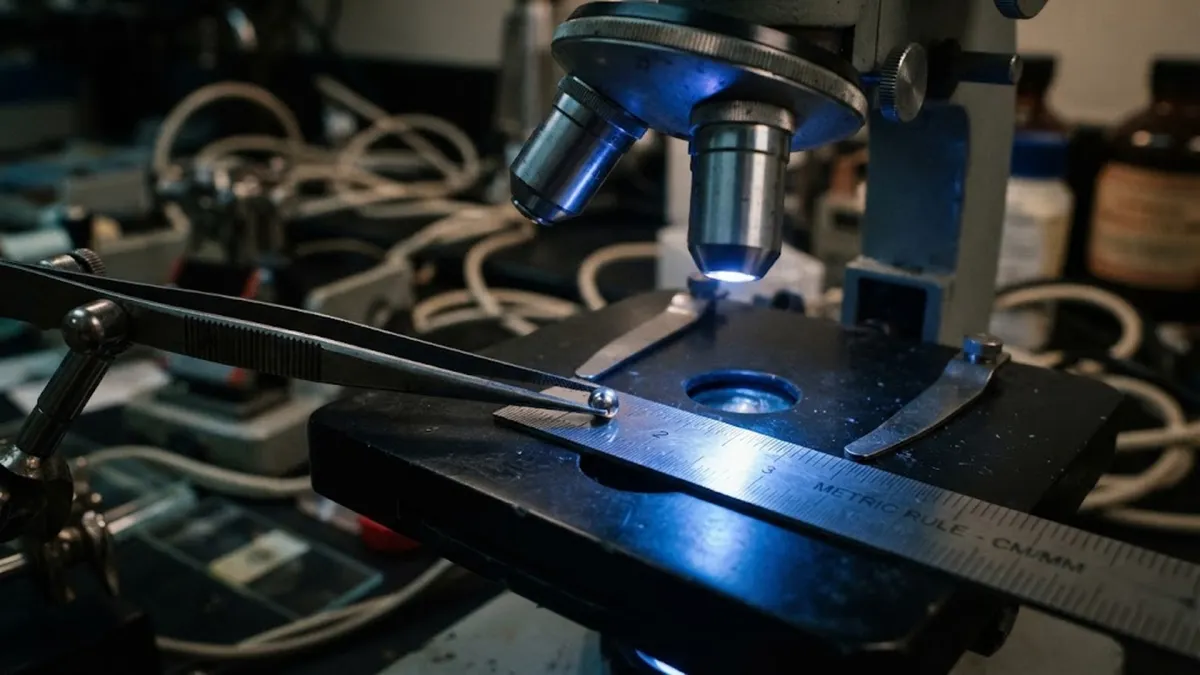
"The sphere was manufactured from an alloy of ninety percent platinum and ten percent iridium," wrote the investigating toxicologist, Dr. David Gall. "It had a diameter of exactly 1.52 millimeters—literally no larger than the head of a match or a pin. Yet when we rotated it under high magnification, we found two holes, each drilled with laser precision at 0.35 millimeters across."
The holes met in the center to form an internal chamber. The exterior of the bead had been dipped in a microscopic coating of carnauba wax, engineered to stay solid at room temperature but melt at 98.6 degrees Fahrenheit—human body temperature. Once the bead entered the warm muscle tissue, the wax dissolved within hours, releasing about 0.2 milligrams of pure ricin. Extracted from castor oil beans, ricin destroys ribosomes inside living cells, completely halting protein production until every major organ shuts down.
| Investigation Parameter | Markov Waterloo Bridge Attack | Kostov Paris Metro Incident | Significance in Toxicology |
|---|---|---|---|
| Pellet Diameter | 1.52 millimeters (platinum-iridium) | 1.52 millimeters (identical geometry) | Unreactive metal invisible to early hospital X-rays |
| Internal Munition | Two crossed 0.35mm cross-drilled cavities | Two crossed 0.35mm cross-drilled cavities | Precision micro-machining impossible for street criminals |
| Poison Compound | Refined crystalline ricin cytotoxin | Refined crystalline ricin cytotoxin | Lethal in quantities thousands of times smaller than cyanide |
| Delivery System | Pressurized nitrogen gas canister inside umbrella shaft | Pocket-sized pneumatic spring tube | Zero gunshot noise; looks like an accidental bump in a crowd |
Laboratory 12 and the Moscow Connection
Detectives soon learned Markov wasn't the first target. Just ten days prior, another Bulgarian defector, Vladimir Kostov, felt an identical stinging pinch on an escalator at the Clichy metro station in Paris. Kostov suffered severe fever, but his doctors found the bead lodged in a muscle band where the wax hadn't fully melted. He survived.
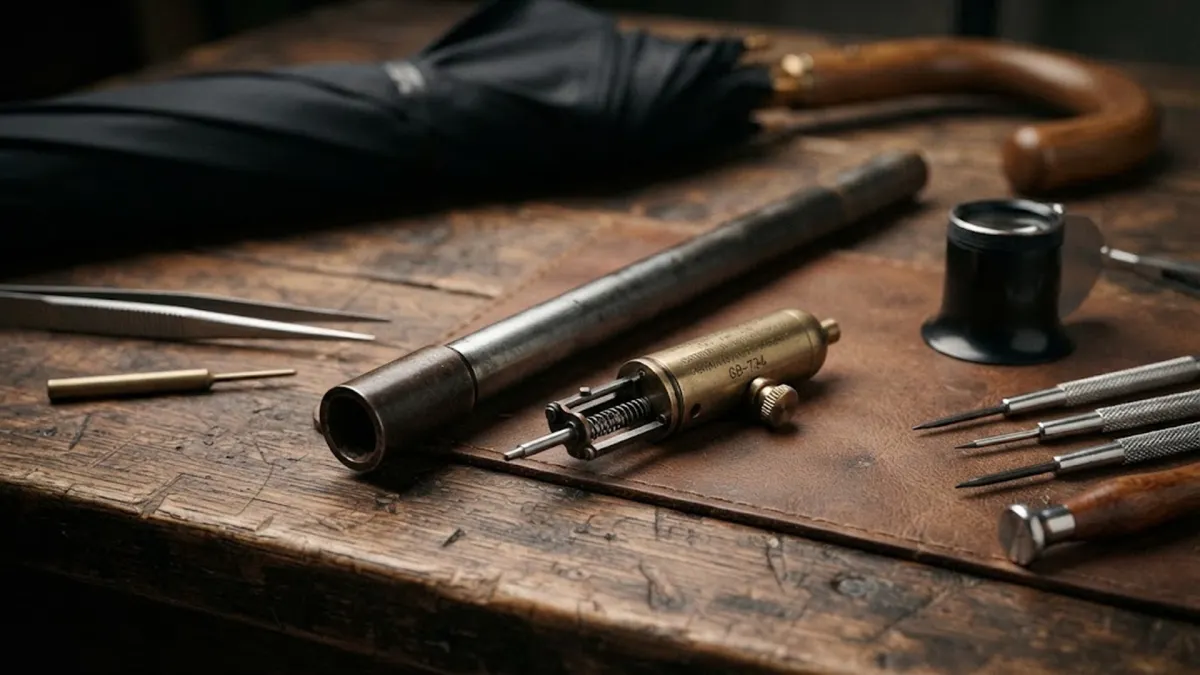
The hardware didn't originate in Sofia. Following the fall of the Berlin Wall in 1989, high-ranking KGB defectors like Major General Oleg Kalugin revealed the true origins of the weapon. Bulgaria's communist dictator, Todor Zhivkov, had personally appealed to Moscow for help silencing dissident exiles. The operation was handed down to "Laboratory 12," the KGB's clandestine technical workshop responsible for lethal poisons and concealed assassination devices.
Soviet engineers had disassembled an ordinary off-the-shelf British gentleman's umbrella. Down along the central metal tube, they fitted a silent pneumatic piston powered by a miniature cylinder of compressed nitrogen. The trigger was integrated right into the umbrella's curved wooden handle. When the operator thumbed a small brass catch, the gas pushed the tiny pellet out through a hollow guide tip at roughly one hundred miles per hour—fast enough to puncture trousers and skin, but slow enough to leave no gunpowder residue and almost no audible sound.
The Discarded Secret Files
When the Bulgarian regime crumbled in 1990, secret service generals shredded forty volumes of investigative files concerning Georgi Markov. General Vladimir Todorov, the head of Bulgarian foreign intelligence, was subsequently sentenced to ten months in prison for destroying the state evidence.
The Ghost of Agent Piccadilly
Scotland Yard eventually traced the primary suspect to an Italian-born adventurer named Francesco Gullino, known in Bulgarian intelligence code as "Agent Piccadilly." British and Danish detectives tracked him down to an apartment in Copenhagen in the early 1990s. But with Bulgaria refusing to declassify original mission orders, and with no surviving physical paperwork, prosecutors had to release him.
Markov lies buried in the countryside of Dorset. His assassination remains a haunting turning point in the history of Cold War intelligence—a chilling preview of modern biological assassination that forced police and intelligence agencies to rewrite forensic medicine from the ground up.
Forensic Legacy
The Markov case permanently altered how emergency hospitals handle unexplained, rapid multiple organ failure. It prompted British and American defense agencies to develop the first portable immunological assays capable of identifying ricin in blood samples within minutes.