
Warm Door Shelves and the Hidden Kitchen Spoilage Trap
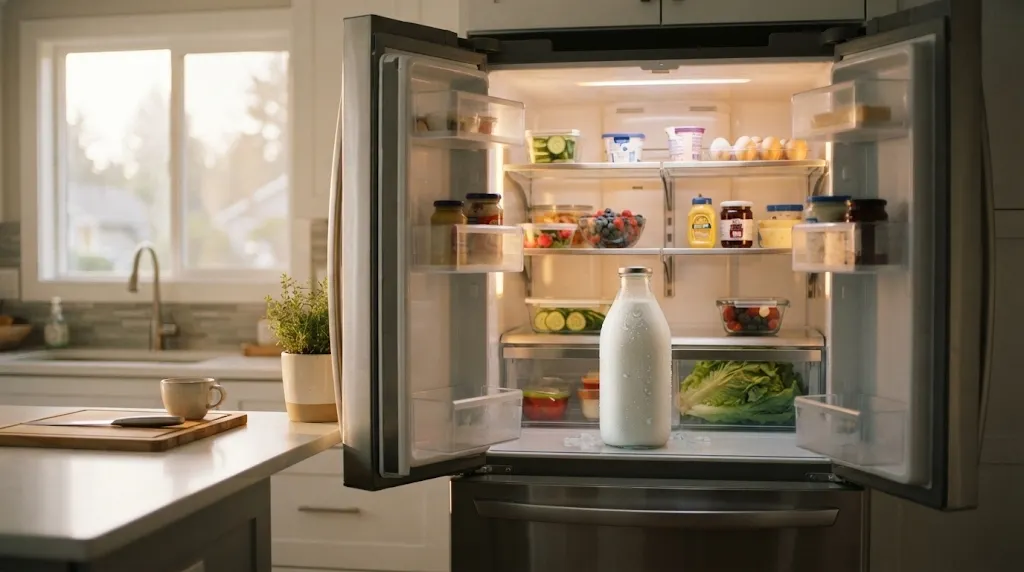
Every Saturday morning around ten o'clock, my neighbor Sarah unloads four heavy grocery bags onto her kitchen island in suburban Chicago. Out come two gallons of whole milk, a yellow carton of large eggs, and blocks of sharp cheddar. Almost automatically, she swings open the refrigerator door and slides the milk jug right into the plastic bottom door pocket.
Appliance companies design door bins with bottle slots, egg trays, and butter dishes that make door storage feel completely natural. But talk to any commercial refrigeration technician who repairs home compressors, and they will give you a blunt warning: the door is the worst spot in your entire kitchen to store perishable groceries.
That convenient plastic pocket is an unstable microclimate that quietly speeds up bacterial spoilage, turns sweet milk sour days before its printed date, and burns through hundreds of dollars in spoiled food every year.
The Supermarket Vegetable Spritz: Why Grocery Aisles Make Produce Rot Faster on Purpose
The Forty-Eight Degree Danger Zone in Front of You
A certified appliance repair specialist named Gary Campbell, who has spent twenty-eight years fixing kitchen cooling units across Illinois, showed me what actually happens inside a refrigerator cabinet.
"People think a refrigerator is like a cooler filled with ice water where every corner stays the exact same temperature," Gary told me while testing a digital thermometer on a customer's French-door fridge. "To keep fresh milk and poultry safe from bacteria, food safety regulations require cold storage between thirty-five and thirty-eight degrees Fahrenheit."
"The second the thermometer crosses forty degrees, common spoilage bacteria like Pseudomonas wake up and start multiplying twice as fast."
Why Opening the Door Dumps Cold Air on the Floor
Gary placed a wireless temperature logger on the plastic door shelf right next to a carton of half-and-half cream. He set a timer and had the homeowner open the door for eight seconds to grab a jar of mayonnaise.
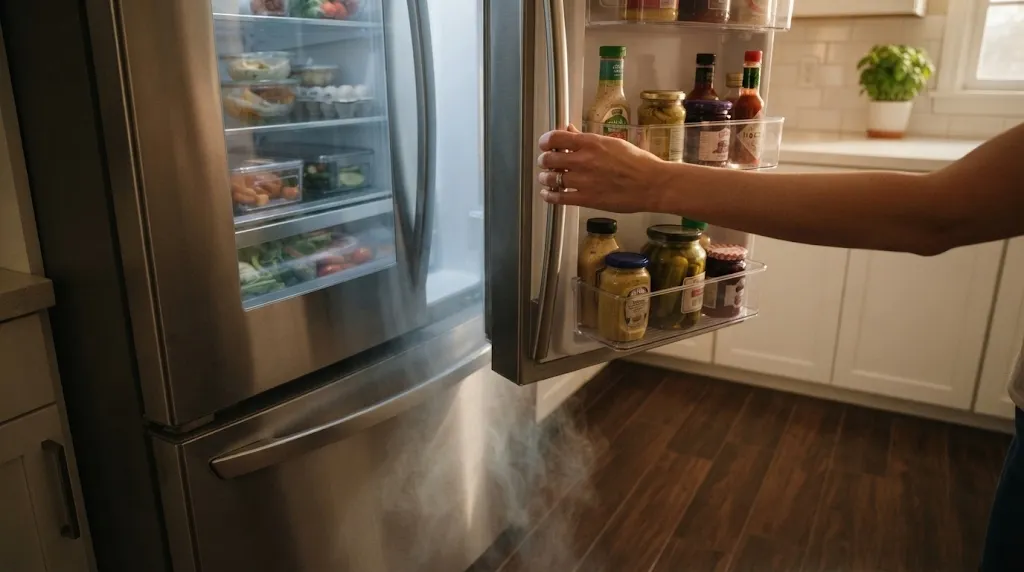
"Cold air is heavy and dense like cold water," Gary explained. "The instant that magnetic door gasket pulls away from the steel frame, dense cold air falls straight out onto your kitchen floor tiles. Meanwhile, warm, humid room air at seventy-two degrees rushes in to take its place."
In a home with two teenagers, family members pull that door open between forty and sixty times every single day. During dinner prep, the door shelf regularly climbs past forty-six degrees, forcing dairy products through a constant roller coaster of warming up and cooling down.
Mapping Natural Convection Currents in the Box
Gary pulled off the interior back plastic panel to show me how refrigerated airflow moves. In almost all modern home refrigerators, freezing air blows out of evaporator coils hidden behind the freezer back wall.
"That cold air enters the fresh food compartment through a small motorized damper door near the ceiling," Gary pointed out. "Because cold air is heavy, it falls straight down along the metal back wall toward the bottom drawers."
This natural gravity fall creates a deep pool of frigid air right on the lowest shelf against the rear wall. It is consistently the coldest, most rock-solid thirty-four degree zone in the entire machine.
| Refrigerator Zone | Average Daily Temp | Temperature Stability | What Actually Belongs There |
|---|---|---|---|
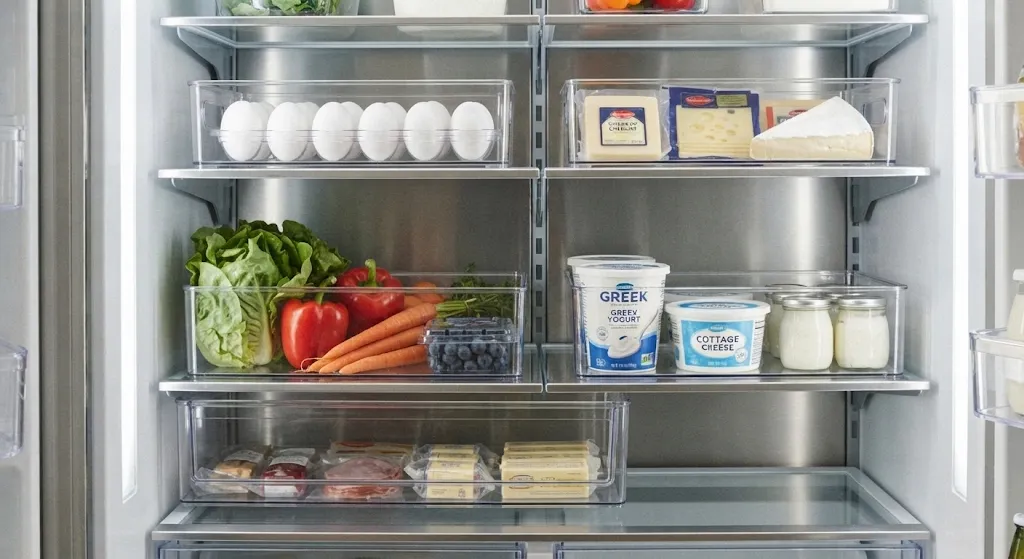
| Bottom Back Shelf | 34°F to 36°F (Coldest) | Rock-solid (Cold air pool) | Whole milk, raw chicken, ground beef, yogurt |
| Upper & Middle Shelves | 37°F to 39°F (Moderate) | High stability | Cooked dinner leftovers, deli cold cuts, soft cheeses |
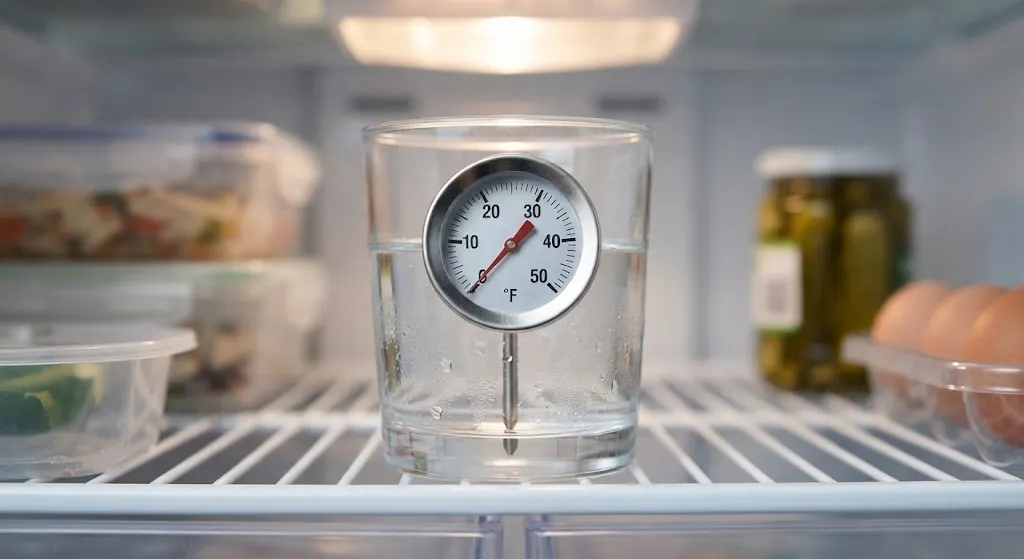
| Door Bins | 42°F to 48°F (Warmest) | Fluctuates 50x daily | Mustard, ketchup, hot sauce, soda cans, pickles |
| Crisper Drawers | 36°F to 38°F (Controlled) | Humidity sealed | Leafy greens on high; ripening apples on low |
Where Milk, Raw Meat, and Leftovers Belong
Gary picked up a jug of whole milk from the door pocket and set it down firmly on the bottom shelf, pushing it all the way against the cold rear plastic wall.
"This back corner right here is where milk belongs," Gary told me. "Tucking your jug against the cold rear panel keeps the liquid chilled at thirty-five degrees around the clock. That simple three-second move halts bacterial growth and keeps your milk tasting sweet for up to ten days past the sell-by date."
Raw chicken breasts, bacon, and ground beef should also sit on that bottom back shelf inside a leak-proof plastic container, preventing raw juices from dripping onto fresh food below.
What the Door Pockets Were Built to Hold
If milk, raw eggs, and yogurt should never touch the door bins, what actually belongs on those convenient plastic shelves?
"The door is made exclusively for preserved condiments loaded with natural acids, vinegar, and salt," Gary explained. "Commercial yellow mustard, tomato ketchup, hot pepper sauce, soy sauce, and pickled relish have so much salt and acid that bacteria cannot grow in them even at room temperature."
Aluminum cans of sparkling water, tonic bottles, and fruit jams also handle door temperature swings with zero loss in quality. Keep the door reserved strictly for foods that cannot rot.
The Mystery of the Crisper Slider Tabs
Gary crouched down and pointed his flashlight at the two plastic crisper bins at the bottom of the fridge, tapping the small sliding plastic levers on the drawer trim.
"Over eighty percent of service calls I run, homeowners have no clue what these sliding tabs actually do," Gary laughed. "People think they control temperature, but they don't have wires attached to them. They are simple sliding air windows that control humidity."
When you slide the lever to high humidity, the plastic window closes tight, trapping the natural water vapor released by fresh vegetables inside the drawer.
Preventing the Ethylene Gas Rot Trap
"Leafy greens like romaine lettuce, fresh spinach, and broccoli need high humidity," Gary explained. "The trapped moisture keeps the leaves from shriveling into rubbery limp weeds, keeping them crisp for over two weeks."
The low humidity setting slides the air window wide open, allowing air to circulate freely in and out of the drawer. This setting is engineered specifically for ripening fruits that exhale ethylene gas, like apples, pears, and ripe avocados.
"If you trap sweet apples in a closed high-humidity drawer with green spinach, the trapped ethylene gas forces the spinach to decay fast," Gary warned. "The leaves turn yellow and slimy in three days. Opening the vent lets ethylene gas float away harmlessly."
Five-Minute Adjustments That Save Real Money
Organizing your refrigerator by temperature zones does more than keep food fresh; it protects your electric bill. When food is spaced out so air can flow around containers, the cooling fan doesn't have to work overtime.
Gary wiped the black rubber door gasket with a warm, damp cloth. "Take five minutes every six months to wipe dirt off this rubber seal," Gary advised. "A clean rubber seal locks tight against the metal frame, stopping costly cold air leaks before your compressor burns out."
Rethinking your refrigerator layout takes less than five minutes on a Saturday afternoon, but it prevents spoiled food, protects your household budget, and keeps your family eating safe, fresh meals every day.