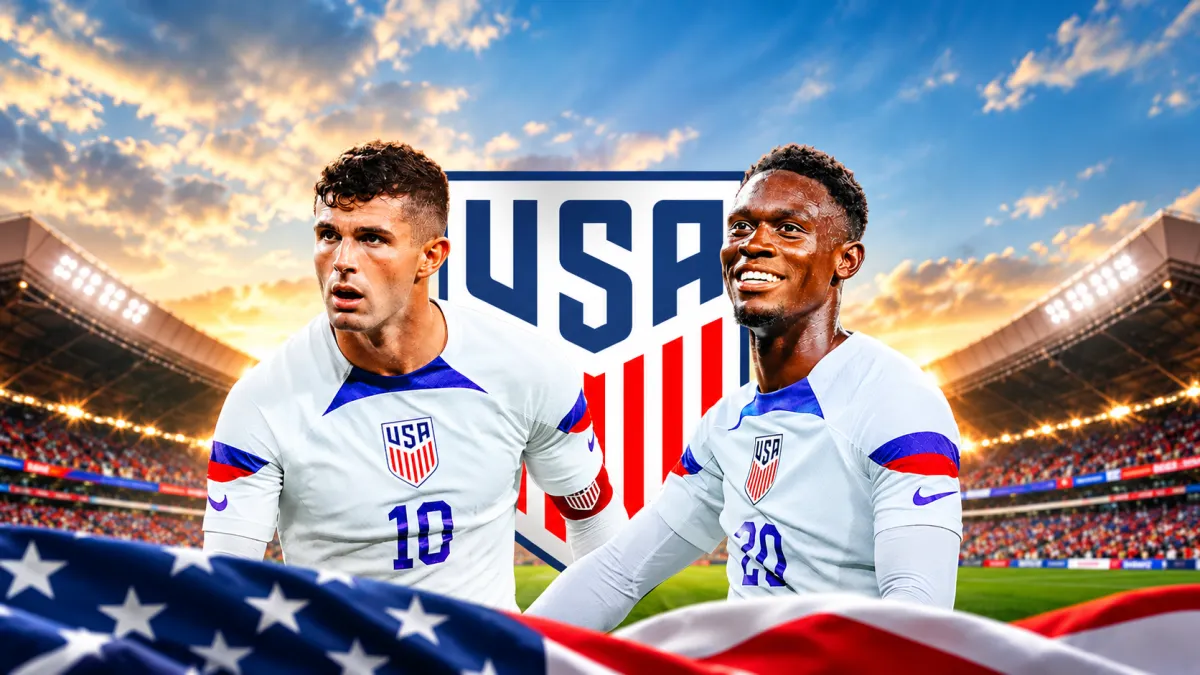

The United States is one of the world's most powerful countries in sports. For decades, it has dominated competitions in disciplines such as basketball, baseball, and American football, while consistently achieving remarkable results at international sporting events. Yet when it comes to soccer—the game that brings millions of fans together for the FIFA World Cup—the United States has struggled to reach the same level as traditional powerhouses such as Argentina, Brazil, France, and Germany.
Why has a country with enormous financial resources, advanced sports facilities, and a large population failed to become one of the world's leading soccer nations? Is the problem a lack of talented players, or does the answer lie in the country's sporting history, culture, and economic structure?
To understand the reasons, we need to travel back more than a century, to a time when soccer still had an opportunity to become America's number-one sport.
1. Two Different Kinds of Football: A Choice That Changed History
Modern soccer entered a new era in 1863, when the Football Association was established in England and formal rules were introduced. The sport gradually spread across Europe and eventually reached other parts of the world. British and European immigrants also brought soccer to the United States, helping introduce it to communities across the country.
However, Americans followed a different path. At universities such as Harvard and Yale, early versions of American football became increasingly popular. The sport gradually developed its own rules and evolved into a central part of American college culture.
Baseball had already established a strong position, while basketball later emerged as another major American sport.
As a result, soccer faced several established competitors at a time when it was becoming an important part of national identity in many European countries. Universities, investors, media organizations, and fans in the United States were already paying considerable attention to other sports.
This historical difference mattered. Building a successful soccer nation requires more than talented players. It also requires strong clubs, organized competitions, experienced coaches, and generations of players who develop within a consistent system from childhood.
2. When Soccer Became Associated With Immigrants
During the late nineteenth and early twentieth centuries, waves of immigration from countries such as Scotland, England, Italy, and Germany helped soccer grow in the United States. Many immigrants were already familiar with the game and established teams and clubs in the cities where they settled.
Soccer attracted considerable interest in some regions, particularly industrial cities in the northeastern United States. Immigrant players also played important roles in the development of local teams.
Nevertheless, soccer failed to become as deeply embedded in mainstream American culture as baseball and American football.
In some circles, soccer was viewed as a foreign sport or a game associated primarily with immigrant communities. This perception contributed to a cultural distance between soccer and parts of American society.
However, this attitude alone cannot explain soccer's limited popularity. The established college sports system, competition from other sports, and economic conditions also played important roles.
Taken together, these factors meant that soccer struggled for decades to become an integral part of America's sporting identity.
3. A Historic Opportunity That Slipped Away
In 1921, the American Soccer League (ASL) was established. During the 1920s, it became one of the country's most important professional soccer competitions, attracting talented players, including European footballers.
At the time, American soccer had significant room to grow. However, disagreements over the control and organization of the sport disrupted its development.
In 1928, a major dispute emerged between the American Soccer League and the United States Football Association over participation in the National Challenge Cup. Some clubs refused to enter the competition supported by the federation, while disciplinary actions and competing competitions further destabilized professional soccer.
This conflict, commonly associated with the American Soccer War, weakened the league and fragmented the sport's financial and organizational resources. The Great Depression, which began in 1929, placed additional pressure on clubs and investors.
The original American Soccer League eventually collapsed in 1933.
This was more than the closure of a few clubs. American soccer lost an important opportunity to establish a stable professional structure. While soccer continued developing across Europe, the United States struggled for decades to build a sustainable professional league capable of competing with the world's leading competitions.
4. The United States Was Once Successful in International Soccer
It may seem surprising, but the United States was not always an insignificant force in international soccer.
The men's national team reached the semifinals of the inaugural FIFA World Cup in Uruguay in 1930, finishing third in the tournament's historical rankings. This remains one of the most significant achievements in the history of American men's soccer.
However, the result failed to generate a lasting wave of investment and public enthusiasm at home.
Economic hardship, problems within professional soccer, and eventually World War II made the situation more difficult. While soccer became a major national sport in many European and South American countries, baseball and American football continued to dominate much of the American sporting landscape.
The problem, therefore, was not simply a lack of talent. The United States failed to turn an early international achievement into a strong, sustainable soccer system.
5. Why Was American Football More Attractive to Television?
One important difference between soccer and several popular American sports is the way games are structured and how easily television advertising can be incorporated.
Soccer is generally played in two 45-minute halves, with relatively few extended interruptions during the match. American football, by contrast, includes frequent stoppages, timeouts, and breaks that create additional opportunities for television advertising.
This difference matters commercially. Broadcasters and sponsors can generate more advertising opportunities in sports with frequent interruptions. Although soccer has an enormous global audience, it historically competed in the United States against sports that already enjoyed established commercial and media advantages.
However, it would be misleading to conclude that soccer cannot be profitable because it offers fewer opportunities for advertising breaks. The sport's global popularity, broadcasting rights, ticket sales, and commercial partnerships demonstrate its enormous economic potential.
The historical challenge for American soccer was that it failed to establish a comparable competitive position in the domestic media market while the country's sporting and broadcasting industries were taking shape.
6. Why Can Developing a Soccer Player in America Be Expensive?
One of the most significant challenges facing youth soccer in the United States is the cost of participating in competitive programs.
In many youth soccer pathways, families must cover expenses such as registration fees, coaching, travel, equipment, and tournament participation. This system, often described as «pay-to-play,» can limit access for talented children from lower-income households.
In countries with established soccer traditions, professional clubs often operate academies that identify promising players at a young age and provide structured training. These systems vary considerably, and European countries also face challenges involving costs and access.
The United States has expanded its professional clubs and youth academies, but access to high-quality development opportunities remains uneven across regions and income groups.
This creates a significant problem. If entering the professional pathway depends too heavily on a family's financial resources, some talented players may never receive the opportunities they need to develop.
A large population alone does not guarantee a steady supply of elite players. What matters is the quality, accessibility, and effectiveness of the system used to identify and develop talent.
7. Why Isn't America's Wealth Enough to Win World Cups?
The United States has enormous financial resources, powerful universities, advanced sports facilities, and a large population. Yet these advantages only translate into sporting success when they are invested effectively.
Building impressive stadiums or signing famous players can attract attention, but neither automatically produces elite homegrown talent.
Developing a top-level soccer player requires years of training, regular competition, high-quality coaching, and experience in demanding matches. Players also need an environment that develops their technical skills, tactical awareness, and decision-making under pressure.
Countries such as Brazil, Argentina, France, and Germany have spent decades developing different systems for producing talented players. In many of these countries, soccer is part of everyday life from an early age, while club competitions play a central role in player development.
The United States is building its own development structure, but the longer history and depth of competition found in many established soccer nations remain significant advantages.
8. What Role Does MLS Play in the Future of American Soccer?
The launch of Major League Soccer (MLS) in 1996 marked an important turning point in American soccer. The league gradually expanded, more clubs joined the competition, and the country's professional soccer infrastructure developed.
Today, MLS is one of the central pillars of professional soccer in North America. It gives American players opportunities to compete in a professional environment and provides a more structured pathway from youth soccer to the senior level.
However, developing a professional league is not enough to turn a national team into a global powerhouse. The quality of competition, opportunities for young players, connections between academies and senior teams, and access to international experience are also important.
To close the gap with the world's leading soccer nations, the United States must develop not only more players but also players with stronger technical abilities, better tactical understanding, and greater experience against elite opposition.
9. Can America's Younger Generation Transform Soccer?
One of the most important recent developments has been growing interest in soccer among American audiences. Easier access to European leagues, the internet, social media, and video games has exposed younger generations to international soccer more than ever before.
The 1994 FIFA World Cup in the United States also helped expand the sport's infrastructure. Co-hosting the 2026 World Cup provides another opportunity to increase public interest and investment.
However, greater popularity does not automatically translate into immediate national team success. Television audiences and fan numbers may grow quickly, but turning that interest into elite professional players requires time, planning, and sustained investment.
If soccer becomes more accessible in schools, neighborhoods, and youth sports programs, while the pathway to professional development becomes clearer, the United States has considerable potential for further growth.
10. Is American Soccer Really Weak?
The short answer is that American soccer should not simply be described as weak. The men's national team has maintained a presence in international competitions, and professional soccer in the United States has developed considerably compared with previous decades.
However, if success is measured by winning World Cups, consistently reaching the final stages of major tournaments, and competing with the world's strongest teams, the United States still has ground to make up.
This gap has less to do with a lack of wealth or population than with the history of the sport's development, cultural priorities, the economics of youth soccer, and the quality of player development pathways.
The United States adopted soccer as a major professional and cultural pursuit later than many of its competitors. Closing that gap now requires a sustained commitment to developing players and improving the quality of competition.