
The Butter That Never Came From a Cow
If you pour real melted butter over fresh popcorn at home, you end up with a soggy, greasy mess within two minutes. Movie theaters figured this out decades ago, which is why the butter you smell at the movies never came from a cow.
Movie theater popcorn has a specific, intoxicating sensory profile that home microwaves and stovetop pots can never replicate. People assume theaters possess secret industrial popping machinery. In reality, that unmistakable flavor, electric yellow color, and lobby-filling aroma come down to a deliberate two-part chemical formula developed in the mid-twentieth century.
The Ohio Secret Behind the Electric Yellow Salt
The first half of the secret sits inside a humble cardboard carton stamped with the name Flavacol. Manufactured by Gold Medal Products in Cincinnati, Ohio since the 1950s, this fine powdery seasoning is used by nearly ninety percent of movie theaters across North America.
Stop Searing Your Steaks to 'Lock in Juices': The Chemistry Myth Kitchens Keep Repeating
Flavacol is not butter. It contains zero milk solids and zero animal fat. It is a precision blend of fine salt, artificial butter aroma molecules called diacetyl and acetylpropionyl, and two specific food colorings: Yellow #5 and Yellow #6. That combination produces the signature neon gold glow that stains fingers and paper bags.

Crystallography: The Microscopic Pyramid Physics
Why can't you get the same result by tossing ordinary Morton table salt and melted grocery store butter into a bowl? The answer lies in microscopic crystallography.
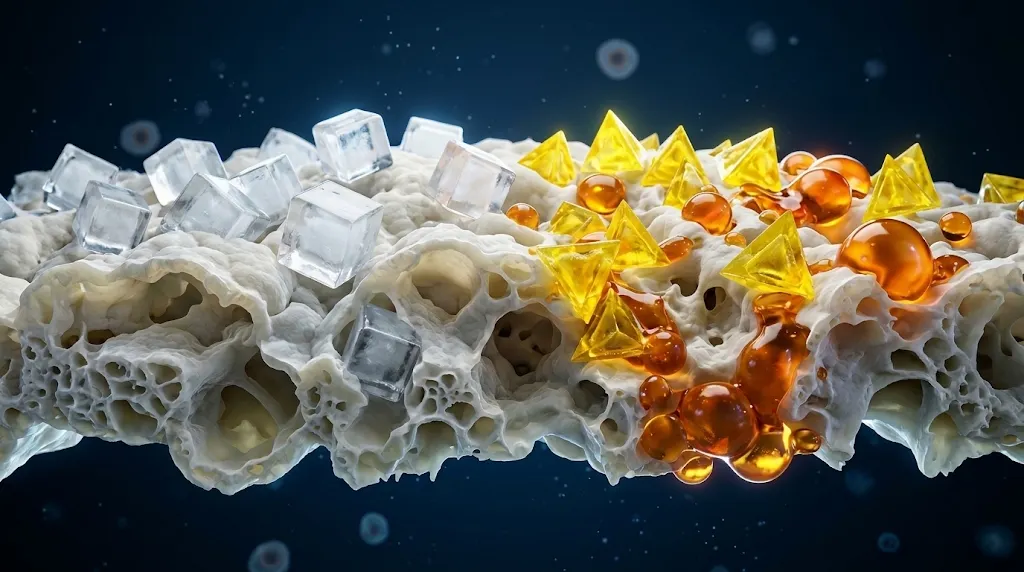
Standard table salt is processed through evaporation into microscopic cubes. When you sprinkle cube salt onto popped corn, the heavy crystals slide right off the smooth, rounded starch surface and collect at the bottom of the bowl. Flavacol, by contrast, is manufactured through a specialized crystallization process that produces microscopic, hollow four-sided pyramids.
"Standard table salt crystals are microscopic cubes that slide right off popped corn. Flavacol crystals are hollow four-sided pyramids manufactured to nestle permanently into every crevice of the starch."
These microscopic salt pyramids possess roughly three times the surface area of ordinary salt flakes. When the popcorn kernel explodes in the hot kettle, the fine seasoning dust adheres instantly to the moist gelatinized starch, delivering a massive, instantaneous burst of sodium to your tastebuds without requiring heavy moisture.
| Popcorn Element | Home Kitchen Method | Movie Theater Formula | The Sensory Result |
|---|---|---|---|
| Popping Oil | Vegetable or Olive Oil (Smoking point ~375°F) | Refined Orange Coconut Oil (No dairy water) | Crisp shell, zero soggy steam, high smoke tolerance |
| Salt Crystal Structure | Milled Cubes (Slide off starch folds) | Hollow Salt Pyramids (Flavacol) | Flakes cling tightly to kernel crevices |
| Butter Flavor Compound | Real Melted Dairy (16% water content) | Diacetyl + Acetylpropionyl (Fat soluble) | Rich buttery aroma without softening the crunch |
| Color & Visual Appeal | Pale white / light beige | Beta-Carotene + Yellow #5 & #6 | Vibrant, warm theatrical golden glow |
The Science of Orange Coconut Oil
The second pillar of the theater formula is the popping medium: refined coconut oil colored with beta-carotene. If a movie theater used real butter to pop corn, two immediate disasters would occur. First, butter burns at roughly 300 degrees Fahrenheit, creating bitter black smoke inside the theater lobby long before the corn reaches the 400-degree popping threshold.
Second, real butter is approximately sixteen to eighteen percent water. Adding water to fresh popcorn dissolves the delicate starch matrix, turning the crispy popped hull into a soggy, chewy mess within three minutes. Refined coconut oil contains zero water, melts into a clean liquid at room temperature, and leaves zero greasy film on the palate.
The Olfactory Engine: Why Cinema Lobbies Smell from the Street
The irresistible scent of movie theater popcorn is driven by volatile heterocyclic aroma compounds called 2-acetyl-1-pyrroline and alkylpyrazines. These aromatic molecules evaporate rapidly into warm air currents.

Cinema architects deliberately position concession exhaust hoods near lobby entrance vestibules. The warm, pyrazine-loaded air creates an involuntary Pavlovian response in approaching moviegoers, stimulating salivary glands and driving impulse concession purchases that generate over eighty percent of a theater's operating margin.
The next time you settle into a plush theater seat with an oversized bucket of golden popcorn, appreciate the engineering. It isn't farmhouse butter—it is a seventy-year-old triumph of crystalline chemistry and sensory physics.