



 24 November 2026
Jevons paradox describes a counterintuitive economic phenomenon: improving a resource's efficiency can sometimes increase its total consumption rather than reduce it.
When technology makes energy, materials, or services cheaper to use, people and businesses may increase demand, expand production, and discover new applications that outweigh the original savings.
10 Examples of Jevons Paradox in Technology and Resource Use
Enhanced Geothermal Systems and 13 Innovations Transforming Clean Energy
 Inside the List
10 Items

AI-Powered Software Development
Main Purpose: Increasing software development efficiency
AI coding tools can reduce the time and cost of developing software. This can make projects previously too expensive or complex economically viable, encouraging companies to build more applications, automate more processes, and increase demand for computing resources.
- Automated coding
- Faster development
- More applications

Artificial Intelligence and Computing Demand
Main Purpose: Reducing the cost of automated tasks
AI systems are becoming less expensive to operate as models and computing infrastructure improve. Lower costs can encourage businesses to use AI for more tasks, including customer analysis, content production, and automated decision support, potentially increasing total computing demand.
- Lower inference costs
- Wider AI adoption
- Increased computing activity

ATMs and Banking Services
Main Purpose: Automating routine transactions
Automated teller machines reduced the need for bank employees to handle routine cash transactions. By making individual branches cheaper to operate, however, ATMs also helped make wider branch networks economically viable, showing how automation can change the scale of a service.
- Cash automation
- Lower operating costs
- Expanded services

Spreadsheets and Financial Analysis
Main Purpose: Improving financial analysis
Spreadsheet software dramatically reduced the time needed to perform calculations and build financial models. Instead of limiting the analysis businesses could do, lower costs made it practical to build more models, examine additional scenarios, and generate greater demand for interpretation.
- Automated calculations
- Faster modeling
- Increased analysis

Email and Business Communication
Main Purpose: Making communication more efficient
Email has made business communication faster and less expensive than traditional correspondence. Its convenience also encouraged more frequent messaging, creating additional communication and coordination activity rather than simply replacing older forms of contact.
- Instant messaging
- Lower communication costs
- Higher message volume

The Paperless Office Paradox
Main Purpose: Reducing paper-based communication
Digital documents and email were expected to reduce the need for paper in offices. However, cheaper document creation, editing, and distribution can encourage people to produce and print more material, showing how technological convenience may increase overall resource use.
- Digital documents
- Easy editing
- Increased content

Increased Demand for Travel
Main Purpose: Making transportation more affordable
Technological improvements can lower transportation costs and make journeys more accessible. As travel becomes cheaper, people may take additional trips or choose longer journeys, potentially increasing total fuel consumption despite improved efficiency.
- Lower travel costs
- Greater accessibility
- More journeys

Fuel-Efficient Transportation
Main Purpose: Reducing fuel consumption per distance
More efficient vehicles require less fuel to travel a given distance. However, lower running costs can encourage drivers to travel farther or more frequently, offsetting some of the expected fuel savings. This is a common example of the rebound effect.
- Better fuel economy
- Lower travel costs
- Increased driving
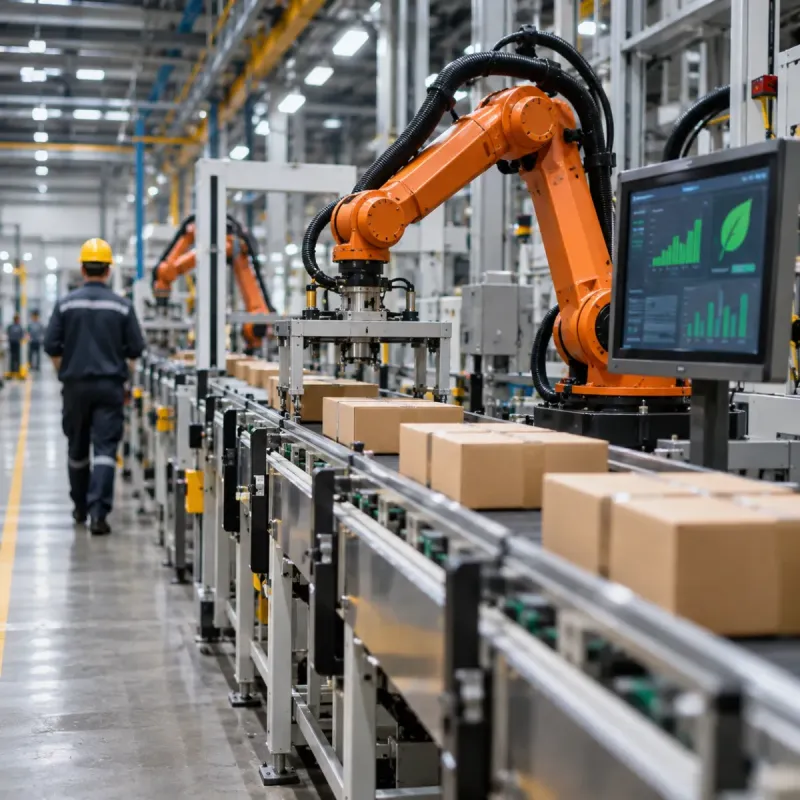
Expanding Industrial Production
Main Purpose: Increasing production efficiency
When machinery uses energy more efficiently, factories can produce goods at a lower operating cost. This can make production more profitable, encourage businesses to expand output, and increase total demand for energy and other resources.
- Lower production costs
- Higher output
- Expanded operations

More Efficient Steam Engines
Main Purpose: Reducing fuel use per unit of work
The original example behind Jevons' paradox came from improvements in steam engines during the Industrial Revolution. More efficient engines required less coal for a given amount of mechanical work, but cheaper steam power encouraged wider industrial use and higher overall coal consumption.
- Efficient engines
- Lower operating costs
- Increased coal demand